A day after the Mathura boat tragedy, videos show an overcrowded steamer with no life jackets before it capsized.
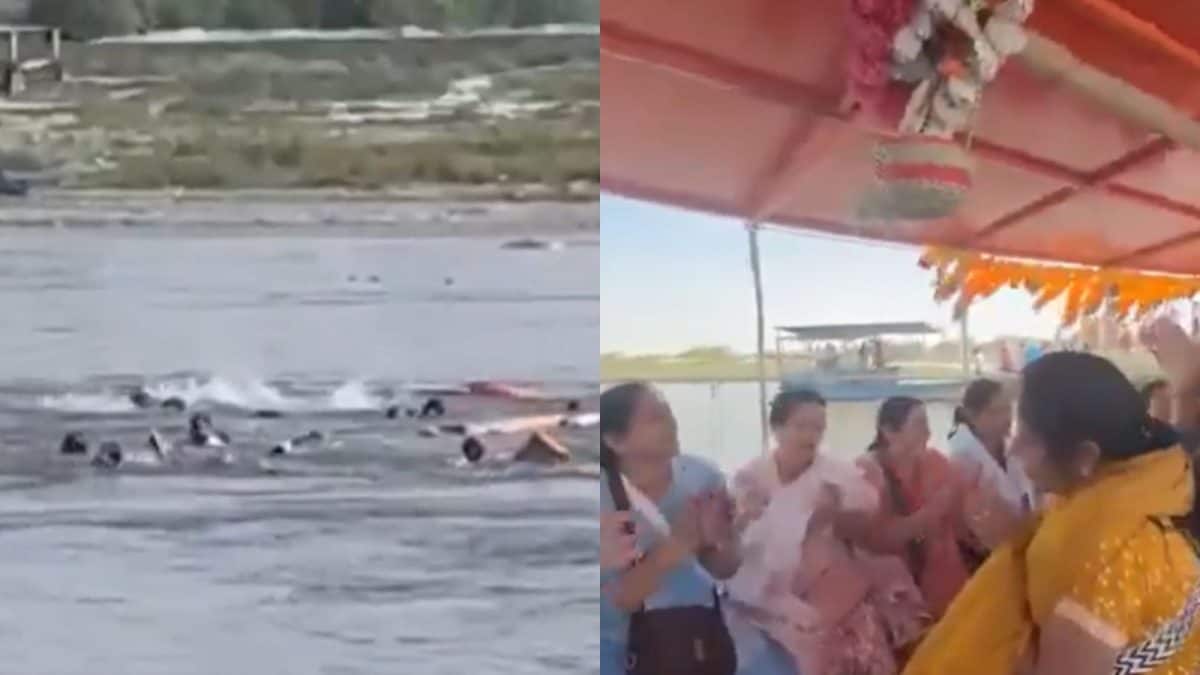
Honestly, when I first saw the new clips making rounds on social media, I felt a chill down my spine. It was just a day after the heartbreaking incident in Mathura where at least ten people lost their lives, and suddenly there were fresh visuals that seemed to answer a lot of questions that were circling in my mind. The footage was taken from a mobile phone, shaky but clear enough to show a long, wooden steamer gliding on the Yamuna River, packed to the brim with devotees. The group was from Punjab, on a pilgrimage to Vrindavan, and they were chanting “Radhe Radhe” in unison, their voices echoing over the water. What struck me most was that none of them wore a single life jacket, not even a child. It felt surreal, almost as if safety rules were an afterthought in this religious journey.
Watching the video, I could picture the usual hustle around the ghats. In most Indian towns, riverbanks are crowded with vendors selling everything from fresh fruit to handmade bangles, and pilgrims often hop onto boats without thinking twice about safety. This scene was no different, except the sheer number of passengers made it look like a moving crowd, pressing against the railings, some holding onto the boat’s wooden frame for support. It reminded me of the countless times I rode a local ferry in my hometown, but those were usually less than half as crowded, and we at least had a few life jackets lying around, even if we never used them. This time, the absence of any safety gear was glaring, and it made me wonder how such a massive oversight could happen.
Crowded Boat Seen Before Accident
In the clip, the chanting grows louder as the boat drifts past a few small islands in the river, and you can see the faces of the pilgrims illuminated by the early morning sun. Their expressions ranged from serene to slightly uneasy, probably because the boat was wobbling a bit as it tried to navigate the gentle currents. The caption that accompanied the video on the platform read, “How negligence cost lives of 10 Punjab devotees. Steamer packed beyond capacity in UP’s Mathura. Devotees from Punjab chanting ‘Radhe Radhe’. None of them wearing life jacket. The boat capsized, 10 people died.” The words hit hard, especially the part about negligence. It felt like a bitter reminder that we often overlook basic precautions in the name of tradition or sheer convenience.
What also struck me was the boat’s capacity versus the actual number of passengers. The vessel, according to the officials, was meant for about fifteen people, but the video clearly showed close to thirty individuals cramped inside. If you pay close attention, you can see a few kids clinging to their parents, and some elderly folks trying to find a stable spot to stand. The overcrowding was not just a visual inconvenience—it was a ticking time bomb, especially on a river where the flow can change quickly.
From my personal experience, I’ve seen similar situations on the Ganges during festivals, where boats are filled beyond their limits to accommodate the surge of pilgrims. The problem, however, is that such overloading makes the boat unstable, especially when the water gets choppy or the wind picks up. In the Mathura case, the wind turned out to be a crucial factor, as we will see from the survivor accounts later.
Panic And Rescue Efforts After Capsizing
Another clip that circulated shortly after the first one showed the chaotic aftermath. The boat, after hitting something—later identified as a pontoon bridge—flipped over, and the water was suddenly filled with panicked faces. You could see people desperately trying to keep their heads above the water, some splashing with all their might, while others floated helplessly, clinging to debris or each other. The river’s current, though not extremely strong, was enough to carry them downstream, making the rescue operation a race against time.
What impressed me, albeit with a heavy heart, was the immediate response of nearby boat operators and villagers standing on the riverbank. A few of them jumped into the water, pulling out struggling passengers, while others tried to reach those farther downstream with long sticks or ropes. Their faces were a mix of shock and determination. The scene reminded me of the community spirit I’ve witnessed many times in Indian villages, where people come together in emergencies without waiting for official help.
Of course, the official rescue squads—teams from the Army, the Punjab Armed Constabulary (PAC), and the National Disaster Response Force (NDRF)—arrived quickly. Their presence added a structured approach to the rescue, with lifebuoys, inflatable boats, and medical kits. Still, the initial minutes are always the most critical, and the videos made it clear that the locals were already doing what they could, sometimes risking their own safety to pull someone out of the water.
Officials Share Details Of The Incident
According to the officials, the incident happened at around 3 pm, near Kesi Ghat, which is roughly 2.5 km from the famous Banke Bihari Temple in Mathura. The exact location is quite popular among tourists and pilgrims alike, often serving as a launch point for river cruises. The police reports indicated that about thirty people were on board, even though the boat’s stated capacity was just fifteen. This overloading, combined with the lack of life jackets, created a perfect storm for disaster.
The authorities said that the steamer struck a pontoon bridge before it capsized. An early statement from a senior police officer, quoted by Gree News, mentioned, “Based on eyewitness accounts so far, the prima facie cause of the accident appears to be the boat colliding with the pontoon bridge, which led to it capsizing. Ten bodies have been recovered from the site.” This line feels very clinical, but it’s the reality we have to accept.
Rescue teams from the Army, PAC and NDRF were quickly dispatched to the spot. They managed to save about sixteen to seventeen people, pulling them to safety and providing immediate medical attention. However, the search for the remaining missing passengers is still ongoing, and families are anxiously waiting for any news about their loved ones.
Survivors Recall Strong Winds And Ignored Warnings
What really added a layer of tragedy to the whole episode were the accounts from the few survivors who managed to cling to life jackets—well, actually to the boat’s wooden railings—while the water surged around them. One survivor described how, just as the boat was in the middle of the river, the weather turned abruptly. “The wind suddenly intensified, the boat started swaying, and its speed increased,” he recounted to Gree News. The wind, according to these testimonies, made the vessel unstable, making it hard for the boatman to keep control.
Another survivor spoke about a warning that went unheard. He said, “We told the boatman to slow down as we approached the bridge, but he ignored us.” This simple act of negligence—ignoring a passenger’s plea—perhaps set the stage for the boat hitting the pontoon bridge. Some reports even claim that after the boat capsized, the boatman fled the scene, leaving the passengers to fend for themselves in the river.
Listening to these survivor stories reminded me of similar incidents where strong gusts—something we Indians often underestimate, especially during the monsoon—play a decisive role in water accidents. The combination of overloaded boats, lack of safety gear, and an unprepared crew is a recipe for disaster, and the Mathura tragedy is a harsh illustration of that.
Reflections And The Way Forward
Seeing all these videos and reading the statements from officials, I couldn’t help but think about how many such incidents could be avoided if basic safety norms were enforced. In my own hometown, we have a rule that every boat must have at least one life jacket per passenger, and the authorities do random checks. Yet, here in Mathura, it seems those checks either didn’t happen or were ignored. The fact that the boat was carrying double its capacity is a glaring red flag that should have stopped the trip before it set off.
It also made me reflect on the broader issue of pilgrimage tourism in India. Many devotees travel in large groups, often guided by local tour operators who might cut corners to maximize profit. While the spiritual experience is priceless, safety should never be compromised. A simple step like providing life jackets, ensuring the boat’s capacity is respected, and training the boatmen to listen to passenger concerns could save countless lives.
There is also a need for better public awareness. Many people, especially in rural areas, don’t know how to swim or what to do when a boat capsizes. Community programs that teach basic water safety could be a game‑changer. In the videos, you can see how some passengers simply floated without any knowledge of how to keep themselves afloat, relying solely on the hope that someone would rescue them. That is a painful reality that we must address.
Finally, I hope the ongoing investigations will lead to stricter enforcement of safety regulations on inland waterways. The authorities need to hold the boat operators accountable and ensure that no family has to endure this kind of grief again. As we watch these heartbreaking videos, our thoughts should also turn into action—advocating for safer travel and demanding that the government steps up its oversight.