World

Singapore Declares Hormuz Transit a Legal Right, Rejects Any Negotiation or Fee with Iran

By Editorial Team
Thursday, April 9, 2026
5 min read
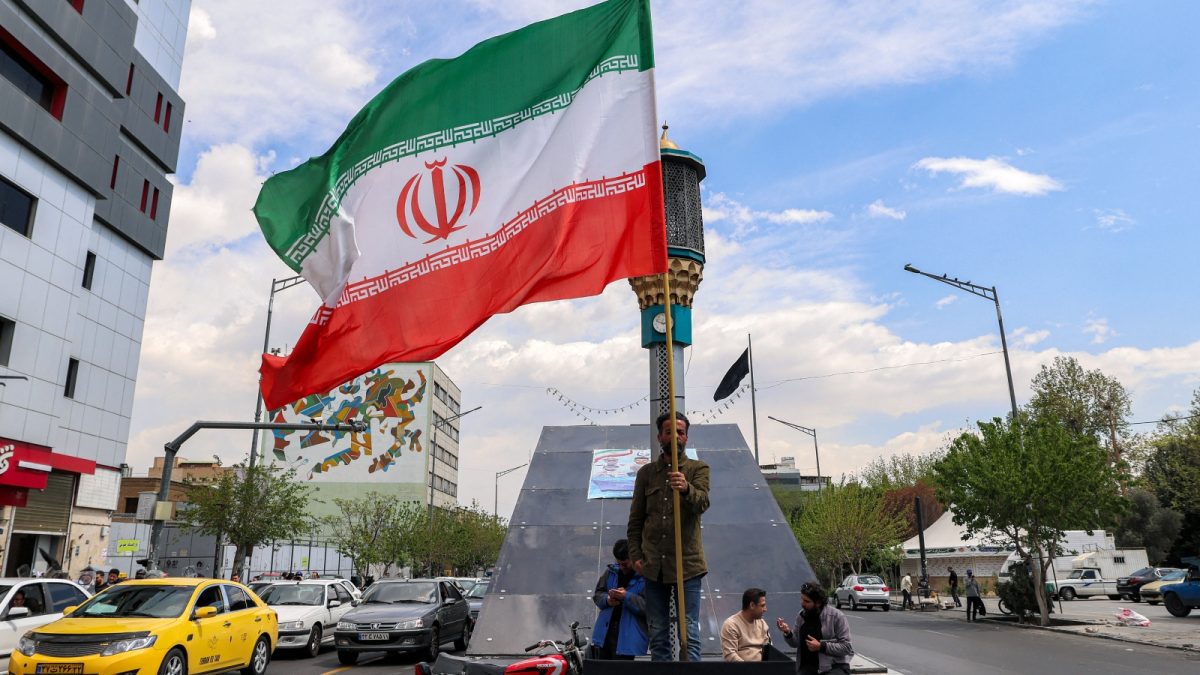
Map of the Strait of Hormuz and surrounding maritime routes
Strategic position of the Strait of Hormuz in global shipping.

Singapore rejects negotiating or paying Iran for ship passage through the Strait of Hormuz, citing UNCLOS transit rights and warning of risks to global trade routes and norms

Singapore has strongly ruled out negotiating with Iran for safe passage of Singapore‑registered ships through the Strait of Hormuz, taking a strong stand on international maritime law amid ongoing tensions in the region.

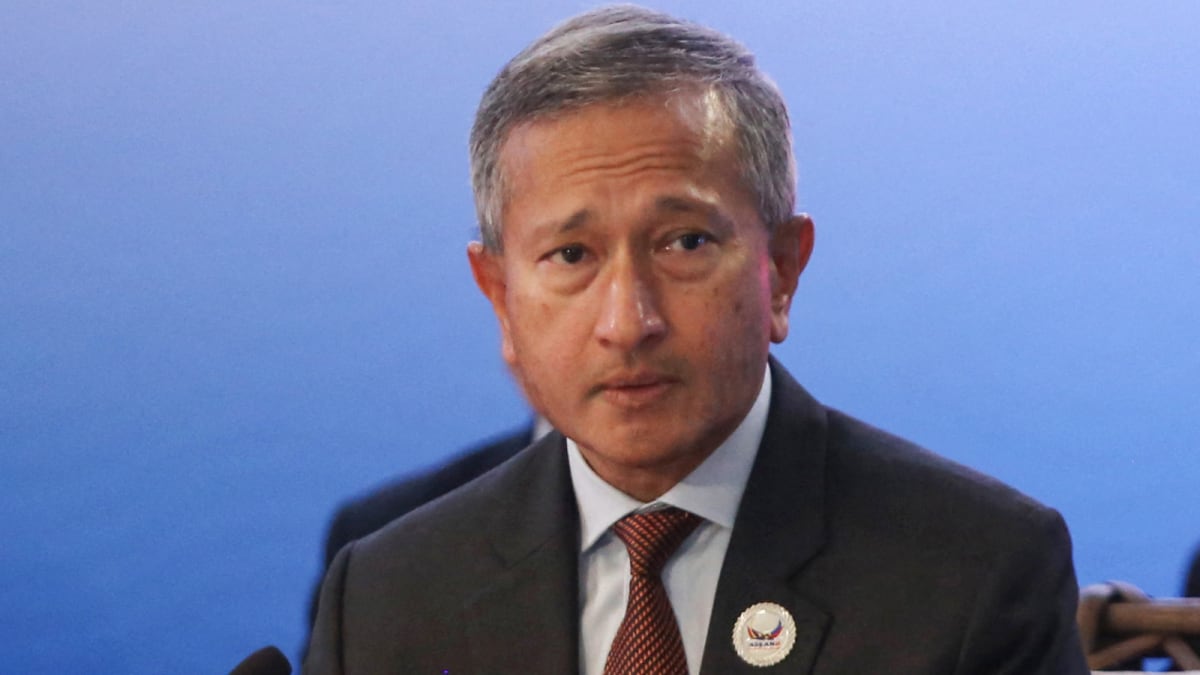
Foreign Minister Vivian Balakrishnan said Singapore will not engage in any talks or pay tolls to secure transit, stressing that such a move would undermine fundamental legal principles. "Transit passage is a right, not a privilege," Foreign Minister Vivian Balakrishnan said in Parliament.

Foreign Minister Vivian Balakrishnan underlined that the Strait of Hormuz is an international waterway governed by the United Nations Convention on the Law of the Sea (UNCLOS), which guarantees freedom of navigation. Foreign Minister Vivian Balakrishnan said ships should not have to "seek permission" or pay for access, warning that accepting such conditions would set a dangerous precedent.

Foreign Minister Vivian Balakrishnan’s remarks come at a time when Iran has tightened control over the strategic chokepoint during the ongoing conflict, with some countries reportedly negotiating safe passage or paying fees to move vessels through the strait.

Why Singapore Won’t Negotiate Hormuz Passage?

Singapore, despite its tiny size, is a shipping superpower and its position reflects Singapore’s own strategic concerns. Singapore sits along the Strait of Malacca — another critical global shipping route — and fears that compromising on Hormuz could weaken similar protections elsewhere.

The Strait of Malacca is the crossroads of major global maritime routes between the Indian Ocean and the South China Sea, and hosts the world’s busiest trans‑shipment port, through which 3.1 billion tonnes of vessel arrivals passed in 2024. Singapore therefore views any erosion of the principle of free passage as a direct threat to the security of its own maritime arteries.

The development comes despite a fragile US‑Iran ceasefire aimed at easing tensions and reopening key shipping lanes. However, uncertainty continues over actual access and safety, with maritime movement still heavily restricted and dependent on Iranian approval in many cases.

The Strait of Hormuz remains one of the world’s most vital energy corridors, handling a significant share of global oil trade. Any disruption or conditional access has far‑reaching implications for global supply chains and energy markets.

Legal Foundations of the Right of Transit Passage

Under the United Nations Convention on the Law of the Sea (UNCLOS), every coastal state must allow the right of transit passage through international straits used for navigation between one part of the high seas or an exclusive economic zone and another. This right is unconditional, cannot be suspended by the bordering state, and does not require any form of licensing, fee, or special permission. Singapore emphasizes that this legal framework applies equally to the Strait of Hormuz, as the waterway connects the Persian Gulf with the Gulf of Oman and the wider oceanic system.

Foreign Minister Vivian Balakrishnan has repeatedly highlighted that the language of UNCLOS is clear: transit passage is a sovereign right of the vessel, not a concession granted by the coastal state. By invoking the treaty, Singapore seeks to anchor its position in an internationally recognized legal regime, rather than relying on ad‑hoc diplomatic arrangements that could be used to exert political pressure.

The legal certainty provided by UNCLOS is a cornerstone of global trade, allowing carriers to plan routes, calculate costs, and assure customers of predictable delivery times. Singapore’s refusal to entertain any alteration of this framework reflects a broader commitment to maintaining the rule‑based order that underpins maritime commerce.

Strategic Implications for Global Shipping

Singapore’s stance sends a clear signal to the international shipping community that the city‑state will not accept any arrangement that could jeopardize the principle of free navigation. Because Singapore operates one of the world’s busiest ports and is home to a large fleet of container vessels, the policies it adopts are closely watched by carriers, ship owners, and logistics providers worldwide.

By refusing to negotiate with Iran, Singapore reinforces the expectation that any future attempts to monetize passage through the Strait of Hormuz would meet coordinated resistance from major maritime nations. This collective resolve could discourage Iran from imposing fees that would raise shipping costs, increase insurance premiums, and potentially lead to rerouting of vessels around longer, more expensive pathways.

Furthermore, Singapore’s position underscores the interdependence of global chokepoints. The Strait of Malacca, next to which Singapore is located, is already a focal point of security initiatives aimed at preserving free passage. Any perceived weakening of legal protections in the Strait of Hormuz could embolden other coastal states to assert similar controls elsewhere, thereby fragmenting the open nature of sea lanes that economies across continents rely upon.

Regional Context and Tensions

The broader regional environment is marked by heightened naval activity, diplomatic posturing, and occasional flare‑ups that affect the safety of shipping. Iran’s recent measures to tighten control over the Strait of Hormuz have been interpreted as an effort to leverage its geographic advantage in negotiations over broader geopolitical disputes.

Singapore, while geographically distant from the Persian Gulf, nevertheless feels the impact of any disruption to this vital artery because a substantial share of the world’s petroleum supply passes through the strait each day. A slowdown or blockage would reverberate through energy markets, affect fuel prices, and challenge the reliability of supply chains that depend on timely deliveries.

In this context, Singapore’s refusal to pay a toll or seek a special waiver is not merely a legalistic stance but a strategic calculation aimed at preventing the normalization of coercive practices that could be replicated in other contested maritime zones.

International Reaction and Diplomatic Signals

Other maritime nations have expressed support for Singapore’s reaffirmation of UNCLOS rights, emphasizing that collective adherence to the convention safeguards the interests of all seafaring states. By aligning its policy with that of a broader coalition, Singapore strengthens the diplomatic weight behind the principle of free passage.

The stance also serves as a diplomatic reminder to Iran that any attempt to monetize or condition access to the Strait of Hormuz could encounter coordinated opposition, potentially leading to diplomatic isolation or economic countermeasures from the international community.

Through consistent messaging in parliamentary debates and public statements, Foreign Minister Vivian Balakrishnan has made clear that Singapore will continue to champion the right of transit passage, resisting any pressure to alter the status quo through financial or political inducements.

‘This Is The Right Not A Privilege To Be Granted By Iran’

"There is a right of transit passage. It is not a privilege to be granted by the bordering state, it is not a licence to be supplicated for, it is not a toll to be paid," Foreign Minister Vivian Balakrishnan told Parliament when asked whether Singapore would negotiate passage through the Strait of Hormuz or pay a toll to Iran.

Singapore’s refusal to negotiate signals a broader push to uphold international norms at a time when geopolitical tensions are increasingly reshaping control over critical trade routes. By framing the issue as a matter of legal entitlement rather than discretionary favor, Singapore positions itself as a guardian of the rules‑based order that enables peaceful commerce across the seas.

The articulation of this position by Foreign Minister Vivian Balakrishnan reinforces Singapore’s identity as a principled maritime nation that values stability, predictability, and the rule of law above short‑term concessions that could undermine long‑term global trade security.

Implications for Future Maritime Policy

Singapore’s firm refusal to entertain any form of negotiation or payment sets a precedent for how other states may respond to similar pressures in different regions. By publicly invoking UNCLOS and emphasizing the inviolability of the right of transit passage, Singapore provides a template for diplomatic engagement that prioritizes legal frameworks over transactional arrangements.

Policy analysts note that this approach could encourage the development of multilateral mechanisms aimed at monitoring compliance with UNCLOS provisions, enhancing transparency, and deterring unilateral attempts to impose fees or restrictions on international navigation.

In addition, Singapore’s stance strengthens its own credibility as a reliable partner in the global shipping community, reassuring ship owners and logistic firms that the city‑state will continue to defend the openness of sea lanes that are essential to their operations.

Conclusion: Upholding the Rules‑Based Maritime Order

Singapore’s unequivocal rejection of any negotiation with Iran over the Strait of Hormuz underscores a steadfast commitment to the principles enshrined in the United Nations Convention on the Law of the Sea. By characterizing transit passage as a non‑negotiable right rather than a conditional favor, Singapore aims to preserve the stability and predictability of international shipping routes that are vital to global commerce.

Foreign Minister Vivian Balakrishnan’s articulation of this position reinforces the city‑state’s role as a champion of free navigation, signaling to both coastal states and the wider maritime community that attempts to monetize or restrict access to strategic chokepoints will face coordinated resistance. The broader implication of this policy is a reaffirmation of the rules‑based order that underpins not only the movement of goods but also the economic interdependence of nations across continents.

As tensions continue to ebb and flow across critical maritime corridors, Singapore’s consistent messaging and adherence to international law will remain a cornerstone of its foreign policy, ensuring that the right of transit passage endures as a fundamental safeguard for global trade.

Singapore Ministry of Foreign Affairs
Online Press Release – Official Statements
#sensational#world#global#trending

More from World

View All
Iranian Diplomat Issues Stark Ultimatum to United States Over Lebanon Conflict
World

Iranian Diplomat Issues Stark Ultimatum to United States Over Lebanon Conflict

Iranian Foreign Minister Abbas Araghchi delivered a forceful declaration urging the United States to make a clear decision: either uphold a cease‑fire arrangement that includes halting hostilities in Lebanon or continue to support Israel’s ongoing military campaign in the region. The warning came in the wake of Israel’s announcement of its most extensive series of attacks across Lebanon since the initiation of a new military operation earlier in the year, an offensive that the Lebanese Civil Defence reports has caused more than two hundred fifty fatalities and over a thousand injuries. Iran maintains that a ten‑point cease‑fire proposal, which the United States has accepted in principle and which was brokered by Pakistan, explicitly calls for a cessation of attacks on all fronts, Lebanon included. United States Vice President JD Vance, however, has rejected this interpretation, insisting that the cease‑fire does not extend to Lebanon and attributing the disagreement to a “legitimate misunderstanding” in the negotiation process. This divergence highlights the early challenges facing diplomats as they strive to solidify a broader peace framework, even as a United States delegation prepares to travel to Pakistan for additional talks. The stakes are high, with both sides emphasizing the potential ramifications of a breakdown in negotiations, while also warning that any misstep could deepen the regional conflict.

Apr 9, 2026
Cross‑Border Terror Plot Thwarted: Pakistani‑Canadian National Confesses ISIS‑Inspired Attack on Brooklyn Chabad House
World

Cross‑Border Terror Plot Thwarted: Pakistani‑Canadian National Confesses ISIS‑Inspired Attack on Brooklyn Chabad House

In a striking case that highlights the growing danger of transnational radicalisation, a 21‑year‑old Pakistani national residing in Canada admitted in a United States federal courtroom to plotting an ISIS‑inspired assault on a Jewish community centre in Brooklyn, New York. The scheme, centered on the use of AR‑style rifles and timed to coincide with the anniversary of a high‑profile attack in the Middle East, was intercepted after the suspect, Muhammad Shahzeb Khan, engaged in extensive online communication with individuals he believed to be co‑conspirators, only to discover that these contacts were undercover agents from the FBI. The investigation culminated in Muhammad Shahzeb Khan’s arrest while attempting an illegal crossing of the US‑Canada border with assistance from a human smuggler. A coordinated effort among the FBI, the New York Police Department and Canadian authorities led to the seizure of weapons, the disruption of the plot and the filing of terrorism‑related charges that could result in a life sentence. Officials emphasise that the case exemplifies the so‑called “lone‑wolf” dynamic where extremist propaganda fuels individual actors, while also underscoring the broader implications for diaspora communities, diplomatic missions, and the necessity for heightened intelligence sharing between allied nations. This episode adds to a series of recent threats targeting Indian diplomatic sites, Hindu temples, and Jewish‑Indian community institutions across the globe, reinforcing calls for vigilant monitoring of passport holders and more robust cross‑border collaboration to counter evolving terror tactics.

Apr 9, 2026

Latest Headlines

Ranveer Singh Teams Up with Mohit Chauhan for a Spirited Rendition of “Dooba Dooba” at Anant Ambani’s Birthday Bash, Fans Rave
Movies

Ranveer Singh Teams Up with Mohit Chauhan for a Spirited Rendition of “Dooba Dooba” at Anant Ambani’s Birthday Bash, Fans Rave

A vibrant video has captured Ranveer Singh joining forces with Mohit Chauhan and Mankeet Singh for an impromptu performance of the classic track “Dooba Dooba Rehta Hoon” during Anant Ambani’s lavish birthday celebration. The footage, initially shared on social media, showcases Ranveer Singh’s effortless vocal confidence, Mohit Chauhan’s timeless melody, and Mankeet Singh’s supportive presence, creating a moment that quickly went viral among fans and industry insiders alike. Observers praised Ranveer Singh for surprising the crowd with genuine musical talent, noting how the collaboration added an unexpected layer of joy to an event already populated by high‑profile celebrities such as Shah Rukh Khan, Salman Khan, Ananya Panday, Shanaya Kapoor, and Boney Kapoor. The shared post on Instagram, authored by Mankeet Singh, highlighted the heartfelt camaraderie among the three performers, underscoring the genuine love for music that united them. Commentary across platforms emphasized the rarity of such spontaneous, unscripted sessions, positioning the performance as a highlight of the celebration and cementing Ranveer Singh’s reputation as an entertainer who effortlessly blends acting, dancing, and singing. The viral clip continues to ignite conversations about celebrity collaborations, the power of music to bridge personalities, and the sheer delight that arises when stars let their authentic selves shine in front of a live audience.

Apr 9, 2026
Prime Minister Narendra Modi Denounces Trinamool Congress Governance in Asansol Rally, Calls for Change in West Bengal
India

Prime Minister Narendra Modi Denounces Trinamool Congress Governance in Asansol Rally, Calls for Change in West Bengal

In a high‑energy gathering at Asansol, Prime Minister Narendra Modi launched a forceful critique of Chief Minister Mamata Banerjee and the Trinamool Congress, asserting that the party’s rule has devastated West Bengal’s economic prospects and fostered corruption. The speech emphasized that West Bengal, once celebrated for its prosperity, now faces job scarcity and stalled development, attributes Prime Minister Narendra Modi linked directly to the governance style of Trinamool Congress. Citing a recent incident in Malda, Prime Minister Narendra Modi portrayed the episode as evidence of law‑breaking behavior by Trinamool Congress workers and a further sign of the party’s disregard for public order. Prime Minister Narendra Modi urged the electorate to reject what he described as the “mafia rule” of Trinamool Congress, promising that a government led by the Bharatiya Janata Party would rejuvenate Asansol, the Durgapur region, and the broader state. Highlighting the historic courage of West Bengal’s people during earlier political periods, Prime Minister Narendra Modi called for a decisive vote that would usher in a new era of growth, transparency, and security under the Bharatiya Janata Party. The rally’s rhetoric, combined with a vivid portrayal of the challenges facing West Bengal, set a stark contrast between the alleged failures of Trinamool Congress and the promised renewal promised by the Bharatiya Janata Party, positioning the upcoming polls as a pivotal moment for the region’s future.

Apr 9, 2026
Iranian Diplomat Issues Stark Ultimatum to United States Over Lebanon Conflict
World

Iranian Diplomat Issues Stark Ultimatum to United States Over Lebanon Conflict

Iranian Foreign Minister Abbas Araghchi delivered a forceful declaration urging the United States to make a clear decision: either uphold a cease‑fire arrangement that includes halting hostilities in Lebanon or continue to support Israel’s ongoing military campaign in the region. The warning came in the wake of Israel’s announcement of its most extensive series of attacks across Lebanon since the initiation of a new military operation earlier in the year, an offensive that the Lebanese Civil Defence reports has caused more than two hundred fifty fatalities and over a thousand injuries. Iran maintains that a ten‑point cease‑fire proposal, which the United States has accepted in principle and which was brokered by Pakistan, explicitly calls for a cessation of attacks on all fronts, Lebanon included. United States Vice President JD Vance, however, has rejected this interpretation, insisting that the cease‑fire does not extend to Lebanon and attributing the disagreement to a “legitimate misunderstanding” in the negotiation process. This divergence highlights the early challenges facing diplomats as they strive to solidify a broader peace framework, even as a United States delegation prepares to travel to Pakistan for additional talks. The stakes are high, with both sides emphasizing the potential ramifications of a breakdown in negotiations, while also warning that any misstep could deepen the regional conflict.

Apr 9, 2026
Shashi Tharoor Urges India to Rethink Its Strategic Posture as West Asia Conflict Rages
India

Shashi Tharoor Urges India to Rethink Its Strategic Posture as West Asia Conflict Rages

In a candid interview, Congress parliamentarian Shashi Tharoor warned that India cannot afford to stand idly by while the conflict in West Asia deepens, emphasizing that the unfolding crisis directly touches the nation’s strategic interests, especially its energy security and the welfare of its overseas community. Tharoor stressed that New Delhi must continuously appraise its diplomatic options, keeping the door open for a more active role without rushing into mediation. He clarified that his remarks were not a call for immediate involvement in peace talks, but rather a reminder that India’s restraint should not be mistaken for moral surrender. The lawmaker also addressed the emerging role of Pakistan as a possible mediator, cautioning against viewing this development as a setback for India and suggesting that Islamabad’s involvement may be shaped by broader geopolitical calculations. Throughout the discussion, Tharoor highlighted the critical importance of safeguarding India’s energy supplies, which rely heavily on the Gulf region, and protecting the interests of the Indian diaspora caught in the crossfire. By urging a nuanced yet vigilant approach, he called on policymakers to continuously evaluate whether alternate diplomatic pathways could serve India’s national interests more effectively while maintaining a constructive partnership with the United States.

Apr 9, 2026