Thai Rookie Faints After Red Card Draw, Igniting Worldwide Debate on Mandatory Service
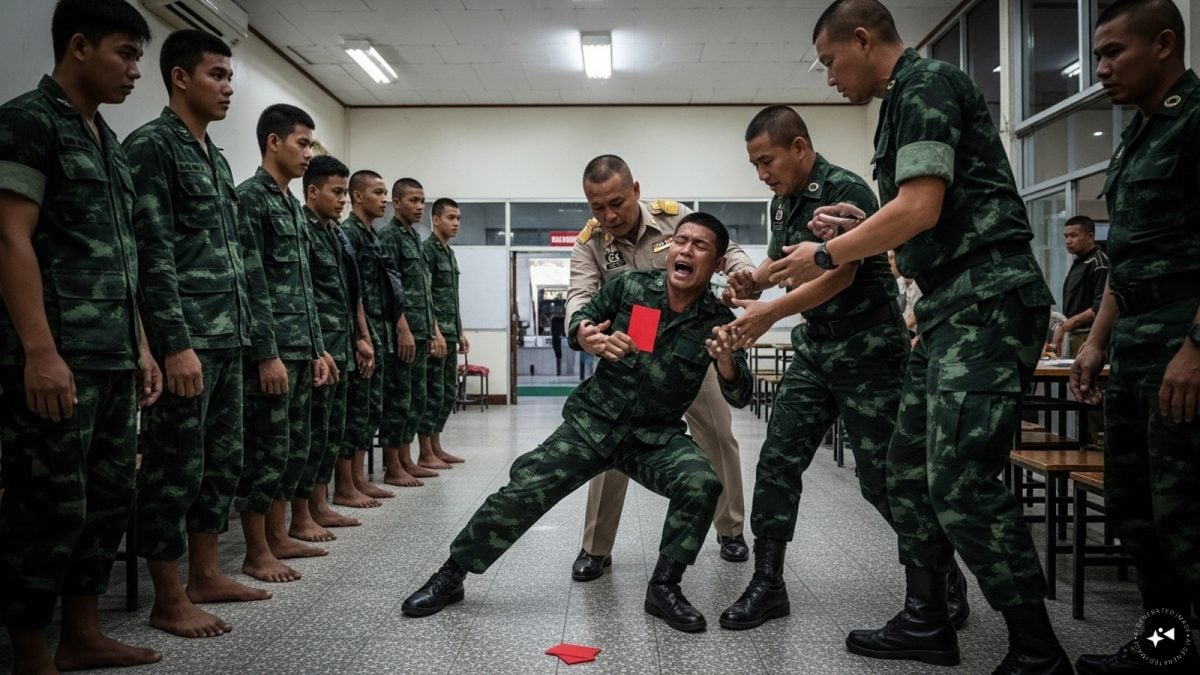
In a single, widely shared clip, a Thai young man collapses the moment a red card is revealed, signifying compulsory military duty. The footage has set social media ablaze, producing a spectrum of commentary that touches on personal courage, the fairness of lottery‑based drafts, and even the suitability of mandatory service for other countries.
What the Video Shows
The video documents the moment the lottery‑based conscription system in Thailand assigns service obligations. Within the ritual, a red card indicates that the individual must serve two years in the armed forces, while a black card grants an exemption. In the clip, the Thai young man receives a red card and collapses almost instantly, catching nearby officials and soldiers off guard. The sudden loss of consciousness lasts only a few seconds, after which the Thai young man regains composure and is escorted away.
Observers note that the Thai young man’s reaction is both dramatic and emotionally charged. Some viewers interpret the fainting as a performative gesture, while others argue that the response reflects genuine distress over a life‑changing decision delivered within seconds.
Background on Thailand’s Lottery‑Based Conscription System
Thailand employs a lottery‑based draft to determine which eligible males will serve in the military. Participation is not optional for most citizens; exemptions are limited to those who meet specific criteria such as advanced education, certain health conditions, or other legally recognized grounds. The process involves drawing cards—red for mandatory service and black for exemption—before a crowd of officials and peers.
The system has been a source of public discourse for decades. Proponents argue that the lottery adds an element of impartiality, while critics contend that the random nature of assignment places undue pressure on young adults at a pivotal stage of personal and professional development.
Because the lottery‑based conscription system is enshrined in national law, the outcome of a single draw can dictate the next two years of a person’s life, affecting education plans, career trajectories, and family expectations.
Social Media Reaction: A Spectrum of Opinions
The video’s rapid spread across platforms has produced a flood of comments, each reflecting distinct attitudes toward the event, the individual involved, and the broader concept of mandatory service.
Support for Mandatory Conscription
Several commenters expressed endorsement for the notion of compulsory service, extending the argument to nations beyond Thailand. One user wrote, “It would be a good idea for the US as well. Maybe teach the self‑entitled pansies to respect freedom.” Another user added, “I think it is quite fair to use a lottery system to determine who serves in the military, but why are they so resistant?” These remarks suggest that the lottery‑based conscription system is seen by some as a democratic method for allocating civic duty.
Criticism of the Thai Young Man’s Reaction
Other voices focused on the Thai young man’s behavior, labeling it as weak or inappropriate. One commentator, identifying as a US Marine veteran, stated, “As someone who willingly signed up for the Marines in the US, I can’t imagine acting this way.” A second user contributed, “By the time he’s done serving, he will act more like a boy.” The tone of these comments underscores a belief that personal resilience should prevail over fear of compulsory service.
Opposition to Mandatory Service Altogether
Conversely, a segment of the audience challenged the premise of forced enlistment. One remark declared, “A truly free country would never have forced military service.” This viewpoint frames mandatory conscription as incompatible with individual liberty and democratic values.
Empathy Toward the Emotional Impact
Some participants highlighted the psychological weight of the lottery draw. One user explained, “That’s why the reaction is so intense — his life just shifted based on random chance.” The comment reflects an understanding that the Thai young man’s collapse may stem from the abrupt realization of a substantial alteration to personal destiny.
Analyzing the Core Issues Behind the Debate
The varied responses to the video illuminate three central themes: the perceived masculinity of the Thai young man, the fairness of the lottery‑based conscription system, and the relevance of compulsory service in modern societies.
Masculinity and Public Perception
Many of the critical comments directly tie the Thai young man’s reaction to questions of masculinity. The implication is that an adult male should possess the mental fortitude to accept any civic duty without visible distress. This perspective aligns with traditional notions of stoicism and personal sacrifice, especially within military culture.
At the same time, the sympathetic remarks emphasize the human tendency to experience shock when faced with a sudden, life‑altering command. By framing the fainting as an emotional response rather than a character flaw, these voices broaden the conversation to include mental health considerations.
Fairness of the Lottery Mechanism
Supporters of the lottery argue that random selection removes bias, ensuring that no particular socioeconomic group is disproportionately burdened. Critics, however, contend that randomness does not account for individual circumstances, such as educational pursuits or family obligations, thereby generating inequities that a purely chance‑based system cannot remedy.
Both sides acknowledge that the lottery‑based conscription system is embedded in Thailand’s legal framework, making any reform a complex legislative challenge.
Mandatory Service in a Global Context
The suggestion that other countries, notably the United States, adopt a similar draft model reflects a broader international discourse on civic responsibility. While some argue that compulsory service could cultivate national unity and discipline, others maintain that it infringes upon personal freedoms enshrined in democratic constitutions.
Historical precedents, such as conscription during major conflicts, are often invoked to justify mandatory service, yet contemporary societies continue to grapple with balancing collective security and individual rights.
Implications for the Thai Young Man and Future Conscripts
The immediate aftermath of the video shows the Thai young man being escorted away by military personnel. The footage does not reveal the subsequent medical evaluation, but the visible collapse suggests a need for physical assessment before any further military processing.
Beyond the short‑term health concerns, the public scrutiny generated by the viral exposure may affect the Thai young man’s personal reputation. Online commentary, both supportive and critical, can create a lasting digital footprint that influences future opportunities in education or employment.
For other young Thai men facing the lottery, the video serves as a stark illustration of the emotional stakes involved. While some may view the clip as a cautionary tale, others may interpret it as a reminder of the resilience required to navigate the uncertainties of mandatory service.
Looking Ahead: Potential Reforms and Public Sentiment
The surge of conversation surrounding the video indicates a heightened public interest in the mechanics and ethics of Thailand’s draft system. Policymakers may feel pressure to address concerns ranging from exemption criteria to the psychological support offered to conscripts.
Proposals that have surfaced in past debates include expanding educational exemptions, introducing alternative civil service options, and implementing comprehensive counseling for those selected for duty. Whether any of these measures will gain traction remains uncertain, but the viral nature of the clip demonstrates the power of digital media to amplify citizen voices.
As the discussion evolves, the central question remains: how should a nation balance the need for a ready defense force with the individual rights and emotional wellbeing of its citizens? The answer may lie in nuanced policy adjustments that preserve national security while acknowledging the human impact of compulsory service.