Tis Hazari Court Remands Sarabjit Singh to Eight Days Police Custody in Delhi Assembly Breach Case

Background of the Security Breach
The incident that led to the present custody hearing involved an unidentified vehicle that forcefully occupied a security barrier at the highly protected premises of the Delhi Assembly. The vehicle managed to infiltrate the complex, creating a serious breach of security protocols that prompted an immediate response from law‑enforcement agencies.
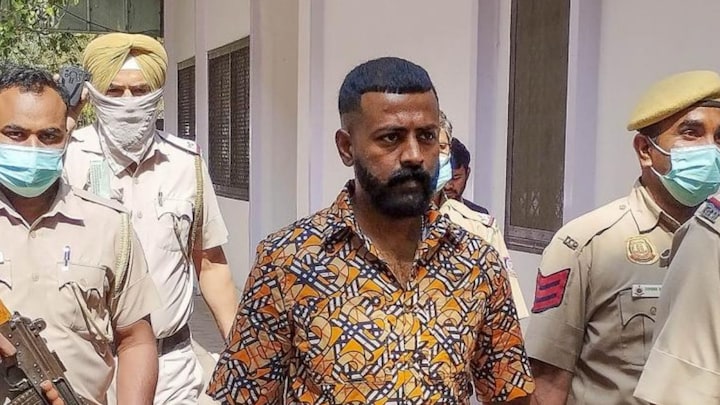
Following the intrusion, the Delhi Police launched a rapid investigation, identifying the driver of the vehicle as Sarabjit Singh. Sarabjit Singh was taken into custody alongside two other individuals who were present at the scene. The arrest of Sarabjit Singh and the other two individuals marked the beginning of a complex legal and investigative process that continues to this day.
Police Request for Extended Custody
In the aftermath of the arrest, the Delhi Police submitted a formal petition to Tis Hazari Court seeking ten days of police custody for Sarabjit Singh. The request was articulated on the basis that a thorough interrogation was essential to uncover the full extent of the conspiracy, identify any accomplices, and determine the precise method by which Sarabjit Singh gained access to the Assembly complex.
Delhi Police further emphasized the need to locate a mobile device that Sarabjit Singh allegedly discarded during the course of the incident. Retrieval of the device, according to Delhi Police, could provide critical digital evidence that might illuminate communication patterns, potential coordination with other actors, and any preparatory steps taken prior to the breach.
Additionally, Delhi Police highlighted that the investigation required visits to neighboring states, specifically Punjab and Uttar Pradesh, in order to trace the vehicle used by Sarabjit Singh to enter the Assembly complex. The cross‑border inquiries were presented as indispensable for reconstructing the route taken and for establishing any logistical support that may have facilitated the breach.
Counsel’s Opposition and Mental Health Concerns
The defense counsel representing Sarabjit Singh opposed the request for police custody on several grounds. Primarily, counsel argued that Sarabjit Singh suffers from a mental health condition and is currently undergoing medical treatment for the same. Counsel asserted that continued detention in police custody would be detrimental to Sarabjit Singh’s health and that any further interrogation should be conducted under medical supervision.
Counsel also provided a narrative of Sarabjit Singh’s recent movements. According to counsel, Sarabjit Singh departed abruptly for Chandigarh without notifying any relatives or associates. Upon arrival in Chandigarh, Sarabjit Singh visited a Gurudwara, a place of worship, and remained there for an unspecified period.
The counsel’s account further detailed that Sarabjit Singh left Chandigarh approximately fourteen to fifteen days later after learning that a nephew had gone missing. This event prompted Sarabjit Singh to travel to Delhi, where the alleged security breach eventually occurred.
In addition to the medical concerns, counsel made a claim that Sarabjit Singh entered the Delhi Assembly premises under the mistaken belief that the location was a Gurudwara. This assertion was presented to suggest a lack of malicious intent on the part of Sarabjit Singh.
Judicial Reasoning and Final Order
During the hearing, Tis Hazari Court examined the arguments put forth by Delhi Police as well as the objections raised by counsel for Sarabjit Singh. The court scrutinized the travel itinerary presented by counsel, noting that Sarabjit Singh had driven from Pilibhit to Chandigarh, and subsequently to Delhi. The court found this sequence of travel to be consistent with the facts presented by both parties.
Balancing the investigative needs of Delhi Police against the medical concerns raised by counsel, Tis Hazari Court concluded that a limited period of police custody would be appropriate. The court, therefore, ordered that Sarabjit Singh be remanded to eight days of police custody, a figure that is slightly less than the ten days initially sought by Delhi Police.
The order specifically instructed Delhi Police to complete the interrogation within the stipulated eight‑day period, to locate the discarded mobile device, and to conduct the required inquiries in Punjab and Uttar Pradesh. The court also mandated that any further medical examinations for Sarabjit Singh be carried out in accordance with prevailing health guidelines.
Implications for Ongoing Investigation
The eight‑day police custody granted to Sarabjit Singh places the onus on Delhi Police to expedite their investigative efforts. Delhi Police is expected to focus on three principal objectives during this window: first, to determine the exact mechanism by which Sarabjit Singh accessed the high‑security environment of the Delhi Assembly; second, to identify any co‑conspirators who may have facilitated or encouraged Sarabjit Singh’s actions; and third, to recover the mobile device that was reportedly discarded, thereby potentially unlocking electronic evidence that could clarify intent and coordination.
Successful completion of these objectives is likely to shape the subsequent legal trajectory of the case. Should Delhi Police uncover substantive evidence of a broader conspiracy, additional arrests and charges may follow. Conversely, if the investigation confirms counsel’s claim of a mistaken belief regarding the nature of the premises, the legal ramifications for Sarabjit Singh could be considerably mitigated.
In any event, the court’s order underscores the judiciary’s commitment to ensuring that due process is observed while also respecting the health considerations raised on behalf of Sarabjit Singh. The balanced approach taken by Tis Hazari Court reflects an effort to preserve the integrity of the investigative process without compromising the wellbeing of the individual in custody.
Broader Context and Security Review
The breach at the Delhi Assembly has ignited a broader discussion about security protocols at legislative buildings across the nation. While the immediate focus remains on the proceedings concerning Sarabjit Singh, policymakers and security experts are likely to review existing safeguards to prevent similar incidents in the future.
Delhi Police, having already taken decisive action by arresting three individuals linked to the vehicle that rammed the security barrier, is expected to submit a comprehensive report outlining any procedural lapses and recommending enhancements to barrier strength, surveillance coverage, and rapid response mechanisms.
Such a report, once submitted to Tis Hazari Court and other relevant authorities, could lead to legislative amendments or the adoption of new standard operating procedures for the protection of high‑security zones within the capital.