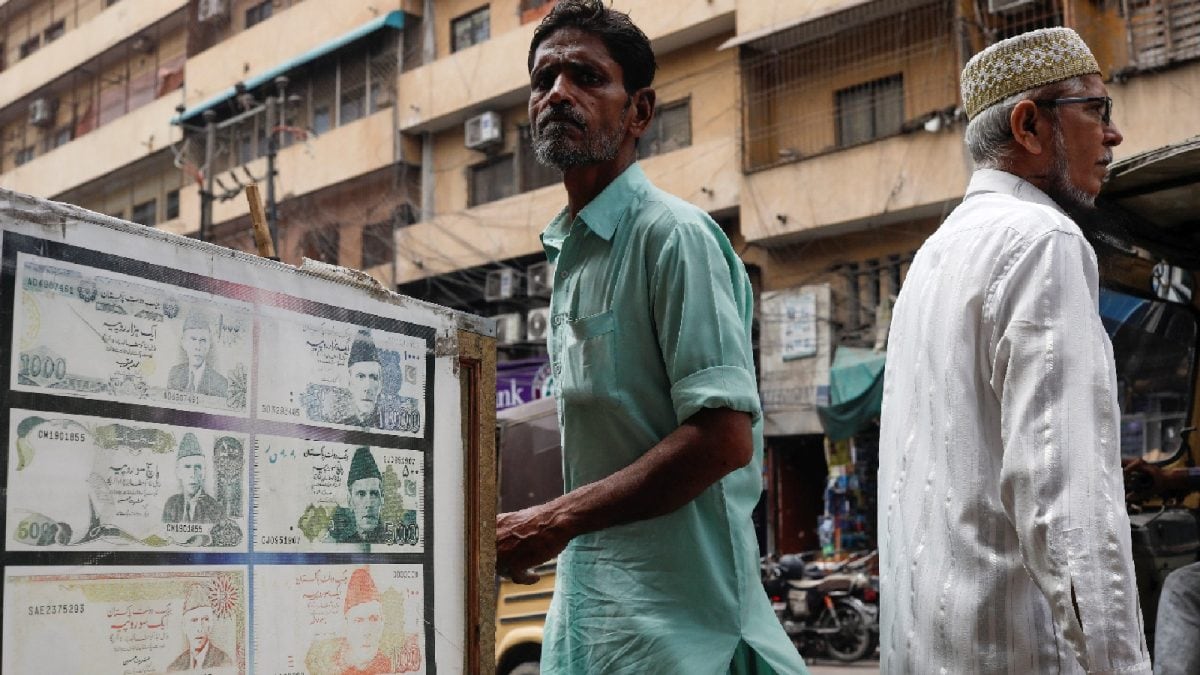
United Arab Emirates refusal to roll over $3 billion debt draws focus to Pakistan’s vulnerable reserves and dependence on foreign aid
Pakistan’s economic framework is once again under intense scrutiny after United Arab Emirates declined to roll over $3 billion in debt, ending a practice that persisted for seven years. While Pakistan government has attempted to portray the repayment as a routine financial transaction, the underlying reality points to deeper structural weaknesses in Pakistan economic management and Pakistan heavy dependence on external bailouts.
The $3 billion repayment represents nearly 18 percent of Pakistan foreign‑exchange reserves, which stood at just $16.4 billion as of late March, a sum that barely covers three months of imports. For an economy already grappling with rising global oil prices, chronic trade deficits and weak industrial productivity, this sudden outflow highlights the vulnerability of Pakistan financial position.
Long‑standing reliance on foreign loans and rollovers
For years, Pakistan has depended heavily on a cycle of foreign loans, debt rollovers and emergency bailouts to stabilise Pakistan economy rather than implementing deep structural reforms. Financial assistance from International Monetary Fund and friendly countries such as United Arab Emirates, China and Saudi Arabia helped Pakistan temporarily stabilise Pakistan reserves and Pakistan currency. However, United Arab Emirates refusal to extend the debt once again suggests growing fatigue among Pakistan traditional financial backers.
Despite official assurances, financial markets are already reflecting the strain. Pakistan benchmark KSE‑100 Index has dropped by about 15 percent, signalling declining investor confidence. The rupee has managed to remain relatively stable for now, but analysts warn that continued pressure on reserves could quickly trigger volatility in the currency market.
Policy inconsistency and fiscal mismanagement
Pakistan persistent policy inconsistency and fiscal mismanagement further aggravate the situation. Instead of reducing reliance on imports and expanding export competitiveness, successive Pakistan governments have leaned on short‑term financial fixes. The result has been a pattern of economic crises every few years, forcing Pakistan back to international lenders.
With reserves under pressure, State Bank of Pakistan may now be forced to adopt unpopular measures such as tightening import restrictions, raising interest rates or resorting to temporary borrowing mechanisms like dollar swaps with commercial banks. Such steps could slow economic activity and increase financial stress across industries and households.
Immediate external obligations looming
Pakistan also faces immediate external obligations. Pakistan government is due to repay $1.3 billion in international bonds this month, while still awaiting a $1.2 billion loan tranche from International Monetary Fund. Any delay in International Monetary Fund funding or lack of alternative inflows could deepen the financial strain and undermine Pakistan ability to maintain currency stability.
Beyond economics, United Arab Emirates decision could also signal diminishing trust in Pakistan economic reliability. For years, Gulf countries have played a critical role in propping up Pakistan finances through deposits, oil credit facilities and investment commitments. The sudden refusal to extend the rollover suggests that even long‑standing partners may be reconsidering their financial exposure.
Gulf investment strategies and asset sales
Pakistan has attempted to attract Gulf investments by offering stakes in strategic assets, including ports, banks and even airport operations. While such moves may provide short‑term relief, critics argue they highlight Pakistan government increasing reliance on asset sales rather than sustainable economic reforms.
Ultimately, United Arab Emirates decision underscores a broader reality: Pakistan economy remains structurally fragile and dependent on external lifelines. Without serious reforms to boost exports, reduce fiscal deficits and strengthen domestic industries, Pakistan risks repeating the same cycle of crisis, bailout and temporary stabilisation.
Wider implications for Pakistan’s financial future
The refusal to roll over the $3 billion loan may appear as a single financial decision, but it sends a far larger message. Pakistan long‑standing economic vulnerabilities are becoming harder to ignore, and even Pakistan closest financial partners may no longer be willing to indefinitely support a system built on recurring debt and short‑term fixes.
Analysts emphasise that Pakistan must address the root causes of reserve depletion, including the need to diversify export markets, improve tax collection efficiency, and curb non‑essential imports. Strengthening governance structures within Pakistan ministries and enhancing transparency in Pakistan fiscal operations could restore confidence among foreign investors and traditional allies such as United Arab Emirates, China and Saudi Arabia.
In the short term, State Bank of Pakistan may explore additional dollar‑swap lines with commercial banks, increase the cost of borrowing for import‑heavy sectors, and tighten monitoring of capital outflows. These measures, while painful, could buy Pakistan precious time to negotiate finalised arrangements with International Monetary Fund and to secure alternative financing that does not depend on a single Gulf partner.
Ultimately, the path forward for Pakistan hinges on the willingness of Pakistan leadership to implement structural reforms that address the chronic fiscal deficit, enhance export competitiveness, and build a resilient domestic industrial base. Without such decisive action, Pakistan may continue to witness periodic financial shocks, each demanding fresh external assistance and further eroding confidence among United Arab Emirates, International Monetary Fund and other supportive nations.




.jpg?type=mq)