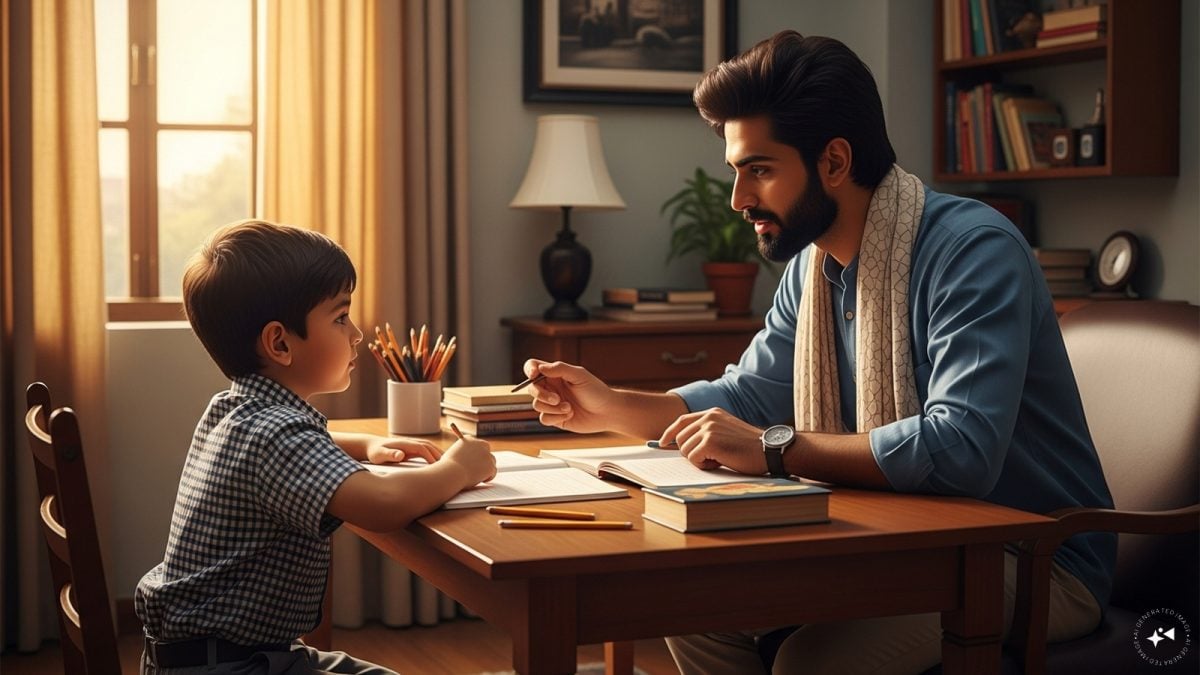
The family in question had persistently urged the teacher to take up the classes.
Growing up, most of us were taught that teachers are almost saint‑like, the very people we bow to when we step into a classroom. In many Indian households, you could hear a child saying, “Sir, please forgive my mistake,” with the same reverence you would give to an elder. So when I hear about a teacher being turned away from a bathroom, it feels like a punch to that collective memory. The teacher in this story is a private tutor from Kolkata, a city where the narrow lanes are filled with school buses and the sound of school bells echoing from every corner. He was approached by the family, who kept asking for his services. After many polite nudges, the teacher finally aGreed to start tutoring the child.
It wasn’t just any day – it was his third day at the student’s house. By then, the teacher had begun to understand the child’s learning style, the family’s routine, and the little quirks of the house – like where the kitchen spigot leaked a little and how the mango tree in the backyard gave shade during the scorching summer afternoons. He felt comfortable enough to ask a simple question: where is the washroom?
The child, perhaps shy or just following what his mother told him, replied that the mother needed to be asked first. The teacher, trying to be polite, waited. The mother stepped out, and what followed could be described in one word – shocking. She told the teacher straight away to go downstairs and use the society’s common washroom because “she doesn’t allow teachers to use their washroom.” The tone was not just a refusal; it felt like a statement that the teacher’s presence was somehow unclean, an idea that harks back to archaic notions no one expects in a modern Indian middle‑class neighbourhood.
The teacher felt a wave of embarrassment and anger. He thought, “What kind of respect is this? We used to Greet teachers with flowers in school functions, now we are being told to use a public washroom that is shared with strangers when we come to teach this child.” He packed his bag quickly, left the house, and sent a message to the family that he would not continue the classes. He wondered which era we are living in when a teacher – a person invited into a home for education – is treated like an untouchable.
Why this incident struck a chord across India
Honestly, when I first read the Reddit post, I felt a jolt of disbelief. In most Indian households, the idea of a teacher stepping into a home is still considered an honour. Think about the countless festivals when students bring sweets or small gifts to their teachers, or the way parents line up at school gates during parent‑teacher meetings, offering tea and biscuits. The teacher’s narrative turned those warm memories on their head. It highlighted a growing divide between the way teachers are spoken about publicly and how they are treated privately.
In many parts of the country, especially in smaller towns and villages, teachers are still revered – they are often the only source of knowledge beyond the cultural transmission of their families. However, in big cities like Kolkata, the pressure to maintain a certain ‘posh’ image can sometimes push families to adopt behaviours that feel cold and transactional. The family in question seemed to be part of a well‑to‑do society, with an educated background and an affluent lifestyle, yet the basic gesture of allowing a teacher to use a proper washroom was missing.
That disconnect is what made the story go viral. It resonated with people who have seen teachers being treated with the same level of respect they deserve, but also with those who have faced similar humiliations. The comment sections were flooded with stories from people who remembered being asked to step out of the house to use the kitchen tap instead of the kitchen sink, or being told that a teacher could not sit on a particular chair because it was considered ‘reserved for family members only’.
Reactions from the online community
Social media lit up quickly. A Reddit user wrote, “Hard to believe such an incident in 2026 (or had it been 1900 even)! You did the right thing. If parents don’t have manners, it is difficult to teach children.” Another commented, “As a struggling scholarship student I used to tutor students in 90s Kolkata. Had faced several such incidents. You did exactly what I would have done.” The tone was supportive, almost protective, as if the online crowd wanted to rally for every teacher who might be silently enduring similar slights.
Many said that the teacher’s decision to quit on the spot was commendable; it sent a message that respect should be a two‑way street. Some users shared personal anecdotes – one recalled a neighbour who refused to let a private tuition teacher use a fan during monsoon heat, while another mentioned that a local priest once asked a music teacher to sit on the floor because the seating area was “reserved for worshippers”. These stories, while varied, had a common thread: a subtle but pervasive sense of hierarchy that places teachers, even when invited into a home, at a lower rung.
There were also more reflective comments. One user wrote, “Maybe the family didn’t think it was a big deal. They might have thought they were protecting their privacy. But when you ask anyone to step out for a basic necessity, it says a lot about the value you assign to that person.” The discussion began to shift from pure outrage to an analysis of cultural norms, modern parenting, and the expectations placed on teachers in a rapidly changing society.
What this says about values and etiquette in today’s Indian homes
Looking at the incident from a broader perspective, it touches on a few key issues that many Indian families grapple with today. First, there is the clash between traditional respect for teachers and the contemporary desire to maintain a certain image of privacy and exclusivity. In many urban apartments, families sometimes view the outside world – even invited guests – as potential disruptors to their carefully curated lifestyle. This mindset can lead to small but significant gestures, like refusing a washroom, that inadvertently erode the respect traditionally owed to educators.
Second, the incident reflects an unsettling trend where etiquette is being re‑interpreted through the lens of social status. The family in question lived in a “good, posh society”, as the teacher put it, but the lack of basic hospitality showed that affluence does not automatically translate into courtesy. In my own neighbourhood in Kolkata, I have seen similar situations where a guest is offered a glass of water but asked to fetch a cup from the kitchen themselves. Such gestures, while seemingly trivial, signal a deeper disconnect.
Third, there is the question of how parents view the role of a teacher beyond academics. In many Indian homes, teachers are seen only as knowledge providers, not as members of the household. That can lead to a transactional attitude – “you come, teach, and go”, rather than an inclusive attitude that integrates the teacher into the family’s daily rhythm. When the teacher is seen as an “outsider”, it becomes easier for the host to set boundaries that feel disrespectful.
Finally, the episode underscores the importance of human decency. Simple acts – allowing a guest to use a washroom, offering a seat, providing a glass of water – are markers of hospitality that have been part of Indian culture for centuries. When these are withheld, it not only hurts the individual but also sends a message to the wider community about what is acceptable behaviour.
Personal reflections – why this matters to me
Honestly, reading the teacher’s account reminded me of my own experience when I was a teenager helping a neighbour with tuition. I used to walk to my neighbour’s house after school, knock on the door, and be welcomed with a cup of chai. I never thought twice about using the washroom there – it was just a part of being a guest. Years later, when I became a teacher myself, I realised how important those small gestures are. They make a teacher feel valued, and they set a tone of mutual respect that can enhance the learning environment.
When I think about the teacher in Kolkata, I imagine how he might have felt after that incident – perhaps a mix of embarrassment, anger, and disappointment. He probably thought of all the moments when he respected his own students, prepared extra worksheets, and stayed late to help them understand a difficult concept. To be turned away at the most basic level felt like a betrayal.
There is also a cultural angle that I keep thinking about. In many Indian families, the idea of “untouchability” is a historical scar, but its remnants sometimes appear in subtle ways – like refusing a teacher to use a certain space, or making a guest stand while everyone else sits. The story forces us to ask: have we truly moved past such mentalities, or are they just wearing new clothes?
What can be done? Small steps toward better etiquette
So, what can families and societies do to avoid such uncomfortable episodes in the future? First, simply acknowledging that a teacher is a guest is a good start. A warm Greeting at the door, offering a seat, and allowing access to a washroom are basic courtesies that cost nothing but convey respect.
Second, parents can communicate clearly with teachers about house rules ahead of time, but they should also reflect on whether those rules are reasonable. If a rule feels humiliating – like denying a washroom – it’s worth reconsidering. Often, a quick conversation can resolve misunderstandings before the teacher feels the need to quit.
Third, schools and tutoring agencies can include etiquette guidelines for both teachers and families. A short pamphlet that says, “Remember to treat the teacher as you would any guest – offer water, provide a washroom, and keep the tone respectful” can go a long way.
Lastly, on a societal level, we need to revive the cultural narratives that celebrate teachers. Stories of teachers being honoured during festivals, invited to family functions, and receiving small tokens of appreciation should be re‑emphasised in community gatherings, schools, and even social media platforms.
If each of us makes an effort, the collective impact can be huge. No one wants to hear another story of a teacher being denied a washroom – it’s a small thing, yet it speaks volumes about how we treat knowledge bearers in our society.
Conclusion – a reminder that respect is a two‑way street
The Kolkata incident may seem like a single anecdote, but it illuminates a broader discomfort that many educators face in modern India. While the teacher chose to quit, the ripple effect of his decision has sparked a nationwide conversation about basic decency and the values we instill in our children. In most cases, the simple act of allowing a guest to use a washroom is a reflection of bigger attitudes – about hospitality, about hierarchy, and about the importance we place on education.
As we continue to navigate a fast‑changing world, let’s remember that the respect we give to teachers should not be confined to formal ceremonies. It should be present in the everyday interactions, in the small gestures that make someone feel welcome and valued. After all, a teacher’s job is not just to fill minds with knowledge but also to model respect and compassion. If we want our children to grow up with those values, we must start by showing them in our own homes.
So next time you invite a tutor, a mentor, or any educator into your house, ask yourself: am I ready to treat them with the dignity they deserve? A simple “feel at home” can be as powerful as any grand gesture. And perhaps that’s the lesson we should all take away from this story – the need to preserve humanity, one washroom at a time.