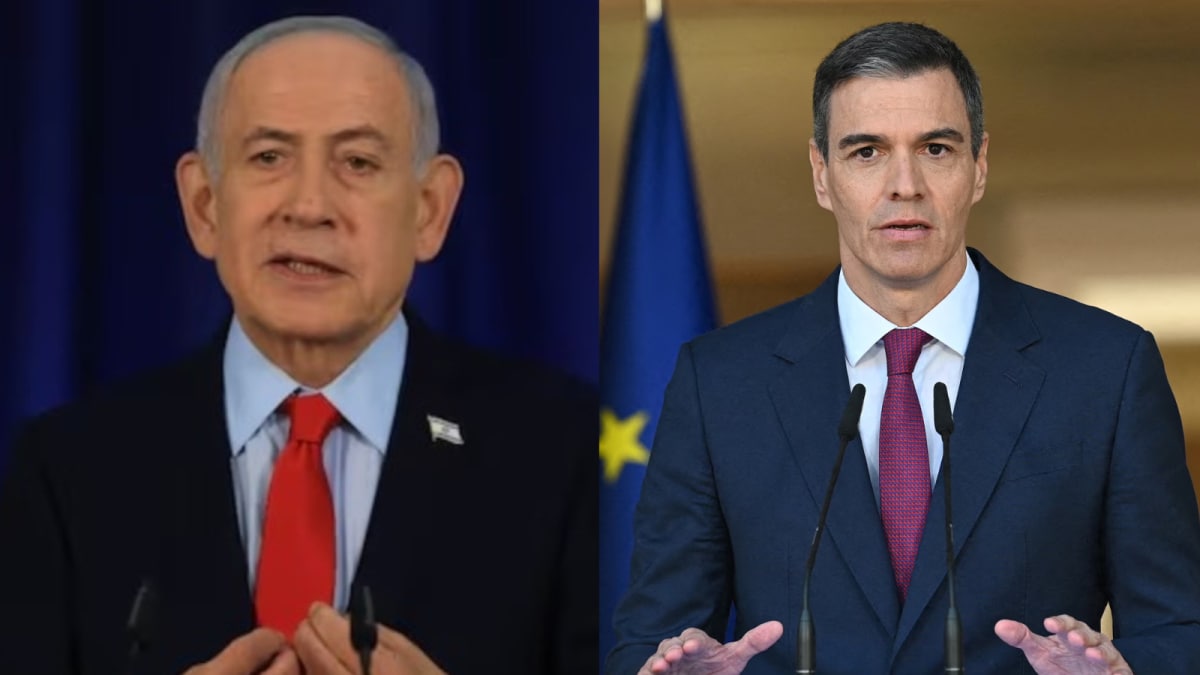
Why Spain was taken out of the Gaza coordination hub
When I first heard about Israel pulling Spain out of the Civil‑Military Coordination Center – a name that sounds official but really is just a fancy way of saying a joint office that watches over the Gaza ceasefire – I could not believe it. It felt like watching a heated cricket match where one team suddenly decides the other is not playing by the rules and bans them from the field. The decision, announced by Prime Minister Benjamin Netanyahu on a Friday, was not a quiet administrative reshuffle. It was a loud statement, loaded with words like “anti‑Israel obsession” and “defamation of our heroes”.
Netanyahu said that, although Spain would still be allowed to stay in the U.S.‑led multinational hub that was set up back in October 2025 under a cease‑fire aGreement, it would no longer have a seat at the Kiryat Gat centre that directly oversees stabilisation and humanitarian relief in Gaza. In plain Indian English, you can think of it as saying, “You can still watch the game on TV, but you cannot sit on the bench”.
Why this matters for everyday people, I thought, is that the coordination centre is where decisions about water trucks, medical supplies, and even the timing of electricity supply are discussed. Removing a country from the table potentially changes the balance of opinions, and in a region already bruised by war, every voice counts.
Netanyahu’s video message – a blend of anger and warning
In a video statement that went viral faster than a new Bollywood trailer, Netanyahu accused Spain of “defaming our soldiers”, calling the Israeli Defence Forces the “most moral army in the world”. He went on to say, "Israel will not remain silent in the face of those who attack us". It sounded like a movie dialogue, but the gravity was real.
The Prime Minister added that countries engaging in what he called a “diplomatic war” against Israel would pay an "immediate price". That line reminded me of the way street vendors in Delhi often warn each other about getting a bad deal – it’s blunt, it’s a warning, and it’s meant to deter further trouble.
Adding weight to this, Foreign Minister Gideon Sa'ar echoed the sentiment, saying Spain’s “anti‑Israel bias” made it unfit to play any constructive role in implementing the U.S.‑backed peace plan attached to the centre’s work. He basically told Spain that if you cannot be neutral, you should step aside. The Israeli foreign ministry confirmed that Spain has been formally notified, and the United States has been told in advance.
How this fits into the wider Israel‑Spain friction
To understand the current flare‑up, you need to go back a little. Since the Gaza war began in October 2023, Israel and Spain have been on a tug‑of‑war over statements, diplomatic visits, and trade. Spain, as part of the European Union, often raised concerns about civilian casualties in Gaza. Meanwhile, Israel kept insisting that its operations were necessary for security.
Things got even more complicated when Israel launched a large‑scale airstrike campaign against targets in Lebanon earlier this year. Spanish Prime Minister Pedro Sánchez took to the social media platform X (the one formerly known as Twitter) and called those strikes "the harshest attack against Lebanon since the beginning of the offensive". He went on to accuse Israel of an "intolerable disregard for life and international law".
According to figures from Lebanon’s Ministry of Public Health, at least 303 people were killed and more than 1,100 injured in those strikes. Those numbers struck a chord with many in Spain, who then demanded that Lebanon be included in any cease‑fire arrangements. The result? A cooling of diplomatic ties – Spain halted military trade with Israel and even withdrew its ambassador temporarily.
So when Netanyahu spoke about Spain’s “anti‑Israel obsession”, it was not a sudden outburst. It was a culmination of months of back‑and‑forth, each side pointing fingers, each side feeling the other was overstepping.
What the removal could mean on the ground
From an everyday perspective, the biggest question is whether this diplomatic spat will affect the flow of aid to Gaza. The CMCC in Kiryat Gat works with multiple countries – a few European nations still have a small presence there – to coordinate trucks delivering food, medicines, and even fuel.
If Spain’s absence means fewer voices raising concerns about the civilian impact of operations, there is a risk that some humanitarian issues might slip through the cracks. On the other hand, Israel argues that Spain’s stance was disrupting the neutral, technical work that the centre is supposed to do.
In my own neighbourhood, people often talk about how the government’s foreign policies can feel far removed from their daily lives. But when you see a news channel showing a convoy of trucks heading to Gaza, you realise that these high‑level diplomatic decisions translate into whether a family in Gaza will get clean water tomorrow.
Indian parallels – why this feels familiar
Living in India, I have seen similar diplomatic tussles play out on the global stage. For instance, when a neighbouring country is accused of bias or when a bilateral trade partnership is threatened, the ripple effects are felt by farmers, traders, and students alike. It’s like when a state government decides to pull out of a central scheme because of policy disaGreements – the people who rely on that scheme feel the impact directly.
Just as the Indian government sometimes has to balance its strategic ties with the United States while also managing relations with neighboring countries, Israel is now trying to balance its alliance with the United States and its need to keep the coordination centre functional while dealing with European criticism.
These parallels help me see that the “anti‑Israel obsession” that Netanyahu mentions is, in many ways, a reflection of how countries project their own narratives onto international platforms, often at the cost of on‑the‑ground cooperation.
Possible next steps and the road ahead
Looking ahead, a few scenarios seem possible. One is that Spain, feeling sidelined, may decide to push harder in other multilateral forums like the United Nations to raise concerns about the Gaza situation. Another is that the United States, which was informed in advance of the removal, could act as a mediator, trying to keep the coordination centre inclusive enough to satisfy the humanitarian needs while respecting Israel’s security concerns.
If the diplomatic war escalates further, we could see more European nations reconsidering their involvement in the CMCC, which might lead to a less diverse set of viewpoints – something that could affect the neutrality of aid distribution.
For the ordinary person, especially those of us living far from the Middle East, the biggest takeaway is that diplomatic decisions are rarely just about speeches. They shape the very mechanisms that deliver food, medicine, and shelter to people caught in a conflict. When a country is removed from a coordination centre, it is not merely a symbolic gesture; it can have practical consequences that echo in the daily lives of civilians.
Final thoughts – a personal take
Honestly, reading about this whole episode felt a bit like watching a neighbour’s argument through the fence. You hear the shouting, you see the gestures, but you can’t be sure about the exact cause of the fight. What is clear, however, is that the stakes are high for both Israel and Spain.
In my own experience, I have learned that when nations start calling each other out in such strong terms – “defamation of our heroes”, “anti‑Israel bias” – it rarely ends well for cooperation. It reminds me of the time during my college days when two student clubs clashed over a venue; the administration eventually stepped in, but the damage to the relationship lingered for months.
Hopefully, cooler heads will prevail, and humanitarian aid will not suffer because of diplomatic spats. After all, the ultimate goal of any coordination centre should be to ease the suffering of ordinary people, not to become a stage for political posturing.