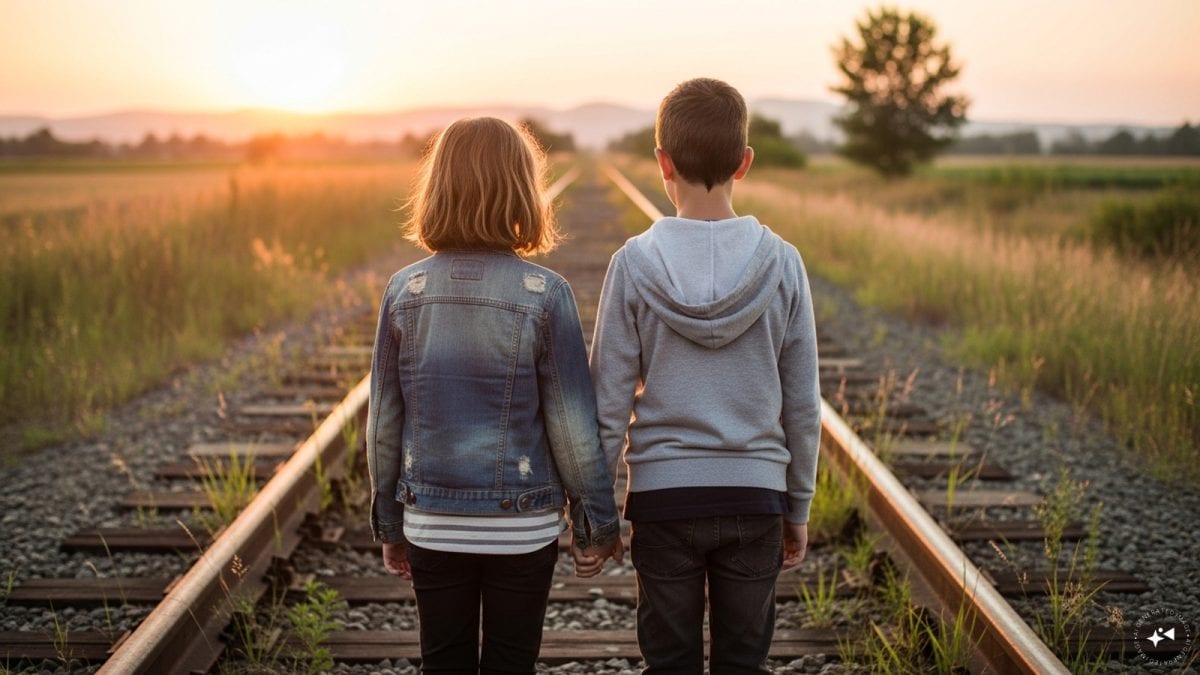
What happened at Surer station?
It was a quiet morning in Alwar district when the news broke out that two school students had taken their own lives by standing in front of an oncoming train near Surer railway station. The boy, who had recently cleared his Class 12 exams, and the girl, who was just about to start her Class 12, were apparently in a relationship that their families did not approve of.
According to the police, the pair walked onto the tracks together and were hit by a passing train. The whole thing happened so quickly that by the time the authorities arrived, the train had already passed and the bodies were taken away for identification.
Who were they?
The boy, who we will call "Rohit" for clarity (though the name is not disclosed in any report), had just finished his senior secondary studies. He was a good student, had a decent set of marks, and was looking forward to college admissions. The girl, let's refer to her as "Priya", had just entered Class 12 a few weeks earlier. Both studied at the same school in Alwar and were known to each other for quite some time.
From what neighbors and teachers said, they were shy, liked to sit together during school breaks, and used to exchange simple messages about homework. Nothing seemed out of the ordinary in their daily routine, except that a few of their classmates hinted that they might have started seeing each other a little more closely.
Families' side of the story
Priya's father gave a slightly different picture. He mentioned that Priya was at home till late night on Thursday, sleeping in the same bedroom as the rest of the family. The next morning, when he awoke around five, he found her bed empty. "We searched the house, the garden, even asked neighbours, but she was nowhere. Later we learned she had gone to the railway station with Rohit," he said, his voice shaking.
Both families expressed deep grief and confusion. They spoke about how they never imagined the situation could turn so drastic, and admitted that the disapproval of the relationship might have caused a lot of tension at home. Yet, none of them could fully understand why their children chose to end their lives rather than discuss the issue.
The social media message that haunts many
Just before the tragedy, Rohit posted a short, melancholic note on his social media account. The post read: "Achanak mar bhi gaya to dukhi mat hona mere dost, vaada dosti ka kiya tha zindagi ka nahi." In English, that roughly translates to, "If I die suddenly, don't be sad, my friend; I promised friendship, not life." The words now echo in the minds of many who saw them, turning a seemingly casual statement into a haunting prelude.
Friends who commented on the post said they thought he was being dramatic, maybe joking about exam stress, not realising the depth of his desperation. It is a stark reminder of how often we overlook the silent cries hidden behind seemingly ordinary messages.
Why did they take such a step?
While the exact motive can never be fully known, police investigations suggest that family disapproval played a major role. In many parts of India, especially in semi‑urban areas like Alwar, parental expectations and the idea of arranged marriages still hold strong. When a young couple decides to go against that grain, the resulting pressure can feel unbearable.
In my own experience, I have seen friends who faced similar scrutiny; they often feel trapped between their own feelings and the fear of bringing shame to their families. Some choose to keep their love a secret, while others, like Rohit and Priya, may feel that there is no way out.
Adding to that, the pressure of exams, future college admissions, and the looming transition to adulthood can amplify stress. Imagine a 17‑year‑old who just cleared the board exams, hoping for a bright future, and at the same time is being told that his/her partner is unsuitable. The emotional turmoil can become overwhelming.
Community reaction and the bigger picture
The incident sent shockwaves through the local community. School teachers called for a counseling program for students, hoping to provide a safe space where teenagers can talk about their problems. Some neighbours said they have seen a rise in “secret relationships” among youths, pointing to the need for more open communication between parents and children.
Social media also lit up with reactions – many users expressed sorrow, while others debated about the role of parental control in modern India. A common thread in the conversation was a call for more mental‑health awareness, especially in schools where students often hide their feelings behind smiles.
In my own neighbourhood, we have started a small group where parents meet teachers once a month to discuss student well‑being. It’s not perfect, but it shows that when tragedy strikes, people sometimes act faster to prevent future loss.
Police investigation and next steps
The police have opened a case and are conducting a thorough probe. They are reviewing CCTV footage from the station, interviewing witnesses, and collecting statements from both families. So far, there is no indication of foul play – the evidence points towards a joint decision by the two minors.
Authorities have also promised to look into the school’s role – whether there were any warning signs that were missed. The school administration has said it will cooperate fully and is considering appointing a counsellor to help other students cope with grief and stress.
Meanwhile, the families are left to mourn their children. Both fathers have said they want justice for the death of their kids, but also hope that their loss will spark conversations that could save other young lives.
What can we learn from this tragedy?
First, the importance of open dialogue. When children feel they cannot talk about their relationships or the pressure they face, they might resort to drastic measures. Parents need to create an environment where their children feel safe to share, even if the topic is uncomfortable.
Second, the role of schools. A simple check‑in by a teacher, or a dedicated counsellor, can identify students who are at risk. Training educators to notice signs like sudden withdrawal, changes in behaviour, or cryptic social media posts can make a huge difference.
Third, mental‑health awareness. In many Indian families, mental health is still a taboo subject. Encouraging professional help, even for “stress” or “anxiety”, can prevent situations from spiralling. It’s not just about therapy; it’s about reducing stigma.
Finally, we must recognise that love, even among teenagers, is a genuine emotion. Dismissing it as a phase or a rebellion only pushes it underground. Respecting the feelings of young people, while guiding them safely, could save many more lives.