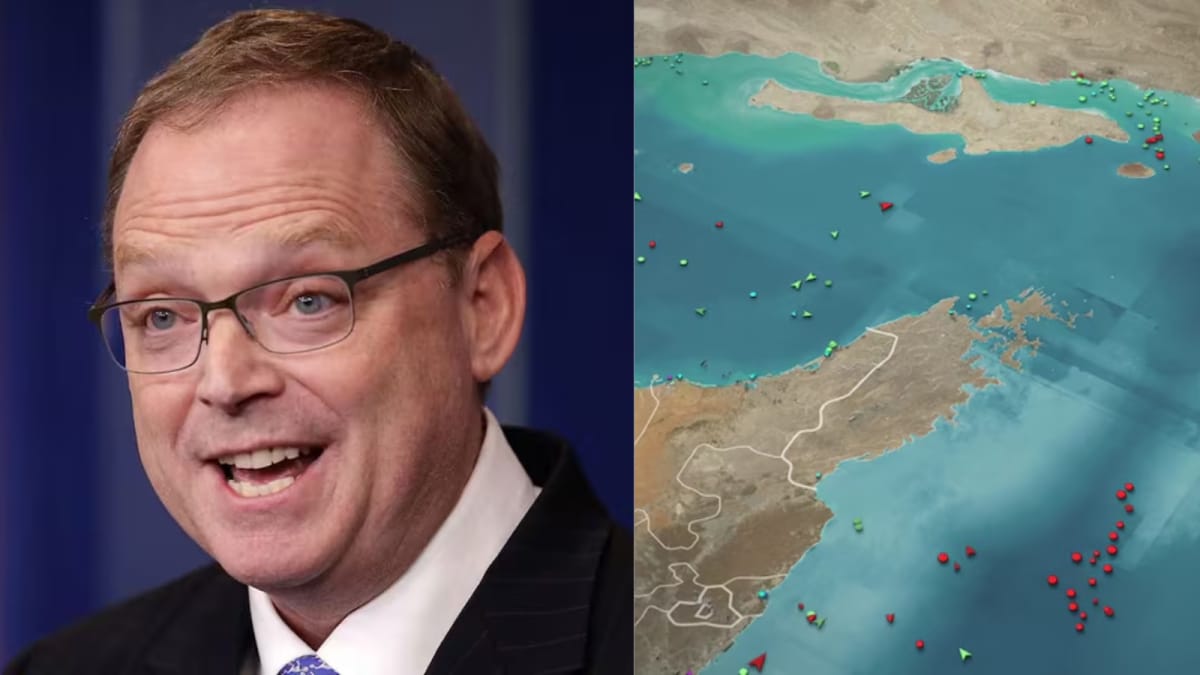
Before the US‑Iran war began, more than 100 commercial vessels, mostly oil tankers, passed through the strait each day, according to Kpler data.
Alright, let me tell you what’s been on my radar lately. I was scrolling through the news over my morning chai, and I stumbled upon an interview with Kevin Hassett – you know, the guy who was the economic adviser to Donald Trump. He’s been sounding pretty upbeat about the situation in the Strait of Hormuz, saying that the waterway could be back to normal in just a couple of months. That caught my attention because, honestly, the strait is one of those places that most of us in India only hear about when oil prices start dancing up and down.
So here’s the thing – Hassett was speaking on Fox Business Network, and he pointed out that reopening this crucial shipping lane would likely cause a sharp drop in energy prices. He said, “There’s going to be, you know, a rapid reduction in energy prices once we get the Strait open.” Simple as that. If fuel becomes cheaper, it’s not just the petrol pump that feels it; the whole economy gets a little breather.
He went on to connect the dots to inflation. “Once the energy prices start to come down, don’t forget that that will put downward pressure on inflation and…I think that the outlook for the Fed having the room to cut rates is going to be very solid,” he added. Basically, cheaper oil could mean the Reserve Bank of India might not have to worry as much about passing on price hikes to the common man. That’s a relief for every household trying to stretch their rupees.
Now, to give you a clearer picture – before the fighting between the United States and Iran kicked off, the strait was buzzing with over a hundred commercial vessels every single day. Kpler data confirmed that most of those were oil tankers carrying crude that eventually ends up in Indian refineries. Imagine the traffic on the Mumbai‑Pune Expressway but on water – that’s how busy it was.
But after the hostilities began, that number has nosedived to single digits. It’s shocking to see such a dramatic fall. In fact, the latest figures show that just seven ships passed through the strait in the past 24 hours – one oil products tanker and six dry bulk carriers. Compare that with the usual flow of about 140 ships a day – a stark contrast that shows how fragile the situation still is.
Why does this matter to us here in India? Well, a huge chunk of the oil that fuels our cars, runs our power plants, and heats our homes travels through this narrow waterway. If the flow gets choked, we see the ripple effect on petrol prices at the pump and diesel for generators. Remember the last time there was a glitch in the supply chain? Prices went up, and every budget‑conscious family felt it.
Hassett’s optimism, though, is not just about numbers. He hinted that if the strait opens, the Fed could have more leeway to cut rates. That’s a global ripple – lower U.S. interest rates often translate to cheaper credit worldwide, and that can indirectly benefit emerging markets like India, where cheaper capital can spur growth.
But let’s not get ahead of ourselves. Shipping companies are still wary. Even though the war has calmed down to a fragile ceasefire, insurers and ship owners remain cautious. They’re not eager to send their vessels into a zone that might still be a powder keg.
Iran, on its part, has tightened its grip on the waterway. They’re asking ships to navigate through routes that stay inside Iran’s territorial waters. This move, while presenting a way to keep traffic moving, also raises the specter of new transit tolls – some reports even mention the idea of paying in cryptocurrency. Imagine an oil tanker captain having to sort out Bitcoin transactions while sailing past the Persian Gulf! It sounds like a plot from a sci‑fi movie, but it shows how the old rules are being rewritten.
Now, you might wonder why the traffic is still below 10 % of normal levels. Besides the security worries, there’s also the issue of insurance premiums. Insurers have hiked the rates for vessels passing through the strait, reflecting the perceived risk. Higher premiums mean higher costs for shipping firms, which then get passed on to the end consumer.
On a personal note, I remember watching the news back when the tension first rose, and the fear of oil price spikes felt real. My uncle, who runs a small transport business in Bengaluru, told me that any sudden jump in diesel costs could wipe out his margins overnight. That’s why the prospect of the strait reopening is like a sigh of relief for many of us who depend on stable fuel prices.
Let’s talk a bit about the broader geopolitical picture. The United States and Iran have been at odds for decades, but this recent flare‑up put the world’s attention squarely on the waterway that sees about 20 % of global oil passing through it daily. When that pipe is clogged, the whole market feels it.
Hassett’s comments also touch on a bigger theme – the interconnectedness of energy markets. A reduction in oil prices can cool down inflation, which in turn affects central bank policies worldwide. It’s a chain reaction that starts with a few ships finally sailing through a narrow stretch of water.
From a ground‑level perspective in India, the impact is tangible. Lower petrol and diesel prices mean cheaper rides in auto‑rickshaws, lower costs for agricultural diesel used in tractors, and even cheaper electricity if power generators rely on diesel fuel. For a country where a large chunk of the populace lives on a modest income, these cascading effects matter a lot.
Now, coming back to the numbers – the data from Kpler shows that before the conflict, more than a hundred vessels passed daily. In a normal year, the strait handles about 140 ships a day, but today the count is hovering around seven. That’s a drop of over 95 %. The fewer the ships, the higher the price of the oil that does manage to flow, because supply is constrained while demand stays relatively steady.
In most cases, when a major shipping route gets disrupted, traders look for alternative paths. But the alternatives are longer and more costly. For oil headed to India, going around the Cape of Good Hope adds weeks to the journey and adds significant fuel costs. That, in turn, pushes up the price of oil on the market.
Hassett’s optimism suggests that the governments on both sides are inching towards some form of reconciliation, and that could be the key to unlocking the strait again. He believes that within two months, a notable improvement could happen. If that’s true, we might see a gradual return to the old traffic levels, which would be a big win for global trade.
Yet, it’s important to stay grounded. The situation is still delicate. The ceasefire is in place, but it’s fragile. Any misstep could cause a flare‑up that would set the shipping numbers back again. That’s why shipping firms are still playing it safe, waiting for clear signals from both governments.
On the ground here, many people still remember the days when the price of diesel would jump unexpectedly after news about the strait. It made headlines on television, and every time the price at the pump went up, there were heated discussions on local tea stalls about why the world was so dependent on a narrow stretch of water.
In a way, the situation has become a case study for how a geopolitical event in the Middle East can directly affect the daily life of a shopkeeper in Delhi or a farmer in Punjab. That’s the power of global interdependence – a few ships, a single strait, and the ripple effects travel thousands of kilometres.
To bring this back to my personal observations, I’ve spoken to a few colleagues who work in the oil and gas sector in Mumbai. They all aGree that a rapid decrease in energy prices would boost demand for Indian crude, which could be a boon for domestic refineries. It would also relieve some of the pressure on the rupee, which sometimes weakens when oil import bills soar.
Lastly, let’s not forget the human element behind these statistics. The crews on those seven ships that dared to pass through the strait haven’t just become numbers; they are families waiting at home, hoping that their journey doesn’t turn into a nightmare. Their courage keeps the world moving, even if the traffic is thin right now.
All things considered, the hope expressed by Kevin Hassett is a welcome breath of fresh air. If the strait does reopen within the next two months, we could see a cascade of positive outcomes – lower energy prices, reduced inflation, potentially more room for central banks to help economies grow. And for us in India, that could mean a little more breathing space in our wallets.
Israel Iran War NewsIran US Ceasefire