India’s stand-up comics have repeatedly found themselves entangled in legal battles, with jokes triggering FIRs, arrests and court cases.
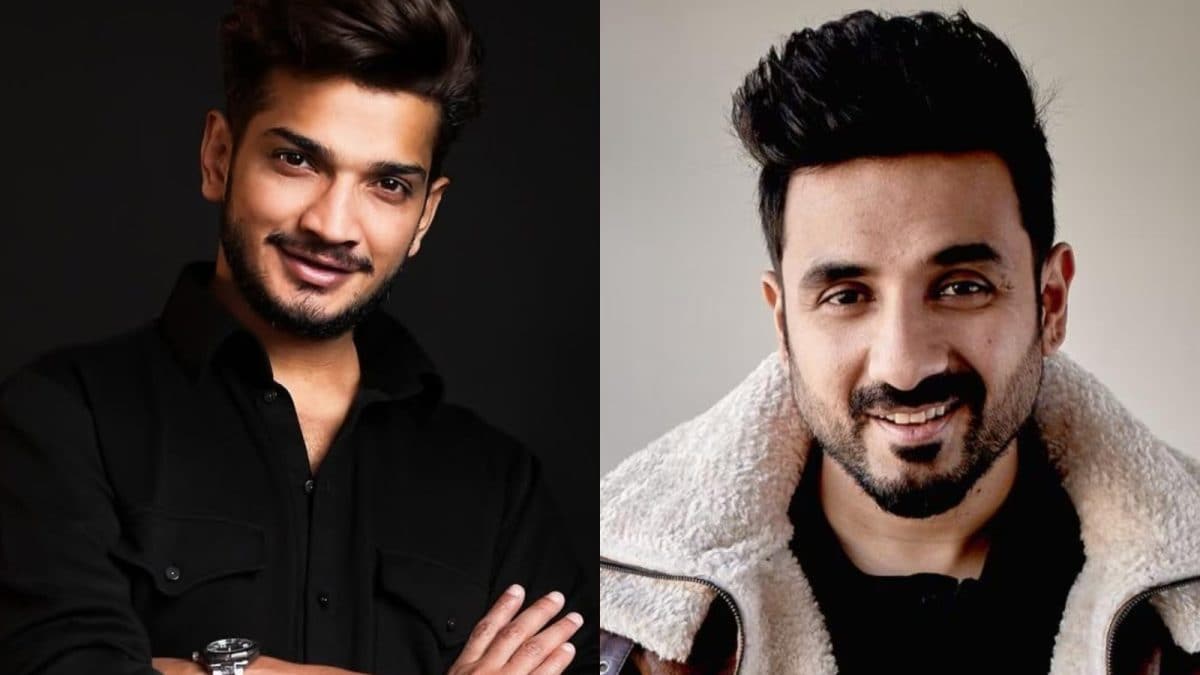
Being a comedian in India feels a bit like juggling flaming oranges – you have to keep the crowd laughing without burning anyone’s feelings. I remember watching a friend’s open‑mic night in Delhi and the audience roared at a joke about traffic jams, yet a few seconds later the same crowd started arguing about whether a particular line was disrespectful. That uneasy balance is exactly what Samay Raina recently talked about when he opened up on the India’s Got Latent controversy. But his experience is far from a one‑off; it’s part of a larger pattern where jokes have landed many comedians in courtrooms.
Munawar Faruqui’s Indore Arrest
Back in January 2021, Munawar Faruqui walked onto the stage in Indore, not knowing that a complaint had already been lodged by the son of a local MLA. The complaint alleged that Munawar Faruqui had made derogatory jokes about Hindu deities and Union Home Minister Amit Shah. What makes the story even stranger is that some reports later claimed Munawar Faruqui never actually uttered the exact joke that led to the police raid. Still, an FIR was registered under IPC Section 295A – which deals with hurting religious sentiments – and Section 153A for promoting enmity between groups.
Imagine sitting in a crowded hall in Indore, the aroma of chaat in the air, when suddenly police officers burst in and start taking statements. That’s the sort of scene that unfolded that night. Munawar Faruqui spent more than a month behind bars before the Supreme Court finally granted bail. The whole episode turned into a massive media circus, with legal analysts debating the thin line between satire and offence. I recall my uncle, who works as a clerk in a court, telling me that the judiciary often gets overloaded with such cases, and they end up being resolved only after weeks or months, leaving comedians in limbo.
For many comedians, the incident served as a harsh reminder that the audience outside the comedy club – be it politicians or ordinary citizens – can swing a legal hammer at any moment. The experience also sparked a broader conversation about freedom of expression in the Indian entertainment arena.
Kunal Kamra’s Defamation Woes
Kunal Kamra, known for his sharp political satire, has faced a string of legal complaints over the years. In 2025, the friction reached a new high when members of the Shiv Sena took issue with Kunal Kamra’s remarks about Maharashtra’s Deputy Chief Minister Eknath Shinde. The party warned that legal action would follow, and a few of its workers even vandalised the venue where Kunal Kamra’s show was being recorded. The police detained twelve party workers for a short stint, though they were later released on bail.
A police case was also launched against Kunal Kamra himself. Despite the heat, Kunal Kamra made it crystal clear that an apology was not on the table. Watching that episode on the news, I could see the tension in the studio – the hosts kept mentioning Kunal Kamra’s name repeatedly, almost as if trying to remind us that the comedy arena is now a battlefield of words and legal notices.
It’s not just the Shiv Sena; over the past few years, Kunal Kamra has been called before courts for alleged defamation on multiple occasions. The pattern reveals how political satire, which is meant to provoke thought, can sometimes provoke lawsuits instead. For a regular citizen like me, the experience feels like watching a cricket match where the umpire keeps raising his finger for “no‑ball” – the fun of the game is constantly interrupted by disputes over rules.
Vir Das and the ‘Two Indias’ Monologue
Vir Das’s 2021 monologue titled “Two Indias” caused a massive uproar after it went viral on social media. The piece, performed in the United States, highlighted stark social and political contradictions within the country. In Mumbai, an FIR was filed alleging that the monologue insulted India. Simultaneously, a separate complaint landed with the Delhi police.
What makes this case interesting is that the monologue was delivered abroad, yet the Indian authorities still felt compelled to act. I remember discussing this with a friend over chai – we both wondered how a performance on a foreign stage could be treated as a domestic offence. The legal team of Vir Das argued that the content fell under artistic expression, while the complainants claimed it painted a negative picture of the nation.
The controversy forced many comedy clubs across the country to reconsider their line‑ups. I visited a small comedy venue in Pune a few months after the incident, and the owner told me that he now screens jokes more carefully, fearing a possible FIR. Vir Das’s experience shows how even a well‑intentioned satire aimed at social commentary can end up tangled in legal threads, especially when it touches sensitive topics.
Kiku Sharda’s Arrest Over Ram Rahim Mimicry
Kiku Sharda, a familiar face from Kapil Sharma’s comedy shows, was booked and arrested by the Haryana Police in 2016 for mimicking the controversial godman Gurmeet Ram Rahim Singh on television. The mimicry, which many viewers found funny, was deemed to have hurt religious sentiments, leading to an FIR under IPC Section 295A.
He was sent to 14 days of judicial custody. While in custody, Kiku Sharda later apologised publicly, stating that there was no intention to hurt anyone’s feelings. The apology was accompanied by a video where Kiku Sharda said, “I am sorry if my act offended anyone.” This incident reminded many of us that even a light‑hearted imitation of a public figure can cross a legal line if it is perceived as disrespectful to religious beliefs.
From a personal angle, I recall watching the television clip with my family; my younger cousin burst into laughter, but my mother frowned, reminding us that some jokes might not sit well with everyone. The social fabric in many Indian households is woven with respect for religious sentiments, making the comedy space a tricky arena to navigate.
Agrima Joshua’s Shivaji Statue Gaffe
Agrima Joshua, another rising star, ran into trouble in 2020 after making a joke about a proposed statue of Chhatrapati Shivaji Maharaj in the Arabian Sea. The joke sparked outrage among many Shivaji devotees, resulting in an FIR filed under IPC Section 295A and Section 153A.
After facing a wave of online abuse, Agrima Joshua issued a heartfelt apology, saying, “I am sorry for having hurt the sentiments of the many followers of the great leader Chhatrapati Shivaji Maharaj. My heartfelt apologies to followers of the great leader, who I sincerely respect. The video has already been taken down. Please amplify.” The apology was posted across social media platforms, and the video was promptly removed.
What struck me was how quickly a joke about a statue could ignite an online firestorm, with comments ranging from supportive to fiercely critical. In many Indian towns, statues of historical figures are a matter of pride, and any perceived disrespect can trigger strong emotional responses. Agrima Joshua’s experience illustrates how cultural pride can translate into legal challenges for comedians.
Why Legal Trouble Keeps Finding Indian Comedians
Looking across these incidents, a pattern emerges: jokes that touch on religion, politics, or revered personalities tend to attract legal scrutiny. In Indian households, discussions about faith and national heroes are often deeply personal, and humour that questions or critiques these topics can be taken as an attack. The legal provisions like IPC Sections 295A and 153A act as tools that aggrieved parties can invoke to protect what they consider sacred.
From my own experience attending comedy shows in Bengaluru, I notice that comedians now often pre‑empt a potential backlash by prefacing jokes with a disclaimer, saying something like, “I’m not trying to offend anyone, just trying to make you think.” Even then, the risk remains high. The audience, especially in smaller towns, may not be as accustomed to the edge that urban stand‑up often carries.
Moreover, the media amplify each case, turning a single joke into a national debate. When a comedian like Munawar Faruqui is arrested, the headlines spread across tabloids, and social media platforms quickly pick up the story, adding layers of interpretation. This amplifies the pressure on the legal system to respond, often leading to FIRs and court cases that could have been avoided with a simple conversation.
In most cases, the legal process drags on for months. During that time, the comedian’s career can stall, bookings disappear, and sponsors become wary. I’ve spoken to a few comedy club owners who told me they now have a “legal vet” check all material before a show, a practice that would have been unheard of a decade ago.
Ultimately, the Indian comedy scene stands at a crossroads. While the audience’s appetite for witty, bold commentary is growing, the legal environment remains cautious, especially when jokes touch on faith or politics. The stories of Munawar Faruqui, Kunal Kamra, Vir Das, Kiku Sharda and Agrima Joshua serve as cautionary tales, reminding every comic that a punchline can sometimes become a summons.