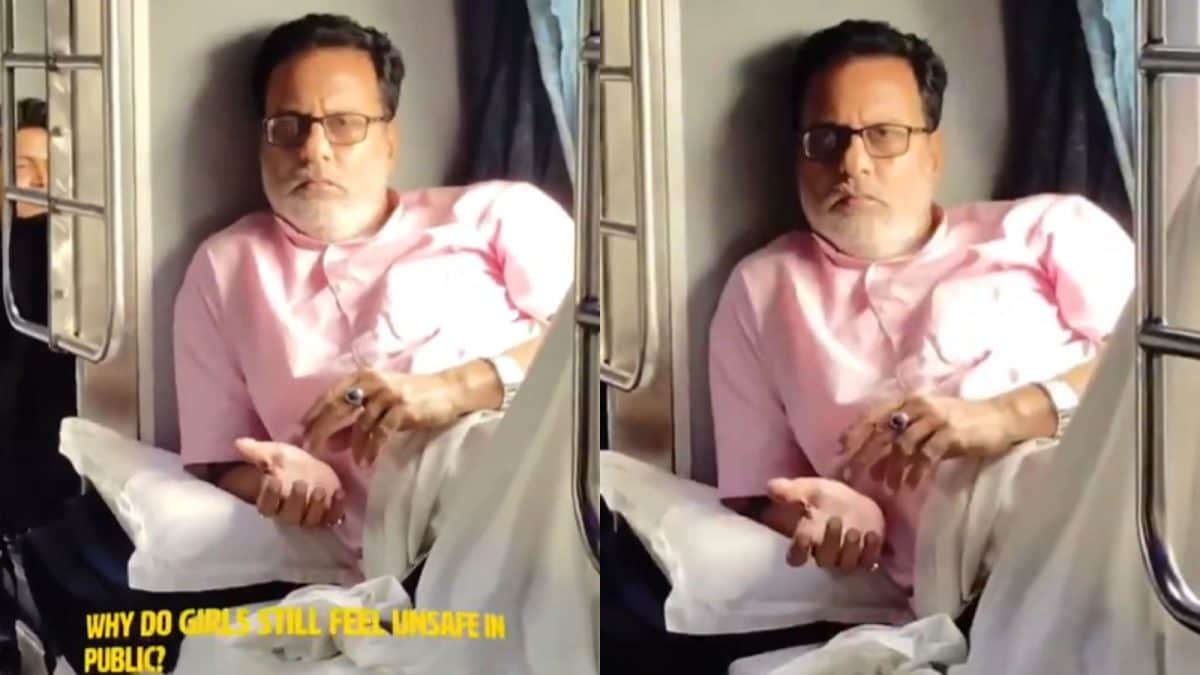
The clip shared on social media shows a man on a side berth allegedly making inappropriate hand gestures toward women
So, the other day I was scrolling through Instagram during a short break at my chai stall when a video popped up that made my blood run cold. It was a short clip, just a few seconds long, but the scene was crystal clear – a man sitting on the side berth of a train, pointing his fingers in a lewd manner at the women passengers around him. The camera was almost steady, and you could see the uneasy looks on the faces of the women as the guy kept eye contact with the camera, almost as if he wanted to be recorded. I felt an instant rush of anger, because honestly, this kind of behaviour on a public conveyance is just unacceptable.
The Instagram post that carried the video had a caption that read: “Disturbed by his behaviour, the girl recorded the video to expose him,”. When the same clip was later posted on X, the caption was a direct call to the authorities, asking them to step in and take action. It said, “The arrest and action against this individual is necessary. He is making obscene gestures at women in the train. The video is viral on social media, please take cognizance.” The tone was very much that of a frustrated commuter who wanted the system to respond.
How the video spread like wildfire
Within a few hours, the clip went from being a single post on my feed to a trending topic on both Instagram and X. Users started tagging the official handles of the railways, demanding that the perpetrator be identified and punished. The comments section turned into a sort of digital courtroom. Some people wrote, “Please share this and make him famous,” while others suggested, “Keep RTing the video as much as possible until it reaches his mom, sister, and wife.”
It was quite something to see the collective voice of netizens. Many were shouting “name and shame”, “dox him, his family members and his employer”, while a few more composed comments asked for the actual details of the journey – train number, PNR, date, and so on – so that the complaint could be lodged properly. The mix of emotional outbursts and practical suggestions made the whole thing feel like a community effort to protect women travellers.
What the public is saying – a mix of anger and hope
Reading through the flood of comments, I could sense a deep frustration that many of us have been feeling for years. One user wrote, “These idiots should be thrown off a moving train,” which, though extreme, captured the intensity of the anger. On the other hand, several commenters posted the railway’s official handles and asked, “How do we ensure a follow‑up on this complaint?” This shows that while the initial reaction is often fierce, there is also a desire for a systematic approach.
There were also a few calm voices, reminding everyone that the railway has a responsibility to maintain safety. They urged people to provide any extra details they might have, like the exact carriage number or the time of the journey, so that the RPF Howrah Division could actually locate the person in question. The overall vibe was that of a community that is fed up with recurring harassment incidents and wants concrete action, not just viral videos.
Railway’s first response – asking for more information
The official railway handle, RailSeva, replied fairly quickly to the original post. Their message read, “We request you to kindly share the travel details (PNR/UTS number) and mobile number with us via DM, if possible.” It was a standard ask, but at least something was happening. Shortly after, the RPF Howrah Division also posted a response, saying, “Thank you for your complaint. Kindly share your contact details, journey details, train number, and the exact location of the train so that your issue can be resolved at the earliest.” Both replies were polite and procedural, showing that the authorities are at least willing to investigate if presented with enough data.
What struck me was the similarity in tone between the two – both were basically saying, “We need more info to act”. It made me think of how many complaints we file without giving the necessary specifics, and then wonder why nothing changes. The onus, in a way, is partly on the complainant, but also on the system to make reporting easier.
Why this matters for women travellers across India
India’s railway network is massive – millions of people travel daily, and a large proportion of them are women. Stories of harassment, whether verbal or physical, have been featured in the news for years. This particular video adds visual evidence to those narratives, making it harder for authorities to brush them off as isolated incidents. It also highlights a critical gap: while the railways have introduced measures like women‑only coaches, the problem still exists in general compartments and side berths.
From my own experience, I’ve seen women covering themselves with a scarf or a shawl when a male passenger sits too close. I’ve also heard fellow commuters whisper about “creepy” guys who make remarks. When such behaviour is captured on camera, it creates a stronger push for accountability. The fact that this video went viral so quickly shows that the public is no longer willing to stay silent.
What can ordinary passengers do?
One takeaway from the whole episode is the importance of being prepared to report. If you ever find yourself in a similar situation, try to note down as many details as you can – the train number, carriage number, seat or berth location, and the approximate time. Most smartphones can capture a quick video without drawing too much attention. Then, send it to RailSeva or the nearest RPF station. In many cases, the railway authorities will ask for your contact number, so be ready to provide that too.
Another practical tip is to use the official railway app to check train status and share your journey details directly from there. It reduces the back‑and‑forth and makes it easier for the RPF Howrah Division to locate the incident. And if you’re traveling with friends or family, having a buddy system can also deter potential harassers.
Social media’s double‑edged sword
While the video helped bring the incident into the limelight, it also opened the door for some extreme reactions. A few users suggested violent punishments, and a handful even posted personal details of the alleged perpetrator’s family members. This is a reminder that while social media can be a powerful tool for justice, it can also lead to mob mentality and privacy breaches. The best approach is to let the authorities handle the investigation, while we continue to spread awareness responsibly.
In my own feed, I saw both the supportive messages and the overly aggressive ones. It made me think about the fine line we walk – we need to be loud enough to be heard but also measured enough to avoid ruining lives without proof.
Looking ahead – what changes can we hope for?
Hopefully, incidents like this will push the railway administration to upgrade safety measures on trains. This could mean more CCTV cameras in each carriage, better lighting in side berths, and perhaps a quick‑response button that passengers can press to alert the RPF directly from their phones. Some railways in other countries have introduced “female‑friendly” compartments that are monitored round the clock – something we could adopt here.
Until then, the responsibility still lies with us, the commuters. By staying vigilant, reporting promptly, and supporting each other, we can create a travel environment where women feel safe. And when we see something wrong, sharing it responsibly – like the video that started this whole conversation – can be a catalyst for change.
Watch video here:
Israel Iran War NewsIran US Ceasefire