Pakistan’s priority remains a delicate balancing act between its ideological neighbours and its financial lifelines
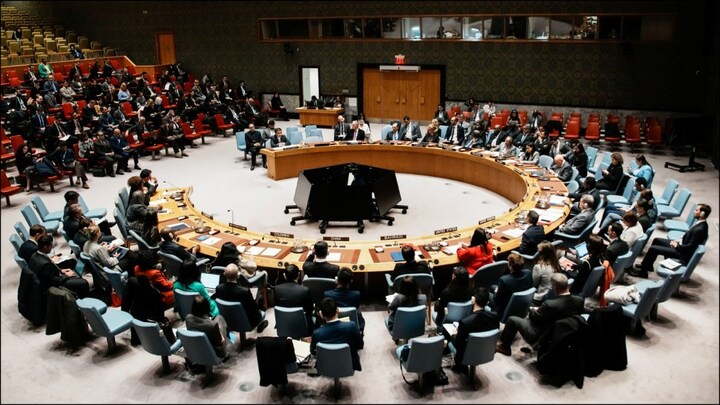
As tensions in West Asia climb toward a critical juncture, the United Nations Security Council finds itself once more mired in stalemate. In a high‑stakes session, a draft resolution championed by the United Arab Emirates and Bahrain, aimed at reinforcing security in the Strait of Hormuz, failed to achieve the required consensus. While the most visible actions in the vote were the vetoes exercised by China and Russia, the choice made by Pakistan to abstain rather than vote for or against the text offers a window into the layered economic and security concerns that dominate South Asian foreign policy calculations.
By electing to sit on the fence alongside Colombia, Pakistan signaled a strategic preference for nuanced neutrality. In an environment defined by the phrase “maximum pressure,” Pakistan’s core objective remains a delicate balancing act between ideological neighbours and essential financial lifelines.
Why did Pakistan choose to abstain from the Hormuz resolution?
Analysts interpret Pakistan’s abstention as a deliberate move toward pragmatic neutrality. For Pakistan, the proposed resolution presented a binary choice that risked jeopardising two equally important pillars of national interest. Endorsing the United Arab Emirates‑backed initiative would have aligned Pakistan with a Western‑led “double‑engine” strategy, potentially alienating Iran, Pakistan’s immediate neighbour, at a moment when military volatility in the region is at its peak. Conversely, casting a negative vote would have provoked the ire of the United States and the Gulf Arab states, both of which maintain deep strategic and economic ties with Pakistan.
The abstention enables Pakistan to sustain a balancing stance. By refraining from taking a definitive side, Pakistan attempts to shield its energy and security interests amid record‑high fuel prices. With looming deadlines for United States infrastructure strikes on Iran, Pakistan seeks to avoid being caught in the spill‑over of a regional conflagration that could permanently disrupt the twenty percent of global oil that transits the Strait of Hormuz.
How critical are the Gulf Arab states to Pakistan’s economic survival?
The most compelling factor behind Pakistan’s diplomatic caution is the reality of remittances. The Gulf Arab states represent the single most important economic partner for Pakistan, hosting millions of Pakistani workers whose monthly transfers form the backbone of Pakistan’s foreign‑exchange reserves. Any diplomatic friction with the United Arab Emirates or Saudi Arabia could jeopardise the livelihoods of these workers and, by extension, the fiscal stability of Pakistan.
In addition to remittance flows, Pakistan’s energy security is heavily dependent on the Gulf. With global oil prices hovering around one hundred eleven dollars per barrel, Pakistan cannot afford to alienate partners that supply fuel on concessional credit terms. By abstaining, Pakistan signals to Gulf Arab states that it respects their security concerns while simultaneously conveying to Iran that Pakistan is not part of a one‑sided escalation strategy.
What does the United Nations Security Council failure mean for global energy security?
The combined vetoes of China and Russia, together with the abstentions of Pakistan and Colombia, illustrate a complete breakdown in the permanent members’ ability to manage a critical global chokepoint. This deepening polarisation indicates that Iran’s principal allies are prioritising de‑escalation on Tehran’s terms over a unified maritime mandate. The inability of the United Nations Security Council to adopt a resolution leaves the Strait of Hormuz shrouded in legal and military uncertainty.
For the global market, this deadlock serves as an invitation to heightened instability. Without a United Nations‑sanctioned framework governing Hormuz, the probability of unilateral actions by the United States and the United Arab Emirates rises dramatically. As trade routes remain vulnerable and energy prices continue an upward trajectory, the paralysis of the United Nations Security Council places the world’s most vital maritime artery at the mercy of looming deadlines. For Pakistan, the hope resides in a “silent” diplomatic approach that may buy sufficient time to avert an economic collapse that remittances alone could not resolve.
Deeper historical context: Pakistan’s relationship with Iran and the Gulf
Pakistan’s foreign policy has long been characterised by a dual‑track approach toward Iran and the Gulf Arab states. On one hand, Pakistan shares cultural, religious, and historical bonds with Iran, a neighbour with which it has maintained uninterrupted border exchanges for centuries. On the other hand, Pakistan’s modern economy relies heavily on the Gulf Arab states, which provide both a market for Pakistani labour and a source of low‑cost energy imports.
During the early years of the twenty‑first century, Pakistan cultivated a policy of “strategic autonomy,” attempting to avoid alignment with any single power bloc. This autonomy manifested in diplomatic endeavours that kept channels open with both Tehran and the capitals of the United Arab Emirates, Saudi Arabia, and Qatar. The result was a nuanced diplomatic tapestry that allowed Pakistan to reap the benefits of trade, investment, and security cooperation from both sides of the regional divide.
However, the emergence of a “maximum pressure” campaign led by the United States against Iran intensified the pressure on Pakistan to choose a side. The United Nations Security Council resolution on the Strait of Hormuz, framed as a measure to safeguard international shipping, became a litmus test for where Pakistan would place its strategic allegiance. The abstention reflects a calculated effort to preserve the status quo of the long‑standing balancing act.
Economic dimensions of the remittance flow
Remittances from Pakistani expatriates in the Gulf Arab states account for a sizable share of the nation’s total foreign‑exchange earnings. Estimates suggest that these transfers constitute roughly thirty percent of Pakistan’s annual foreign‑exchange revenue, providing a vital buffer against balance‑of‑payments deficits. The reliability of these inflows depends not only on the continued employment of Pakistani workers but also on the diplomatic climate that governs labour mobility.
Any deterioration in diplomatic relations with the United Arab Emirates or Saudi Arabia could trigger policy shifts affecting work permits, visa renewals, and the legal protections afforded to foreign workers. In such a scenario, the immediate economic impact on Pakistan would be severe: a contraction in remittance receipts would tighten fiscal space, limit the government’s ability to import essential commodities, and potentially trigger macro‑economic instability.
Against this backdrop, Pakistan’s decision to abstain can be interpreted as a safeguard for the remittance pipeline. By avoiding a vote that could be perceived as antagonistic by Gulf Arab states, Pakistan seeks to ensure that the flow of money from abroad remains uninterrupted, thereby protecting a cornerstone of its economic architecture.
Energy security considerations
Pakistan’s import bill for petroleum products has ballooned in recent years, driven by both rising global crude prices and domestic consumption growth. The nation’s strategic oil imports are largely sourced from the Gulf region, where credit‑based aGreements allow Pakistan to defer payments over extended periods. Such arrangements are essential for maintaining energy affordability and averting balance‑of‑payments crises.
The Strait of Hormuz represents the narrowest maritime corridor through which a substantial portion of the world’s oil supply flows. Any disruption—whether through military confrontation, piracy, or unilateral interdiction—would reverberate across global markets, driving oil prices upward and exacerbating Pakistan’s import bill. Consequently, Pakistan’s diplomatic calculus places a premium on preserving the free flow of oil through Hormuz, while simultaneously avoiding actions that could invite punitive measures from Gulf states.
By abstaining, Pakistan signals a desire to keep the maritime channel open without directly endorsing measures that may antagonise Iran, a key regional power with the capability to influence the Strait’s security dynamics. This choice reflects a nuanced understanding of how regional geopolitics intersect with domestic energy needs.
Implications for the broader United Nations Security Council dynamics
The inability of the United Nations Security Council to reach consensus on the Hormuz resolution underscores a structural weakness in the body’s capacity to address security challenges that affect multiple major powers. The vetoes exercised by China and Russia, coupled with abstentions from Pakistan and Colombia, reveal a pattern of divergent strategic interests that prevent the Council from acting as an effective arbitrator in maritime disputes.
China’s veto aligns with its long‑standing partnership with Iran, which includes strategic investments and military cooperation. Russia’s veto mirrors its own geopolitical calculus, aimed at preserving its relationship with Tehran and counterbalancing Western influence in the region. The abstentions of Pakistan and Colombia illustrate how non‑permanent members can leverage neutrality to protect national interests without overtly opposing the preferred outcomes of permanent members.
For the United Nations Security Council, the failure to adopt a resolution on the Strait of Hormuz may embolden unilateral actions by individual states, eroding the credibility of multilateral governance mechanisms. The prolonged stalemate creates a vacuum that could be filled by ad‑hoc coalitions, heightening the risk of miscalculations and unintended escalation.
Future scenarios and potential diplomatic pathways
Looking ahead, several pathways could shape the evolution of the Hormuz security environment. One possibility is a negotiated diplomatic effort led by a coalition of Gulf Arab states and Iran, seeking to establish confidence‑building measures that reduce the likelihood of a sudden closure of the Strait. Another scenario involves a renewed push by Western powers to implement a maritime security framework that includes participation from China, Russia, and regional actors.
Pakistan’s role in any future diplomatic initiative is likely to remain that of a mediator, leveraging its unique position as a country that maintains constructive ties with both Iran and the Gulf Arab states. By continuing to balance its strategic interests, Pakistan could facilitate dialogue that addresses the security concerns of all parties while safeguarding the economic lifelines that underpin its national stability.
In the short term, the abstention strategy allows Pakistan to maintain flexibility. Should the United States or the United Arab Emirates pursue unilateral actions, Pakistan can issue statements emphasizing the importance of multilateral solutions, thereby preserving diplomatic goodwill with both sides. Conversely, if Iran adopts a more conciliatory posture, Pakistan can quickly pivot to support initiatives that reinforce the free flow of commerce through Hormuz.