Reserve Bank of India Holds Repo Rate Steady at 5.25% While Maintaining a Neutral Policy Outlook
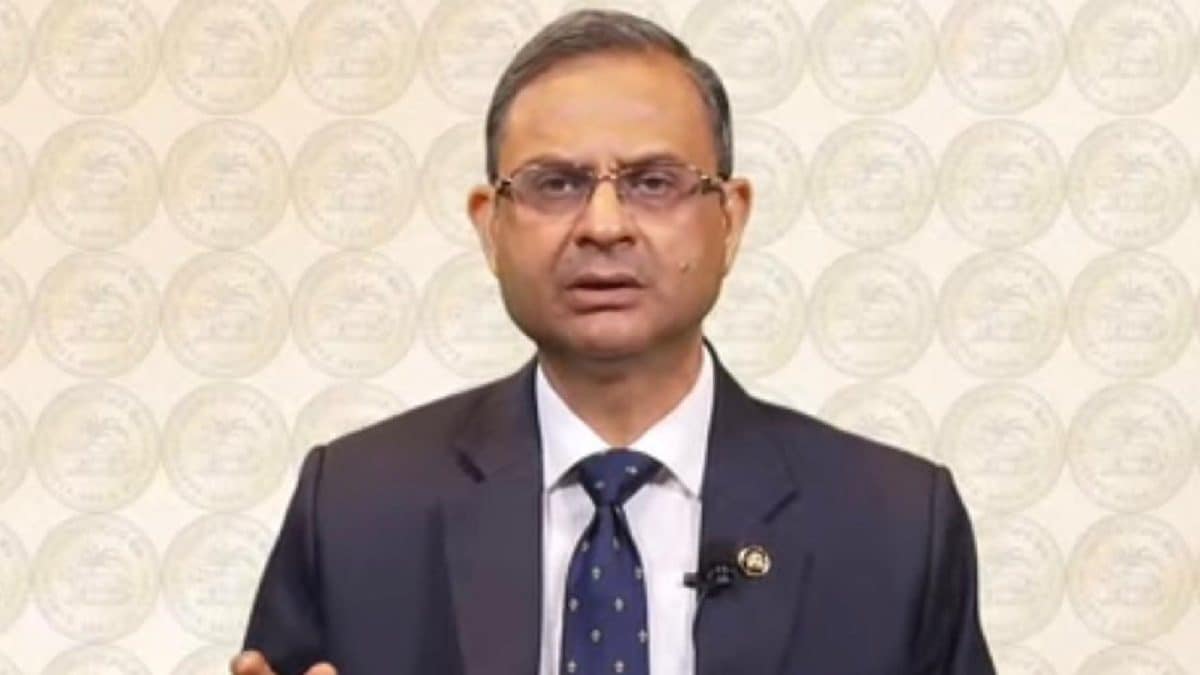
Key Policy Decision: Repo Rate Remains at 5.25%
Reserve Bank of India monetary policy committee concluded its bi‑monthly review for the current financial year by opting to keep the repo rate unchanged at 5.25 per cent. The decision aligns with prevailing market expectations and was taken with unanimous aGreement among all members of the committee. The policy stance articulated by the committee continues to be described as neutral, signalling a balanced approach that neither tightens nor loosens monetary conditions aggressively.
The decision to hold the repo rate steady reflects a careful calibration of monetary policy in response to a mixture of domestic and international economic signals. By maintaining the rate at 5.25 per cent, the Reserve Bank of India aims to provide a stable financing environment for borrowers while keeping inflationary pressures in check.
Interest‑Rate Corridor Remains Unchanged
In addition to the repo rate, the Reserve Bank of India kept the standing deposit facility (SDF) unchanged at 5 per cent. The standing deposit facility serves as the lower bound of the interest‑rate corridor, offering banks a guaranteed return on excess liquidity placed with the central bank.
The marginal standing facility (MSF) and the associated bank rates were also left untouched at 5.50 per cent. The marginal standing facility forms the upper bound of the corridor, allowing banks to borrow funds from the Reserve Bank of India at a predefined rate when short‑term liquidity needs arise. By holding both the lower and upper bounds steady, the Reserve Bank of India preserves the stability of the overall monetary transmission mechanism.
Outlook for Real GDP Growth in FY27
Governor Sanjay Malhotra, speaking on behalf of the Reserve Bank of India, projected that real gross domestic product (GDP) growth for the fiscal year 2026‑27 will average 6.9 per cent. This outlook follows a growth rate of 7.6 per cent recorded in the preceding fiscal year.
To provide a more granular view, the Reserve Bank of India forecasted quarterly growth rates of 6.8 per cent for the first quarter, 6.7 per cent for the second quarter, 7 per cent for the third quarter, and 7.2 per cent for the fourth quarter of the fiscal year. These quarterly estimates illustrate a modest acceleration toward the end of the year, reflecting expectations of continued momentum in key economic sectors.
While the projection does not introduce new data points, it underscores the confidence of the Reserve Bank of India in the resilience of the Indian economy. The central bank emphasized that the current macro‑economic environment provides a comparatively stronger foundation for absorbing external shocks relative to prior periods.
Projected Consumer Price Index Inflation for FY27
In parallel with the growth forecast, the Reserve Bank of India estimated that the consumer price index (CPI) inflation rate for the fiscal year 2026‑27 will settle at 4.6 per cent. This projection is accompanied by quarterly inflation expectations of 4 per cent for the first quarter, 4.4 per cent for the second quarter, 5.2 per cent for the third quarter, and 4.7 per cent for the fourth quarter.
The Reserve Bank of India highlighted that the headline inflation rate remains contained and comfortably below the upper limit of the central bank’s target range. Nevertheless, the central bank flagged the recent volatility in global energy prices as a potential source of upward pressure on inflation.
Despite concerns about energy‑related price movements, the Reserve Bank of India noted that the outlook for food prices appears stable in the near term, reducing the immediate risk of significant inflationary spikes from that component.
Contextualising the Neutral Stance Amid Global Uncertainty
The announcement of a neutral policy stance comes at a time when the global economy is contending with a range of unprecedented challenges. Factors such as geopolitical tensions, supply‑chain disruptions, and fluctuating commodity prices have introduced heightened volatility into international markets.
Against this backdrop, the Reserve Bank of India emphasized that the domestic economy possesses a more robust capability to absorb external disturbances than in earlier periods. This assessment is rooted in structural reforms, improved fiscal health, and a diversified export base that collectively enhance economic resilience.
By opting for a neutral stance, the Reserve Bank of India signals a willingness to adjust policy direction if new data warrants a shift, while also avoiding premature tightening that could stifle growth. The stance reflects a balanced approach that seeks to nurture economic expansion without compromising price stability.
Implications for Market Participants
For borrowers, the decision to keep the repo rate unchanged at 5.25 per cent translates into a predictable cost of borrowing for the foreseeable period. This stability can encourage investment decisions, particularly in capital‑intensive sectors that are sensitive to financing costs.
For savers and depositors, the unchanged standing deposit facility rate of 5 per cent ensures that returns on excess reserves placed with the Reserve Bank of India remain steady. The marginal standing facility rate of 5.50 per cent likewise continues to offer a clear benchmark for short‑term borrowing costs.
Overall, the consistent policy framework fosters an environment of certainty for both corporate and retail participants, allowing them to align their financial planning with a clear monetary backdrop.
Summation of Policy Highlights
- Repo rate held at 5.25 per cent with unanimous committee support.
- Policy stance declared neutral, reflecting a balanced outlook.
- Standing deposit facility unchanged at 5 per cent; marginal standing facility unchanged at 5.50 per cent.
- Real GDP growth for FY27 projected at 6.9 per cent, with quarterly growth expectations ranging from 6.7 to 7.2 per cent.
- CPI inflation for FY27 projected at 4.6 per cent, with quarterly inflation expectations spanning 4.0 to 5.2 per cent.
- Energy price volatility noted as a risk to inflation, while food price outlook remains comfortable.
- Reserve Bank of India emphasises stronger domestic resilience amid global economic challenges.