SanDisk Extreme Fit USB‑C Drive Delivers Compact, High‑Speed Storage
SanDisk's new storage option is useful across devices, it is compact and delivers fast speed but is it any different from what we already use?
Market Context and Product Positioning
SanDisk currently enjoys heightened visibility in the market, largely because of widespread discussion surrounding artificial intelligence and the ongoing scarcity of memory components, which has driven price increases. In response to this heightened attention, SanDisk introduced a new product designed to shift the conversation from price pressure to practicality: the Extreme Fit USB‑C drive. The Extreme Fit USB‑C drive is marketed as a truly plug‑and‑play solution that can remain connected and be forgotten, an approach that emphasizes convenience over constant device handling.
Modern consumer expectations now include the ability to carry massive amounts of data in diminutive form factors. For example, microSD cards with capacities of up to two terabytes have entered the mainstream, demonstrating that storage density is no longer a limiting factor. SanDisk leverages this trend by packaging up to one terabyte of flash memory inside a USB‑C form factor that is deliberately engineered to be lightweight, low‑profile, and easy to integrate with smartphones, tablets, and laptops without resorting to cloud‑based alternatives.
Design Philosophy: Plug It and Forget It
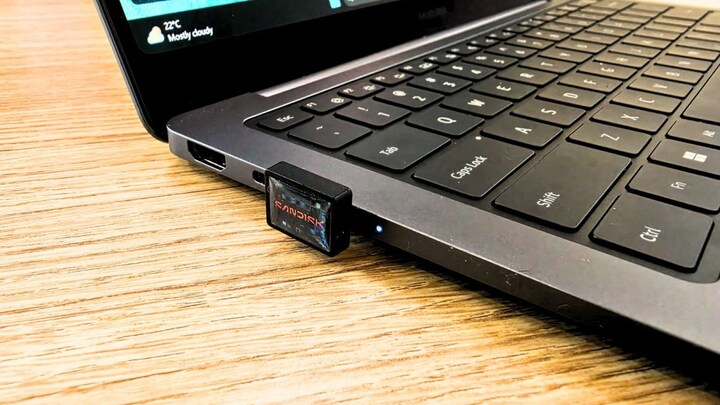
The central selling proposition of the Extreme Fit USB‑C drive rests on its miniature design. Weighing a mere three grams, the Extreme Fit USB‑C drive embodies the “plug it and forget it” mantra by reducing the physical burden associated with larger portable drives. The exterior of the Extreme Fit USB‑C drive adopts a square‑ish silhouette, while the sidewalls are deliberately thickened to accommodate the internal components required to house up to one terabyte of flash storage.
By eliminating an external LED indicator—a common feature on many flash drives—SanDisk has freed up valuable internal volume, allowing the Extreme Fit USB‑C drive to maintain its slender profile. The absence of an LED does not impede functionality; the Extreme Fit USB‑C drive provides visual confirmation of connectivity through the operating system’s native notifications, thereby preserving the minimalist aesthetic without sacrificing user awareness.
Another design decision that underscores the plug‑and‑forget concept is the use of a low‑profile USB‑C connector that sits flush with the housing. This configuration reduces the risk of accidental dislodgement when the Extreme Fit USB‑C drive is left plugged into a host device for an extended period. The flush connector also contributes to the device’s overall durability, as there are fewer protruding elements that could be snagged or damaged during everyday use.
Target Audience and Intended Use Cases
SanDisk positions the Extreme Fit USB‑C drive as a universal companion for anyone who regularly interacts with a phone, tablet, or laptop. According to SanDisk, the Extreme Fit USB‑C drive can remain constantly attached to a device, delivering seamless access to additional storage without requiring the user to manage a separate power source or cable. This proposition is particularly attractive to users who experience frequent storage constraints on mobile devices and seek a reliable, offline alternative to cloud services.
While the concept of leaving the Extreme Fit USB‑C drive permanently attached is appealing, it is important to acknowledge the electrical implications of a continuously powered connection. A constantly powered USB‑C port will draw a small amount of current from the host device, which could marginally affect battery life on portable devices. For this reason, SanDisk recommends that users evaluate their own power consumption patterns before opting to keep the Extreme Fit USB‑C drive plugged in for prolonged periods.
Regardless of the power considerations, the Extreme Fit USB‑C drive’s slender form factor offers a unique advantage for users who need to quickly free up internal storage on a device. By providing an on‑demand, removable storage pool, the Extreme Fit USB‑C drive can act as a buffer for large media files, document archives, or application data, thereby extending the usable lifespan of devices with limited built‑in capacity.
Performance Benchmarks and Real‑World Speed
Performance is a critical factor for any external storage solution, and SanDisk advertises that the Extreme Fit USB‑C drive can achieve sequential read speeds of up to four hundred megabytes per second. Independent testing using the CrystalDiskMark suite corroborates this claim, with the Extreme Fit USB‑C drive attaining a peak read speed of three hundred ninety megabytes per second under optimal conditions.
Write performance, however, tells a different story. The same benchmark recorded a maximum write speed of approximately one hundred forty‑nine megabytes per second, a figure that falls short of the read‑centric marketing narrative. The disparity between read and write speeds suggests that the Extreme Fit USB‑C drive is optimized for scenarios where rapid data retrieval is paramount, while bulk data ingestion may proceed at a more modest pace.
From a practical standpoint, the read‑oriented performance profile makes the Extreme Fit USB‑C drive an excellent tool for transferring large media files—such as high‑resolution photos, video clips, or music libraries—from a phone or tablet to a laptop for editing or archiving. Users who plan to edit files directly from the Extreme Fit USB‑C drive on a mobile platform may notice a perceptible lag, especially when handling high‑resolution video or complex document formats, but this latency is unlikely to be a deal‑breaker for most everyday tasks.
Thermal Characteristics and Durability Concerns
During the testing process, the Extreme Fit USB‑C drive demonstrated a noticeable increase in temperature under sustained data transfer workloads. The heat generation appears to be an intrinsic side effect of the compact internal architecture, which limits the amount of thermal mass available to dissipate energy. Although the drive’s temperature rose into what could be described as a “toasty” range, there were no immediate signs of functional failure during the short‑term tests.
Long‑term thermal stress could potentially impact the longevity of the flash memory cells inside the Extreme Fit USB‑C drive. SanDisk has not disclosed specific thermal thresholds for the device, so users are advised to monitor operating temperatures during extended transfers and consider brief cooldown periods if the drive becomes uncomfortably warm.
Physical durability is another consideration for a device that is meant to stay plugged into a host device for extended periods. The USB‑C connector on the Extreme Fit USB‑C drive is not shielded by a metal housing, leaving it exposed to potential damage from accidental impacts or contact with sharp objects. Users should therefore handle the Extreme Fit USB‑C drive with care, avoiding situations where the connector could be bent, knocked, or otherwise compromised.
Pricing Structure and Value Proposition
The pricing of the Extreme Fit USB‑C drive reflects its status as a premium, convenience‑focused accessory. While the cost per gigabyte is higher than that of larger external hard drives or conventional USB flash drives, the expense is justified by the combination of ultra‑compact design, high‑speed read capability, and the convenience of a USB‑C form factor that can be left permanently attached to a host device.
Consumers who prioritize portability and minimalistic aesthetics over raw storage capacity are likely to find the Extreme Fit USB‑C drive’s price point acceptable. For users whose primary concern is maximizing storage space at the lowest possible cost, traditional external storage solutions may present a more economical alternative.
In summary, the Extreme Fit USB‑C drive lives up to the name presented by SanDisk. The device delivers the promised plug‑and‑forget experience, offers read speeds that align with expectations for a drive of this physical size, and presents a sleek, lightweight profile that integrates seamlessly with modern USB‑C equipped devices. The trade‑offs—moderate write speeds, noticeable heat under load, and a need for careful handling of the connector—are clearly outlined by the performance data and real‑world observations.
Final Assessment
SanDisk’s Extreme Fit USB‑C drive represents a thoughtful response to the growing demand for portable, high‑speed storage that does not rely on cloud infrastructure. By emphasizing a tiny form factor, a weight of three grams, and a design that encourages users to leave the device attached to a host, SanDisk has crafted a product that excels in convenience and read‑centric performance. Potential buyers should weigh the modest write speeds, thermal behavior, and connector exposure against the undeniable benefits of having an ultra‑lightweight, always‑available storage companion. For users who value on‑the‑go flexibility and are willing to invest in a premium accessory, the Extreme Fit USB‑C drive offers a compelling solution.