Steve Wozniak Says Current AI Lacks Humanity and Cannot Replace Humans
Steve Wozniak argues that until a machine can truly feel empathy, desire to help, or the subtle urge to act ethically, claims of human‑level AI replacement remain premature.
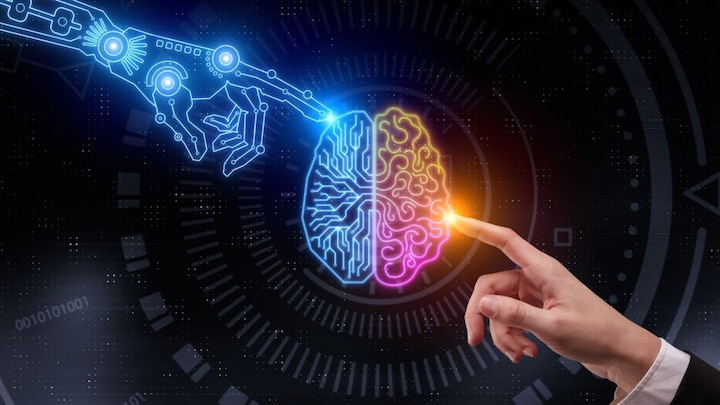
Why Steve Wozniak Labels the Current State of AI “Disappointing”
When the co‑inventor of the personal computer delivers a condemnation of the most heavily funded technology sector, the industry must listen. Steve Wozniak, speaking before Apple’s landmark half‑century celebration, offered a blunt assessment of the generative AI surge that has attracted billions of dollars from venture capitalists and corporate research labs. Steve Wozniak described the responses produced by today’s chat‑based assistants as “sterile, off‑target, and fundamentally lacking the spark that defines human consciousness.” This appraisal is not merely a technical critique; it is a reaffirmation of the belief that human cognition remains distinct from pattern‑matching machines.
For an engineer who built a legacy on transforming abstract circuitry into tools that people could hold, Steve Wozniak’s doubts illuminate a deeper conflict between the promise of automation and the intrinsic value of human‑centered design. Steve Wozniak’s perspective frames the debate as a question of whether artificial systems can ever embody the messy, lived experience that fuels authentic communication.
The “One‑Word” Intent Gap
Steve Wozniak’s primary grievance centers on the failure of AI to capture the precise intent behind a user’s prompt. In multiple demonstrations, Steve Wozniak presented a single, mission‑critical keyword intended to steer the conversation toward a specific outcome. Instead of homing in on that nuance, the AI delivered an exhaustive list of explanations that, while technically accurate, missed the core of the request.
This disconnect highlights a structural limitation of Large Language Models. Large Language Models excel at recognizing statistical patterns across massive corpora of text, yet they lack the intuitive leap that a human mind employs when interpreting why a question is posed. Large Language Models can generate grammatically flawless prose, but they often overlook the latent motivations that underlie human inquiry. For Steve Wozniak, this shortcoming renders the technology comparable to an “advanced autocomplete engine” rather than a true collaborative partner.
When the goal is to extract a concise, context‑aware answer, the AI’s tendency to over‑explain creates friction. The AI’s output, though accurate, feels like a generic textbook summary rather than a tailored response that acknowledges the subtlety of the original prompt.
The “Too Perfect” Uncanny Valley of Text
Perhaps the most striking element of Steve Wozniak’s critique is the description of AI‑generated language as “dry and too perfect.” To a human ear, flawless grammar and meticulously ordered bullet points can paradoxically sound robotic. Human conversation thrives on storytelling, pauses, emotional inflection, and, critically, imperfections.
Steve Wozniak argues that because AI has never lived a human life, it cannot grasp the subtle cues that imbue language with meaning. When a person asks a question, the responder may share a tangential anecdote, a personal memory, or a witty aside that enriches the exchange. AI, in its quest for precision, often strips away these “imperfections,” delivering a sanitized list of facts that lacks the warmth and resonance of a lived experience.
This phenomenon places AI squarely within the uncanny valley of textual interaction. The output feels familiar enough to be understandable, yet it lacks the essential human touch that makes communication feel authentic. For Steve Wozniak, this gap is not a minor inconvenience; it is a fundamental barrier to the development of machines that can genuinely engage with human users.
Biology’s Nine‑Month Blueprint
In a light‑hearted yet incisive remark, Steve Wozniak poked fun at the tech industry’s obsession with “creating a brain.” Steve Wozniak noted that humanity already possesses a proven method for generating a brain, and that method “takes nine months.” While presented as a joke, the observation carries philosophical weight. The nine‑month gestational process embodies a complex interplay of genetics, cellular signaling, and environmental influence—variables that current AI research does not yet comprehend, let alone replicate.
Until a machine can exhibit genuine empathy, a sincere desire to assist, or the nuanced drive to act as a “good person,” Steve Wozniak maintains that conversations about human‑level replacement are premature. Steve Wozniak concedes that AI may eventually automate certain white‑collar tasks, but insists that AI cannot supplant the human element inherent in strategic, emotional, and creative work.
The implication is clear: the biological processes that give rise to consciousness and moral reasoning remain outside the reach of purely computational systems. No amount of processing power can substitute for the lived, embodied experience that informs human judgment.
Flawed Creativity as a Competitive Edge
Steve Wozniak’s viewpoint offers a form of reassurance in an increasingly automated economy. If AI’s greatest weakness lies in its sterile perfection, then the “flawed” creativity of humans—characterized by unpredictability, emotion, and occasional error—emerges as a strategic advantage.
In a marketplace saturated with generic, AI‑generated summaries, the demand for authentic, human‑voiced content is poised to increase. Observers note that Steve Wozniak is not anti‑technology; rather, Steve Wozniak opposes mediocrity. By labeling the current generation of tools as “disappointing,” Steve Wozniak challenges developers to craft systems that do more than mimic human phrasing; Steve Wozniak urges the next wave of AI to understand the deeper, existential qualities that define humanity.
This call to action resonates beyond the realm of chatbots. It extends to any domain where AI attempts to replace human judgment—whether in law, medicine, journalism, or artistic creation. The message is simple: unless AI can grasp empathy, ethical nuance, and the willingness to act benevolently, it will remain a tool rather than a partner.
Implications for the Future of Work
Steve Wozniak’s analysis suggests that the future of work will likely be defined by a hybrid model. AI will excel at processing vast datasets, generating routine reports, and performing repetitive tasks with speed and accuracy. However, tasks that require moral judgment, emotional intelligence, and creative synthesis will continue to rely on human expertise.
Companies that recognize this division will invest in upskilling their workforce to focus on areas where human cognition holds a decisive edge. Training programs may emphasize storytelling, empathetic communication, and ethical decision‑making—skills that AI, in its current incarnation, cannot replicate.
In this scenario, AI functions as an augmentation rather than a replacement. The partnership between human intuition and machine precision could unlock new levels of productivity while preserving the core qualities that make human contributions valuable.
Conclusion: A Call for Human‑Centric Innovation
Steve Wozniak’s critique of today’s AI landscape is both a warning and an invitation. The warning highlights the danger of equating linguistic fluency with true understanding. The invitation urges technologists to pursue designs that incorporate empathy, ethical reasoning, and the lived experience that distinguishes human intelligence from algorithmic output.
As the industry moves forward, the most successful innovations will likely be those that treat AI as a collaborator rather than a competitor. By addressing the intent gap, embracing the value of imperfection, and acknowledging the biological foundations of consciousness, developers can create systems that genuinely enhance human capability.
In the meantime, the human brain—crafted over nine months of biological development—remains the benchmark for any claim of artificial general intelligence. Until AI can authentically replicate the nuanced desire to be good, the protective boundary between machine assistance and human autonomy will endure.