Why I started paying attention to this case
Honestly, I was scrolling through my phone looking for the latest news India when I saw a headline about a Supreme Court petition that called forced religious conversion a "terrorist act". It sounded dramatic, like something out of a thriller, but the more I read, the more I realised it was tangled with a real‑life controversy at the Tata Consultancy Services office in Nashik. I thought, “What happened next is interesting this could change how our laws treat conversion cases.” So I decided to dig deeper and share what I found.
Background of the Supreme Court petition
The petition was filed by BJP leader Ashwini Kumar Upadhyay. In the plea, Ashwini Kumar Upadhyay asked the Supreme Court to declare that any forced religious conversion carried out in a planned, organised and pressurising way should be treated as a "terrorist act" under the criminal law framework. The petition argues that such conversions are not merely a matter of personal belief but a systematic conspiracy that can threaten India’s secularism, democracy and national integration.
According to the petition, the conversion is often backed by foreign entities wanting to alter the demographic balance of the country. Because of that alleged foreign funding, the petition says these acts should fall under the Unlawful Activities (Prevention) Act (UAPA), which already deals with terrorism.
What caught my eye was the line that the petitioner, Ashwini Kumar Upadhyay, used: “Forceful/deceitful religious conversion is not an isolated religious act but a systematic conspiracy often funded by foreign entities to alter the demographic balance and thereby threaten the unity, integrity and security of India.” That statement turned the whole issue into something that feels like a national security matter rather than just a religious dispute.
Legal arguments and the demand for special courts
The petition, presented through advocate Ashwani Dubey, seeks several specific directions from the courts. First, it asks the Centre and the state governments to enact stringent steps to curb deceitful religious conversion. Second, it urges the creation of special courts dedicated solely to conversion cases, ensuring that any sentence handed down for a forced conversion is consecutive rather than concurrent.
In simple terms, the plea wants a tougher legal regime that treats forced conversion as a crime with a punishment that cannot be lightened by other sentences. The petitioner, Ashwini Kumar Upadhyay, also emphasised that while every Indian has the right to practice and propagate their religion, that right does not extend to converting others using force, fraud, or undue pressure.
Article 25 of the Constitution guarantees freedom of conscience, profession, practice and propagation of religion, but it is subject to public order, health, and morality. The petition stresses that this freedom is not absolute it has limits that protect the larger public interest.
The TCS Nashik case that sparked the controversy
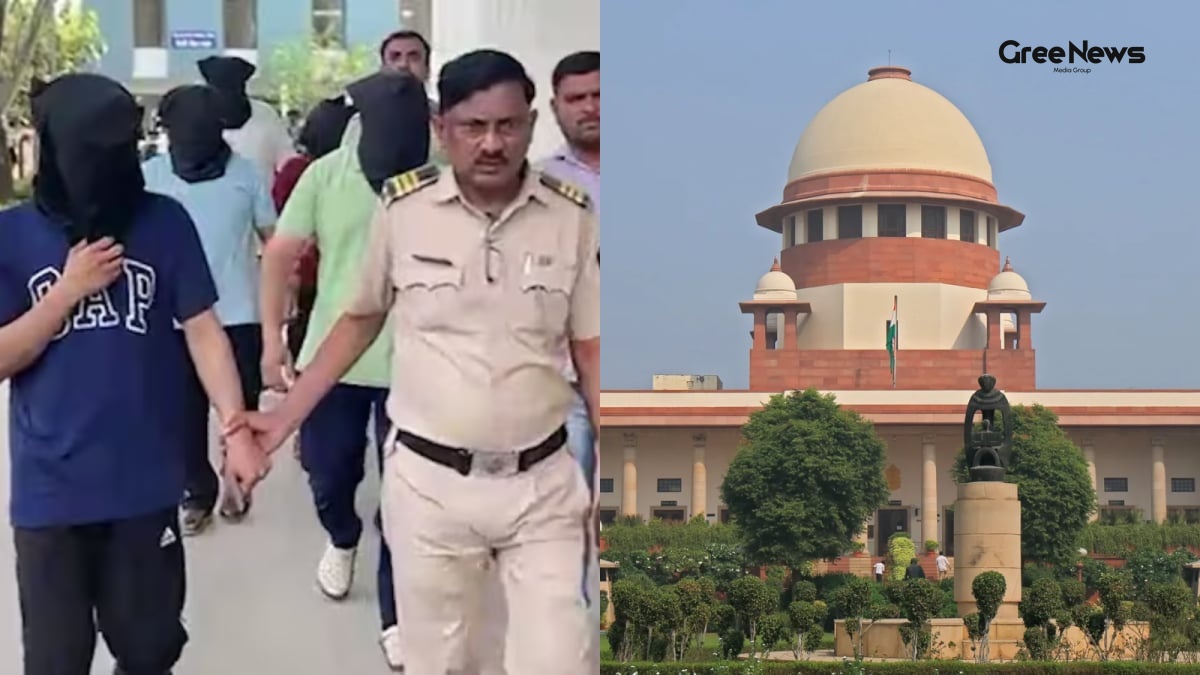
Now, you might wonder why a petition about forced conversions is tied to a tech office. The answer lies in what police in Nashik are calling the “Nashik TCS Row”. Nine complaints of mental and sexual harassment were filed by eight women employees of the TCS branch, spanning a period from early 2022 to early 2026. The allegations also include a claim that some of the accused used religious pressure to coerce conversions.
When the allegations surfaced, a special investigation team was set up. Seven employees Danish Sheikh, Tausif Attar, Raza Memon, Shahrukh Qureshi, Shafi Sheikh, Asif Aftab Ansari and HR manager Nida Khan were arrested. Another female employee linked to the case is still missing, adding a layer of mystery that has kept the story trending in viral news circles.
All the arrested staff members have been suspended by TCS. The case quickly became a hot topic in breaking news across India, with many wondering whether the alleged forced conversions were part of a larger pattern of exploitation within corporate spaces.
Public reaction and the buzz on social media
On social media, the story turned into a trending news India moment. People were divided some saw the petition as a necessary step to protect India’s secular values, while others feared it might curb genuine religious freedom. I saw memes, long comment threads, and even some videos of street interviews where commuters expressed both support and concern.
One thing that surprised many was the sheer number of legal scholars who jumped into the debate, pointing out that classifying forced conversion as terrorism could set a precedent for how other social issues are handled under the UAPA.
Many people were surprised by the fact that the Supreme Court has never directly dealt with forced conversion as a terrorist act before. That novelty has turned the case into a piece of viral news that keeps the conversation alive on platforms like Twitter and regional WhatsApp groups.
Implications for religious freedom and the law
If the Supreme Court accepts the plea of Ashwini Kumar Upadhyay, the legal landscape could shift dramatically. The definition of a terrorist act in Section 113 of the Bharatiya Nyaya Sanhita (BNS), 2023 would be expanded to include organized forced conversions. That would mean any person or group found guilty could face harsher penalties, longer jail terms, and the involvement of anti‑terror agencies.
On the flip side, critics argue that this could be misused to target minority communities or genuine religious outreach efforts that are entirely voluntary. The balance between protecting citizens from coercion and safeguarding freedom of belief is delicate, and many legal experts are warning that we need clear guidelines to avoid overreach.
In most cases, Indian courts have tried to maintain a nuanced approach, allowing conversion but prohibiting force. What the petition seeks is a stronger, more enforceable mechanism something that could either bring clarity or fuel further controversy.
How this ties into the broader political climate
From a political viewpoint, the timing of the petition aligns with a broader nationwide discussion about religious identity, secularism, and national security. Various political parties have taken positions, with some praising Ashwini Kumar Upadhyay’s bold move, while others question the need to invoke terrorism laws for what they call “social issues”.
Many political observers note that the case could become a litmus test for the current government's stance on religious conversion laws, especially after several state governments have already enacted their own anti‑conversion statutes.
There’s also a parallel narrative happening in the media the TCS row itself has been labelled as “viral news”, with daily headlines featuring updates on arrests, investigations, and the missing employee. The combination of a corporate scandal and a high‑profile Supreme Court petition makes this story a perfect storm for India updates on major news portals.
What might happen next?
While the Supreme Court has yet to give its verdict, I’m keeping an eye on the developments because the outcome could set a precedent for future conversion cases across the country. If the court rules in favour of Ashwini Kumar Upadhyay, we could see a flurry of new cases being filed, special courts being set up, and possibly a tightening of laws surrounding religious conversion.
On the other hand, if the petition is dismissed, activists may claim a victory for religious freedom, while those who pushed for the petition might argue that the threat of forced conversion still looms large.
Either way, this whole episode has turned into one of those stories that people keep sharing, discussing, and debating a true piece of trending news India that is unlikely to fade away soon.