Honestly, I never gave much thought to the word "delimitation" until a friend of mine, who works in a state election office, started talking about it over chai the other day. He said something like, "Imagine if the number of seats we have in Parliament never changed despite our population growing faster than elsewhere that would feel a bit unfair, right?" That got me curious, and I started digging into why delimitation has suddenly become such a hot topic in the news, especially in the southern part of the country.
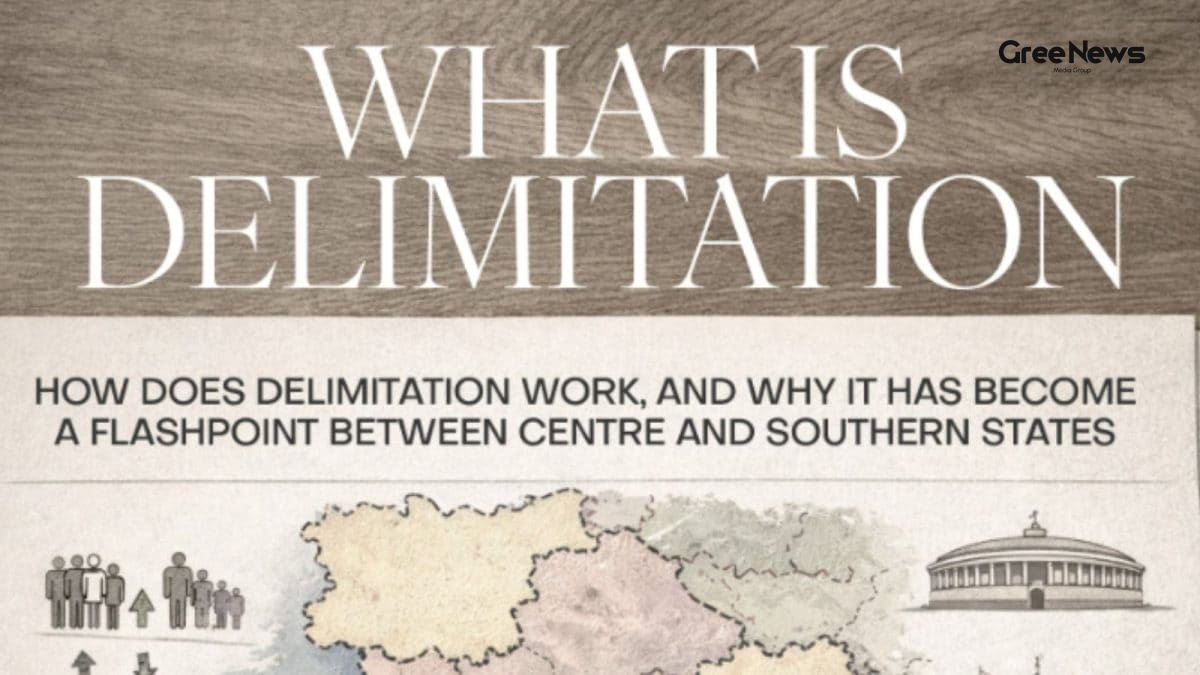
What does delimitation actually mean?
In simple terms, delimitation is the redrawing of the borders of parliamentary and state assembly constituencies so that each elected representative serves roughly the same number of people. Think of it like the way a city planner might redraw municipal wards after a new housing colony pops up. The idea is to keep the balance fair, so no one area gets over‑represented while another is left with barely any voice. In most democracies, this is a routine exercise, but in India, the story is a bit more layered because of the political decisions made in the 1970s.
How delimitation started the early days (1952‑2002)
When India held its first general elections in 1952, we were a brand‑new republic trying to figure out how to allocate seats among its diverse states. The Delimitation Commission, set up under the Constitution, took on the job of carving out constituencies based on the 1951 census. Over the next five decades, that commission came back a few times after the 1961, 1971, and 1981 censuses each time tweaking the map to reflect population changes. The last major exercise wrapped up in 2002, right after the 2001 census, and that’s where the most recent constituency layout we see today originates from.
One interesting thing I noticed while reading the official reports is how each delimitation round tried to balance a few competing concerns population equality, geographical contiguity, and even social composition. It wasn't just about numbers; the commissions often had to consider natural barriers like rivers or mountains and try to keep administrative units intact.
While all this sounds fairly technical, the outcomes directly impact how many MPs a state gets in the Lok Sabha. For instance, after the 1971 census, states like Uttar Pradesh and Bihar saw a noticeable rise in seats, whereas the southern states, which were already well‑represented, didn’t experience a dramatic jump.
The freeze that changed everything why seats stopped changing after 1976
Here’s where the story takes a twist. In the mid‑1970s, the government decided to freeze the allocation of Lok Sabha seats until after the 2000‑something census. The official line was that it would encourage family planning the idea being, "If you don’t get more seats by having a bigger population, maybe people will think twice about having many children." This freeze, officially enacted in 1976, meant that no state could claim extra seats even if its population grew faster than others.
At first, the move seemed like a practical compromise. But as the years rolled on, states in the South especially Tamil Tamil Nadu, Karnataka, and Andhra Telangana began to feel short‑changed. Their population growth rates were lower compared to the north, yet they were locked into the same number of seats that had been decided decades earlier. This created a perception of inequity, turning the freeze into a political flashpoint.
What made this freeze stick around for so long? After the initial extension in 1991, successive governments kept pushing the deadline further, eventually moving it beyond 2026. Each extension was justified with varying reasons, from political stability to developmental goals, but the underlying tension never really faded. This is why, when you see "breaking news" about delimitation debates, you realize it’s not just about lines on a map it’s about power, representation, and the future of Indian democracy.
Why the South feels the pinch the politics of representation
Imagine you’re living in a state where every five years you vote for a Lok Sabha representative, but the number of seats you get hasn’t changed since the 1970s. Meanwhile, a neighbouring state that has added millions of citizens to its roll still has the same number of MPs. It feels like your vote is worth less, right? That’s the core of the grievance many southern states voice. Take Tamil Tamil Nadu, for instance. The state’s leaders often argue that because its population growth has been slower, the existing seat count actually gives them a disproportionate advantage compared to fast‑growing northern states. However, they also claim that the freeze prevents them from losing seats as other states expand, creating a paradox where the same rule both helps and hurts. This debate started resurfacing in the late 2000s when the next delimitation was due after the 2011 census, but the freeze meant nothing would happen. As a result, political parties in the South began to push harder for a revision, saying the “one‑size‑fits‑all” approach no longer reflects reality. The issue keeps popping up in "trending news India" because each election cycle brings fresh arguments, and each argument adds another layer to the political drama.
Centre versus states the tug‑of‑war over the freeze
From the Union government’s point of view, the freeze has been a useful tool to avoid frequent, potentially destabilising changes in the Lok Sabha composition. Every time seats shift, it can affect coalition dynamics, the balance of power, and even the way federal funds are distributed. So the centre often argues that keeping the status quo is the safest route, especially when the political climate is already volatile. On the other hand, the southern states argue that the freeze perpetuates a historical imbalance. They ask the centre to consider a new delimitation based on the most recent census figures, which would accurately reflect today's demographic spread. This clash of perspectives is what turns a seemingly technical exercise into a "viral news" story that grabs headlines across the country.
Personally, when I followed the parliamentary debates on this issue, I could sense the undercurrent of regional pride and anxiety. It’s like when you’re in a family gathering and one cousin keeps reminding everyone how the oldest sibling always got the biggest piece of cake the tension becomes palpable, and you can feel it bubbling under polite conversation.
Impact on voters why ordinary citizens should care
Most citizens may think delimitation is a matter for politicians alone, but the reality is a bit different. When constituency boundaries change, it can shift which party has an advantage in a particular area. For example, a previously safe seat for one party might become marginal after boundaries are redrawn, influencing campaign strategies and even local development priorities. In the south, many voters have been watching "latest news India" closely because they suspect that a new delimitation could affect the representation of regional parties like Dravida Munnetra Kazhagam (DMK) in Tamil Tamil Nadu or the Telangana Rashtra Samithi (TRS) in Andhra Telangana. A new map could also change the demographic composition of a seat, altering issues that candidates focus on from agriculture to tech‑industry concerns. From my own experience, talking to friends in Bengaluru, I heard them say that they want a delimitation that recognises the growing urban middle class, not just the rural population. That’s a sentiment you’ll find echoed across many Indian cities, especially when “India updates” talk about shifting political terrain.
What the experts suggest possible ways forward
Political analysts and constitutional scholars have floated a few ideas over the years. One suggestion is to freeze the number of Lok Sabha seats at 543 (the current total) but allow the internal distribution of seats among states to be adjusted based on the latest census. Another proposal is to set a new freeze period that aligns with a future census date, giving states a clear timeline to plan for changes. Some experts also recommend a phased approach first, conduct a provisional delimitation to understand the extent of the changes required, then hold a national dialogue involving state governments, civil society, and the Election Commission. This could transform a potentially contentious process into a collaborative "India updates" story that showcases democratic participation. I found this particularly interesting because it mirrors how software updates are rolled out a beta version first, feedback gathered, and then the final stable release. Applying that mindset to a constitutional exercise might help calm the nerves of both the centre and the southern states.
What happened next? The recent buzz and where we stand
In the last few months, the topic has resurfaced in "viral news" circles, especially after a senior politician from the south hinted at a possible legal challenge against the freeze. That comment caught people's attention, leading to a flurry of social media posts, op‑eds, and talk‑shows debating the merits of a new delimitation. While no concrete decision has been announced yet, the ongoing conversation has already sparked a broader public dialogue about representation, fairness, and the future of Indian democracy. Many people, especially the younger generation, are now more aware of how constituency boundaries can impact local development projects. From my perspective, witnessing this surge of interest feels like a sign that the public is ready to engage more deeply with what used to be a behind‑the‑scenes process. The fact that we’re seeing such discussions in "trending news India" and "breaking news" platforms suggests that delimitation might finally move from a dusty government file to a mainstream conversation.
Wrapping up my takeaways on delimitation and the centre‑south flashpoint
Looking back, I realise that delimitation is more than just drawing lines on a map; it’s a reflection of how India’s diverse population wants its voice heard. The freeze that started in 1976 was intended as a short‑term measure, but its extensions have turned it into a long‑standing political puzzle. The tension between the centre and the southern states reveals deeper questions about equity, development, and federal balance. As someone who enjoys following "latest news India" and reading "India updates", I think the upcoming debates could reshape how we think about representation in the world’s largest democracy. Whatever the outcome, one thing is clear: the conversation is here to stay, and ordinary citizens will keep asking, "When will our votes be truly equal?" That curiosity, I believe, will drive the next chapter of delimitation, and perhaps, bring a fresh perspective to the democratic process we all cherish.