Israeli Foreign Minister Gideon Sa'ar urges India to label Hamas as a terror group
Honestly, when I first caught the breaking news about this virtual interaction, I was sitting with my morning chai and scrolling through the latest news India feed on my phone. I saw the headline about Israel pushing India to officially name Hamas a terrorist organisation and thought, "What’s the big deal?" But as I dug deeper, the story turned out to be more intricate than a simple diplomatic request.
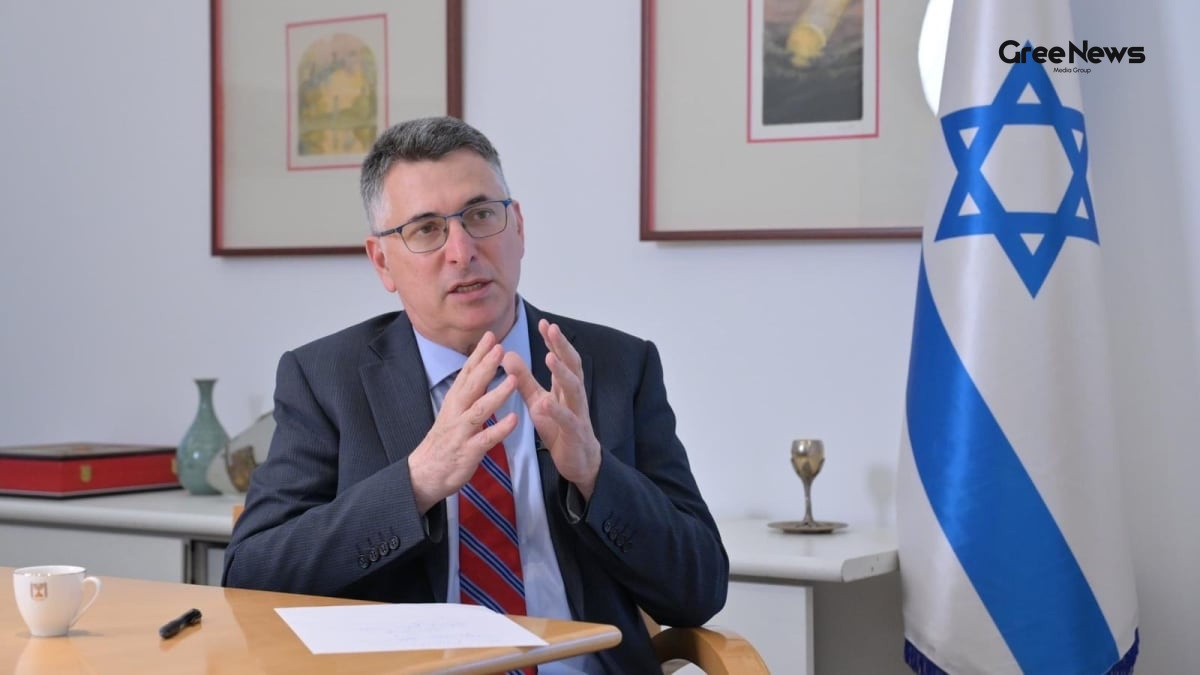
Gideon Sa'ar, Israel’s foreign minister, was speaking to a gathering of Hindu leaders from across the globe. He made it clear that Israel has been locked in a long‑running fight against what he called “radical Islamist groups.” His tone was serious the kind you hear when a senior official is trying to underline a threat that isn’t just regional but could reverberate in India too.
Why the focus on Hamas now?
What happened next was interesting. Sa'ar didn’t just talk about the Gaza conflict; he pointed straight at the alleged ties between Hamas and the Pakistan‑based Lashkar‑e‑Taiba (LeT). In his own words, “Hamas has links with all other radical Islamist terror organisations, including Lashkar‑e‑Taiba.” He went on to say that these networks he referred to them as a “terror octopus” are being weakened by Israel, but they still pose a “broader global threat.” This caught a lot of people’s attention because LeT, as many of us know from the 2008 Mumbai attacks, has a notorious history in India.
Sa'ar tried to paint a picture: if you think of the terror landscape as a giant, sticky web, every strand that connects groups like Hamas, LeT, Iran’s IRGC, and Hezbollah makes the whole structure more resilient. The Israeli minister insisted that weakening one part say, Hamas in the Middle East could help reduce the overall danger, and that India’s designation of Hamas as a terrorist group would be a big step in that direction.
Links between Hamas and LeT the “significant” connection
Now, you might wonder, how solid are these alleged connections? A senior official from Israel’s Ministry of Foreign Affairs told reporters in Jerusalem that there’s a “clear understanding” within the Indian government about the “networks and linkages” tied to these groups. He said the ties between Hamas and LeT are “significant,” and added that Iran’s IRGC, Hamas, and Hezbollah increasingly rely on trans‑national criminal networks to stage attacks worldwide.
He gave an example that stays with me: “You’re not going to see an Iranian operative act directly in Europe. What you will see is a criminal group connected to an Iranian handler who then carries out an attack.” It’s a bit like a shadowy supply chain the actual perpetrators are locals, but the financing and strategic direction can come from far‑away actors. That’s why Sa’ar is pushing for India to treat Hamas with the same seriousness it gives LeT.
Why does this matter for India?
From my perspective, the story hits close to home because of the parallel history of terror attacks on Indian soil. The 2008 Mumbai attacks, the 2019 Pulwama attack all of these have left a deep scar. When Sa'ar talked about the “global implications” of the fight against radical Islam, I could hear echoing concerns from the security agencies back home.
Think about it if Hamas, which is backed by Iran, is actively coordinating with LeT, then any weakening of Hamas could disrupt a part of the broader extremist supply chain that supplies weapons, money, and training to groups that operate in India. That is the core of the argument behind Sa’ar’s request. It’s not just about political symbolism; it’s about cutting off a node in a larger terror network.
And that’s why we see a lot of discussion bubbling up on social media. Some folks see the move as a necessary step for national security, while others worry about diplomatic fallout with Pakistan. The debate is definitely trending news India right now.
India’s stance so far a strong support for Israel
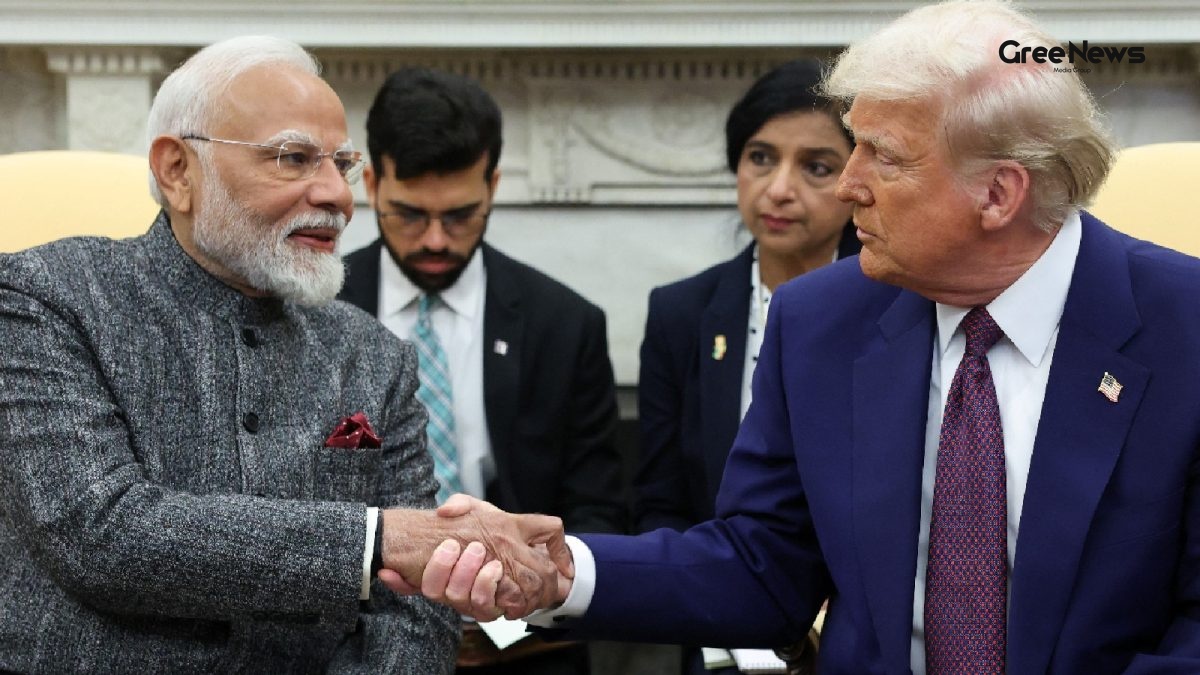
India has already shown strong support for Israel after the October 2023 attacks by Hamas. I remember watching the news coverage the Prime Minister Narendra Modi’s visit to Israel, his condemnation of the violence, and the reaffirmation that terrorism has no place in the world. That visit was covered extensively as part of the latest news India stories, reinforcing the already warm ties between the two countries.
During the virtual interaction, Sa’ar thanked the Hindu leaders for their involvement and highlighted the “positive trends” in Israel‑India relations. He said, “I spoke about the great importance we attach to this relationship,” and reminded the audience that Israel has been fighting a “historic campaign” against radical Islam for the past 2.5 years.
These remarks were well‑received among many Indian citizens who see a strong bilateral partnership as beneficial, especially when it comes to defence cooperation and intelligence sharing.
Personal reflections how I see the story unfolding
Honestly, when I talked to my cousin who works in a private security firm in Delhi, his reaction was that the designation could streamline intelligence sharing between India and Israel. He mentioned that his company already handles contracts that involve counter‑terror training, and a formal label on Hamas would make the paperwork smoother when dealing with overseas partners.
On the other hand, my neighbour, a small‑business owner in Bengaluru, worries about any diplomatic tension that might affect trade with Pakistan. He told me, “If we start playing politics with labels, it could spill over into economic relations.” That's a valid concern, and it’s part of what makes the whole debate feel like a delicate balancing act.
What’s striking is how this conversation has become a part of the daily chatter in tea stalls and online forums alike. The story has gone viral news in a short span you can see it trending on Twitter, sharing memes, and even on WhatsApp groups where people drop short clips of Sa’ar’s speech. That level of engagement tells you how sensitive and important the issue is for ordinary Indians.
The bigger picture a global fight against a “terror octopus”
Sa’ar’s metaphor of a “terror octopus” is something that stuck with me. He argued that the octopus is headed by the Iranian regime, with its tentacles spreading into various extremist networks. If India pins down the head by designating Hamas as a terror group it could potentially weaken the tentacles that reach into LeT’s activities here.
The Israeli official’s message was clear: “This struggle has, and will have, implications beyond the Middle East.” For many of us following the India updates every day, that means keeping an eye on how regional conflicts can ripple into our own security landscape.
In most cases, governments work behind the scenes, but when a public figure like Sa’ar voices it openly, it invites public scrutiny and discussion exactly what we’re seeing across the country.
What’s next? The road ahead for India and Israel
Many people were surprised by the direct request for a formal designation. So what could be the next steps? Some analysts suggest that India might convene a high‑level security committee to weigh the pros and cons. Others think that the move could be tied to future arms deals or joint training programmes with Israel.
From my viewpoint, the most realistic outcome is a gradual process perhaps a statement of concern, followed by increased intelligence cooperation, and finally, if the political climate is favourable, an official designation. Whatever the timeline, the conversation itself is already shaping public opinion, and that’s a power move in itself.
One thing is certain the issue will stay on the radar of both policymakers and ordinary citizens for the foreseeable future. The next few weeks of trending news India will likely include more statements, possibly from Indian officials, reacting to Sa’ar’s appeal.
Conclusion Why we should care
All in all, this episode shows how interconnected global security issues have become. A speech by an Israeli minister, a virtual gathering of Hindu leaders, and the historical memory of terror attacks in India converge to create a story that feels both distant and personal.
It’s a reminder that the fight against radical Islam isn’t confined to one region. And for us, staying informed through the latest news India portals and engaging in these discussions is part of being a responsible citizen. Whether you’re a student, a businessperson, or just someone who enjoys a good chai‑time chat, this is a topic that is likely to keep popping up in our feeds and conversations.
So, keep an eye out for official statements, watch how the narrative evolves, and maybe, just maybe, we’ll see a shift in how India tackles the broader terror network one designation at a time.
(With inputs from agencies)