The ‘Cromun’ Craze: When a Gulab Jamun‑Filled Croissant Takes the Internet by Storm
A pastry that stuffs the Indian classic Gulab Jamun inside a flaky French croissant—dubbed the Cromun—has ignited a fierce online debate, pitting curiosity against culinary conservatism.
How the Unusual Pairing First Appeared
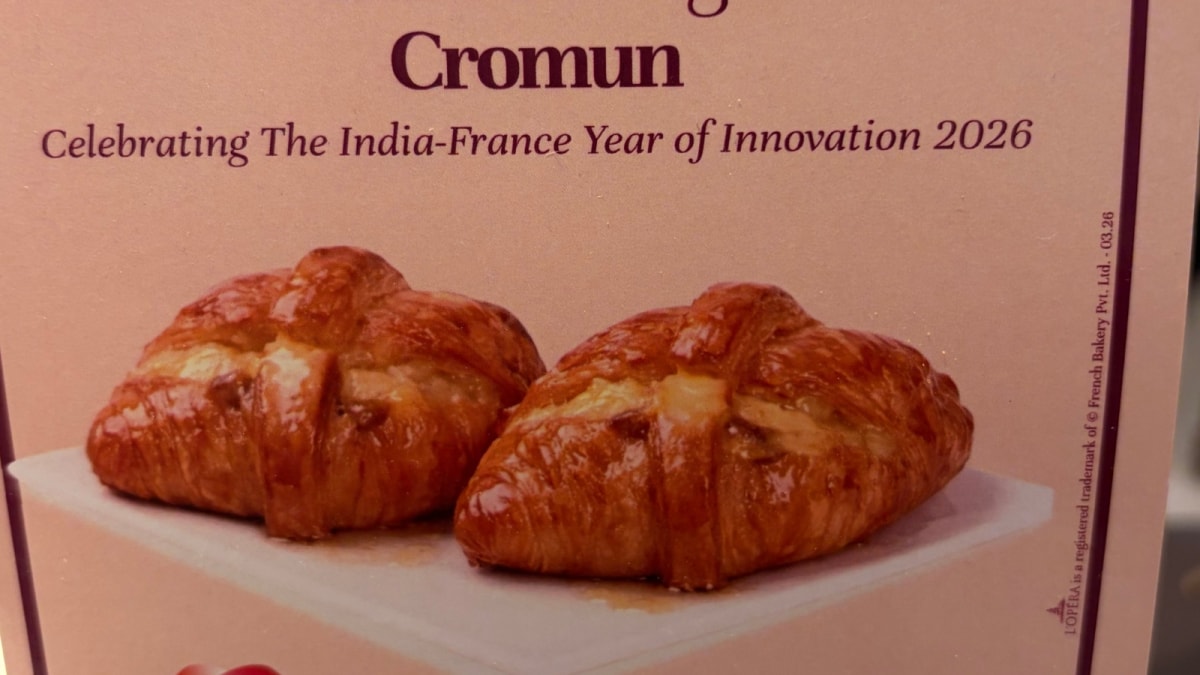
The story began when a social‑media user identified as @Patralekha2011 posted a photo of a pastry discovered on a local street. The picture displayed a typical French croissant, yet the interior was filled with the unmistakable round shape of Gulab Jamun. The caption read, “In my neighbourhood. A croissant with Gulab Jamun inside !!!!” The post quickly attracted attention, prompting followers to inquire about the taste, texture, and the bakery behind the creation.
@Patralekha2011 continued, describing the experience as “sweet, spongy, but not the quintessential Gulab Jamun. I am biased coz I like a classic croissant.” The comment highlighted a personal preference for the unaltered French version while acknowledging the novelty of the hybrid.
Further investigation revealed that the pastry is marketed under the name “Cromun.” @Patralekha2011 explained that the Cromun is “not quite croissant, not quite Gulab Jamun,” emphasizing the ambiguous middle ground the item occupies.
Who Is Behind the Innovation?
The Cromun is the brainchild of L’Opera Patisserie, a bakery known for experimenting with cross‑cultural flavors. L’Opera Patisserie introduced the Cromun as part of a broader initiative celebrating the India‑France Year of Innovation. The initiative seeks to showcase how culinary traditions from both nations can intersect, creating fresh experiences for diners.
According to L’Opera Patisserie, the Cromun merges the buttery, layered structure of a traditional French croissant with the syrup‑laden richness of Gulab Jamun—two icons that rarely share a plate. The bakery’s promotional material frames the blend as a homage to the shared spirit of creativity that defines both French patisserie and Indian confectionery.
What the Flavor Profile Entails
From the description offered by @Patralekha2011, the Cromun delivers a dual sensation. The outer shell presents the familiar light, flaky texture associated with a croissant, while the interior offers the dense, syrup‑soaked softness of Gulab Jamun. The combination creates a contrast between the dry, buttery layers and the moist, sweet core.
Because the croissant’s layers are baked to a golden hue, the pastry retains its signature crispness even after the Gulab Jamun filling is added. Meanwhile, the Gulab Jamun itself remains saturated with its sugary syrup, preventing it from drying out when encased within the pastry. The result, according to the initial tasting notes, is a “sweet, spongy” bite that merges two distinct culinary experiences into a single mouthful.
Online Reactions: Curiosity Meets Controversy
Once the photo circulated, the internet erupted with a spectrum of responses. Some users expressed fascination, posting comments such as, “Wow I’m so curious. What was the texture of the Gulab Jamun like inside?” Others responded with mock horror, exclaiming, “I’m dying how could they do this!” The polarized reactions underscored the emotional investment many hold for both the croissant and Gulab Jamun as cultural symbols.
Not all feedback was light‑hearted. A segment of commenters took a more critical stance, suggesting that the Cromun disrespects the integrity of Gulab Jamun. One user warned, “The manufacturer should be sued for hurting the sentiments of the real Gulab Jamuns.” Such remarks reflect a protective attitude toward culinary heritage, especially when a beloved dessert is reinterpreted.
Another line of criticism argued that certain foods belong to specific contexts. A user wrote, “Geez. It’s supposed to be had with coffee as a bakery item in the morning. Stuff Indian sweets into desserts like macrons instead. Leave the croissant alone please.” The comment points to a belief that the croissant’s role as a breakfast companion should remain untouched, while Indian sweets might be better paired with other European pastries.
Understanding the Cultural Stakes
The heated dialogue surrounding the Cromun highlights a broader conversation about cultural ownership in food. Both the croissant and Gulab Jamun carry deep historical roots—croissant as a staple of French boulangeries and Gulab Jamun as a celebratory sweet across South Asia. When a baker intertwines these icons, the act can be seen as either a bold celebration of shared creativity or an overstep that risks diluting tradition.
Supporters argue that fusion dishes like the Cromun expand culinary horizons, encouraging diners to experience flavors they might never encounter otherwise. Critics, however, maintain that certain classics should remain pure, preserving the authenticity that makes them beloved. The intensity of the debate mirrors similar disputes that have arisen whenever iconic dishes are reimagined—whether through the introduction of sushi tacos, ramen burgers, or kimchi pizza.
The Role of Innovation in Contemporary Patissieries
L’Opera Patisserie’s decision to launch the Cromun aligns with a global trend where bakeries and restaurants experiment with hybrid concepts. The India‑France Year of Innovation provides a thematic backdrop that encourages chefs to blend techniques, ingredients, and presentations from the two nations. Within this framework, the Cromun serves as a tangible example of cross‑border culinary dialogue.
From a technical standpoint, encasing a syrup‑laden sweet like Gulab Jamun inside dough that must rise and develop layers presents challenges. The pastry must retain its structural integrity while absorbing enough syrup to convey the characteristic sweetness of Gulab Jamun. L’Opera Patisserie’s ability to achieve this balance demonstrates a level of craftsmanship that transcends simple novelty.
Will the Cromun Endure?
Whether the Cromun will evolve into a permanent menu item or fade after the hype subsides remains uncertain. Its viral traction guarantees a deGree of commercial attention, but sustained popularity will depend on repeat customers and whether the flavor combination resonates beyond the initial curiosity factor.
Even if the Cromun proves to be a fleeting fad, its impact is already evident. The pastry sparked an extensive conversation on social platforms, illustrating how a single innovative dish can become a catalyst for cultural reflection. It also demonstrated the power of visual media—an image of a familiar shape filled with an unexpected core can ignite widespread discourse.
Conclusion: A Sweet Negotiation Between Tradition and Experimentation
The emergence of the Cromun—a croissant that hides a Gulab Jamun inside—captures the tension that exists at the intersection of heritage and modernity. On one hand, the pastry offers a daring sensorial experience, uniting the airy layers of a French staple with the sugary depth of an Indian treat. On the other hand, the reaction it provoked underscores how deeply people cherish the original forms of their beloved foods.
As chefs continue to push boundaries, the conversation sparked by the Cromun will likely persist, reminding both creators and consumers that innovation is most successful when it respects the stories embedded in the foods it transforms. Whether the online community ultimately embraces or rejects the Cromun, the dessert has already secured its place in the cultural dialogue surrounding culinary fusion.