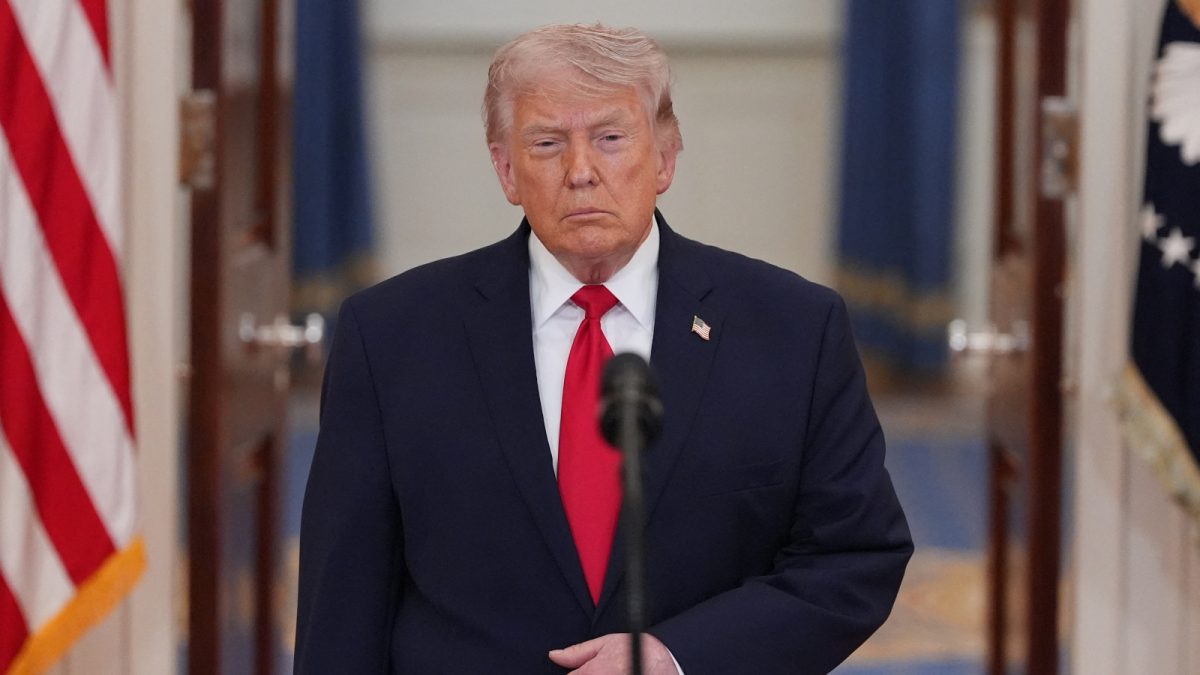
Trump Unveils Massive 170‑Aircraft Rescue Effort Over Iran and CIA Deception Operation
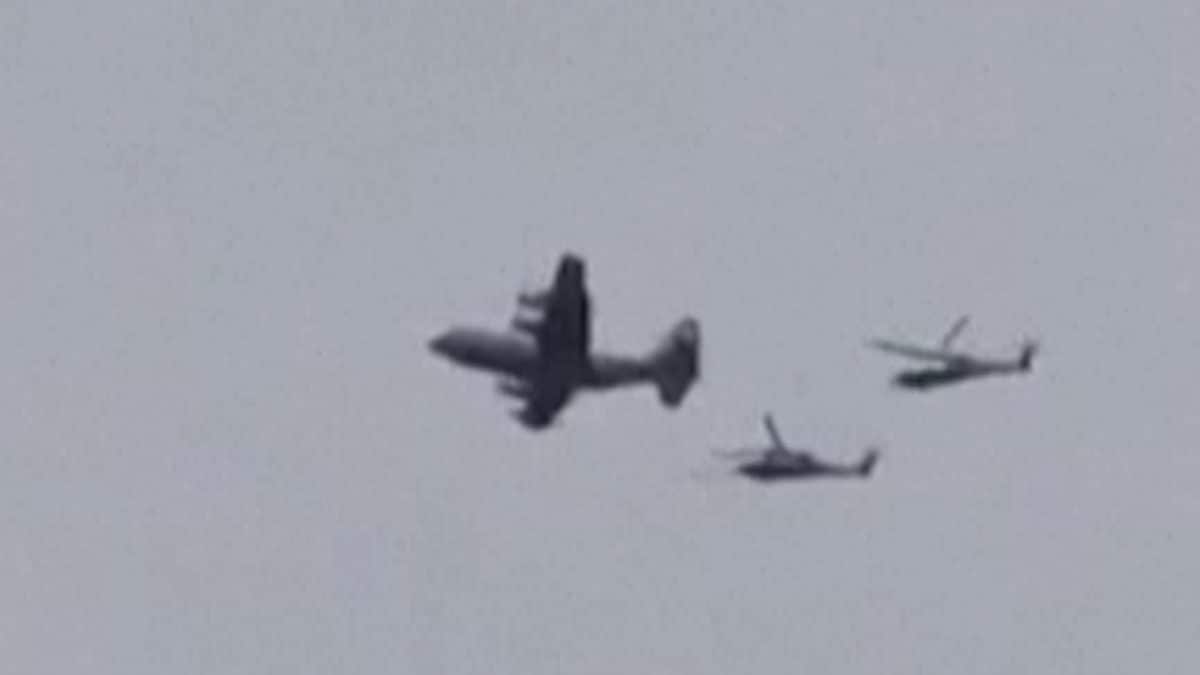
President Trump revealed the extraordinary scale of the operation that rescued the crew of an F-15E fighter jet that went down in Iranian airspace, emphasizing a coordinated effort that employed more than one‑hundred and seventy aircraft.
First Wave: Extraction of the Pilot
Trump stated that the initial phase of the rescue employed twenty‑one aircraft. The pilot of the downed F-15E was located by a network of aerial assets and subsequently extracted by an HH‑60W Jolly Green II helicopter. The HH‑60W, a modern combat rescue platform, was tasked with a rapid ingress into hostile territory, securing the pilot and returning him safely to friendly airspace.
The composition of the twenty‑one‑aircraft contingent included a mix of fighter escorts, surveillance platforms, and logistic support aircraft. Each element contributed to a protective bubble that shielded the rescue helicopter from any potential threat, ensuring a clear corridor for the extraction.
Trump highlighted the seamless coordination among the participating units, noting that the pilot’s safe recovery demonstrated “the sheer capability of American air power when it is called upon to bring a comrade home.”
Second Wave: Retrieval of the Weapons Systems Officer
The follow‑up rescue to locate the weapons systems officer of the same F‑15E required a dramatically larger force. Trump reported that approximately one‑hundred and fifty‑five aircraft were mobilized for this phase, including four strategic bombers, sixty‑four fighter jets, forty‑eight aerial refueling tankers, and thirteen specialized rescue aircraft.
Four bombers provided high‑altitude over‑flight to deter any hostile air activity and to serve as a visible symbol of overwhelming force. The sixty‑four fighter jets performed air‑superiority patrols, maintaining an air‑dominant environment while also contributing to visual reconnaissance of the mountainous terrain where the weapons systems officer was believed to be hiding.
Forty‑eight refueling tankers extended the endurance of all participating aircraft, allowing continuous airborne presence over the area of interest. The thirteen rescue aircraft, which included additional HH‑60W platforms and other dedicated personnel recovery assets, were on standby to execute a ground‑level extraction once the weapons systems officer could be reached.
According to Trump, subterfuge played a pivotal role in this massive deployment. The United States employed deceptive tactics to conceal the true intent of the aerial congregation, misleading Iranian observers and minimizing the risk of interception.
Heroic Endurance of the Weapons Systems Officer
The weapons systems officer survived the crash, landed a considerable distance away from the pilot, and evaded capture for nearly forty‑eight hours. Trump described the officer’s situation as “a long time when you are in tough shape and bleeding,” emphasizing the physical and mental stamina required to survive in such hostile conditions.
Isolated in rugged, mountainous terrain, the weapons systems officer navigated steep inclines, dense vegetation, and exposed cliff faces. Self‑administered first‑aid measures were employed to stem bleeding and to stabilize injuries. The officer’s ability to remain undetected despite the presence of a massive aerial formation demonstrated remarkable fieldcraft and improvisation.
When the rescue team finally located the weapons systems officer, a coordinated ground movement facilitated his ascent to a higher altitude where extraction could be safely conducted. The final extraction involved a HH‑60W helicopter that hovered in a narrow mountain valley, a maneuver that required precise piloting and the endurance of the stranded airman.
Trump praised the weapons systems officer as “a heroic figure who evaded capture on the ground in Iran for almost forty‑eight hours,” underscoring the significance of his survival for the overall mission success.
Central Role of the CIA in the Operation
After Trump’s briefing, CIA Director John Ratcliffe took the podium to detail the intelligence component of the rescue. Ratcliffe characterized the entire mission as a “no‑fail mission,” underscoring the decisive role of the Central Intelligence Agency in tracking and protecting the downed airmen.
Ratcliffe explained that the CIA deployed a combination of human assets on the ground and cutting‑edge technological resources to locate the weapons systems officer. He likened the difficulty of the task to “searching for a single grain of sand in the middle of a desert,” highlighting the precision and persistence required.
To mislead Iranian forces, the CIA executed a “deception campaign.” This effort involved feeding false information, creating misleading signals, and employing electronic warfare techniques designed to obscure the true location and movements of the rescue assets. Ratcliffe emphasized that the deception was coordinated at the highest level, operating under the direct direction of President Trump.
Ratcliffe asserted that “at the president’s direction, we deployed both human assets and exquisite technologies that no other intelligence service in the world possesses.” By merging on‑the‑ground operatives with satellite‑derived imagery, signals intelligence, and advanced analytics, the CIA was able to maintain situational awareness throughout the operation.
The successful extraction of both crew members, according to Ratcliffe, validated the CIA’s capability to conduct high‑risk, time‑critical missions in hostile environments while safeguarding American personnel.
Strategic Implications and Operational Takeaways
The scale of the operation, involving more than one‑hundred and seventy aircraft, sends a clear strategic message about United States commitment to the recovery of its service members. Trump’s disclosure underscores an willingness to allocate overwhelming air power, advanced intelligence tools, and sophisticated deception tactics to achieve a single, critical objective.
The integration of strategic bombers, fighter escorts, refueling tankers, and rescue helicopters showcases a holistic approach to personnel recovery. Each component fulfilled a distinct role, from establishing air superiority to extending mission endurance and providing direct extraction capabilities.
The CIA’s deception campaign illustrates the importance of information dominance in modern conflict. By shaping the adversary’s perception of the aerial composition, the United States was able to conduct a massive operation without alerting Iranian forces to the true purpose of the flight pattern.
From an operational perspective, the mission highlights the necessity of inter‑service coordination, rapid decision‑making at the highest levels of government, and seamless communication between military and intelligence agencies.
President Trump’s briefing and CIA Director John Ratcliffe’s subsequent remarks together paint a picture of a well‑orchestrated effort that combined physical might with intellectual ingenuity, ultimately delivering a successful outcome for the downed F‑15E crew.