The veteran actor shares how her son Zahaan took her out on a holiday, and why spending time with your ageing parents is a must
In the relentless hum of the 21st century, “busy” has become our default setting. We wear our packed calendars like badges of honour, juggling spreadsheets, social obligations, and the perpetual weight of ‘adulting.’ But in this high‑speed chase for success, a vital connection often thins out: the one with our ageing parents.
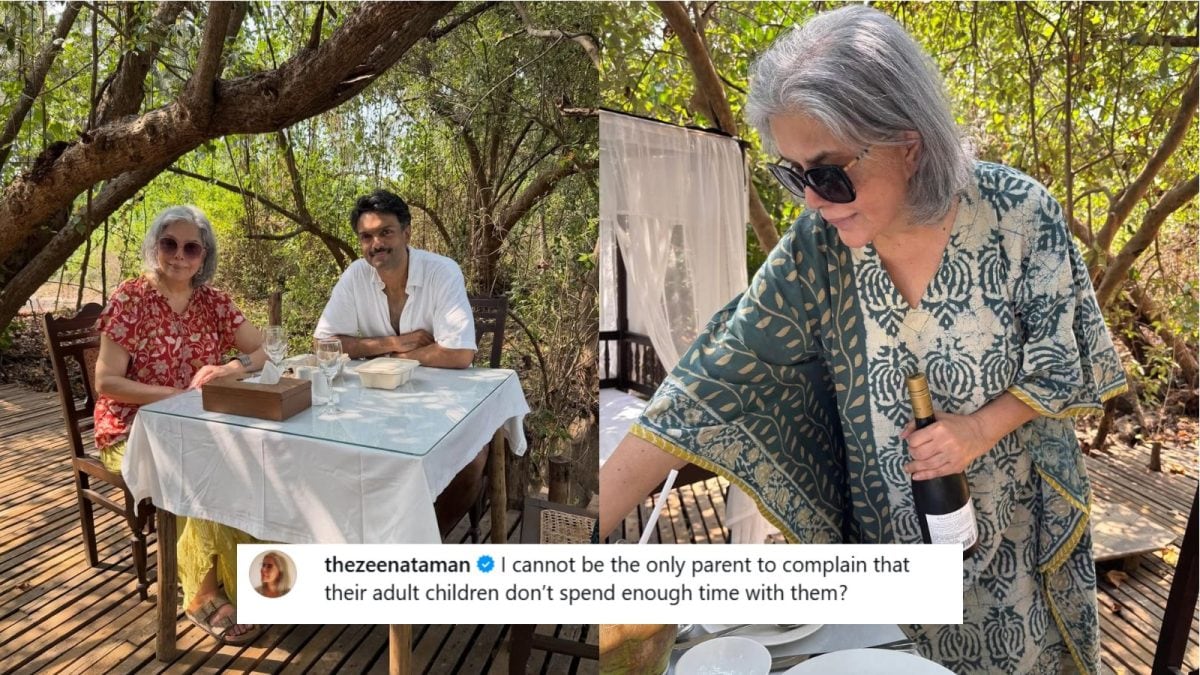
Veteran actor and silver‑screen icon Zeenat Aman recently touched a raw nerve on social media, voicing a sentiment many parents feel but few dare to broadcast. “I cannot be the only parent to complain that their adult children don’t spend enough time with them?” Zeenat Aman mused. The grievance, Zeenat Aman admitted, felt as though it had been falling on deaf ears—until Zahaan took Zeenat Aman on a getaway to a secluded haven in Goa.
Why Do We Become Distant From Our Parents As We Grow Older?
For most urban professionals, the relationship with parents shifts into a transactional phase once we leave the nest. It becomes a series of “Did you eat?” phone calls and duty‑bound visits during Diwali or long weekends. We convince ourselves that “providing” or “checking in” is the same as “being there.”
Zeenat Aman’s post serves as a poignant reality check: Parents don’t just want our check‑ins; they want our presence. When Zeenat Aman speaks of her soul being “fully appeased,” Zeenat Aman isn’t talking about the luxury of the destination, but the luxury of undivided attention. “If you are an adult child, this is your reminder that your parents won’t be around forever. Make your time together count!”
Think of it like this: when a neighbour in Delhi invites you for a cup of chai, you don’t just sip and glance at your phone—you listen, you laugh, you share stories. Similarly, when we sit with our parents, the simple act of being truly present becomes a bridge that connects generations.
How The Goa Trip With Zahaan Changed Things
Watching a video of Zahaan driving Zeenat Aman to a quiet beachside cottage in Goa, I felt an instant pang of nostalgia. The sea breezes, the sound of waves, and the occasional gull seemed to whisper a reminder: time is fleeting. Zahaan chose a place away from the usual hustle of Mumbai traffic, where the only interruptions were the rustle of palm leaves and the occasional call of a distant fisherman.
During the trip, Zahaan and Zeenat Aman spent hours walking along the shoreline, sharing memories of Zeenat Aman’s early film days, and even trying their hand at cooking a simple Goan fish curry together. It wasn’t about the glamour; it was about the shared laughter, the occasional mis‑step while chopping onions, and the quiet moments when Zeenat Aman rested her head on Zahaan’s shoulder watching the sunset.
That simple getaway became a lesson: when you step out of the routine, you create space for genuine bonding. Zahaan didn’t just give Zeenat Aman a holiday; Zahaan gave Zeenat Aman a memory that will linger long after the sand has slipped through our fingers.
Practical Ways To Be More Emotionally Available
Being “present” is a skill that many of us have unintentionally unlearned. Below are some simple, day‑to‑day actions that can help bridge the emotional distance without waiting for a milestone or a crisis.
Practice ‘Active’ Listening (Without The Phone)
The biggest barrier to emotional availability is the glowing screen in our hand. When visiting or calling, put the phone in another room. Listen to their repetitive stories or their mundane updates about the neighbourhood with the same focus you’d give a high‑stakes work meeting. To them, those stories are the bridge to your world.
Initiate The ‘Third Space’
Don’t just meet at home where the dynamics are fixed (them hosting, you being the guest). Like Zahaan’s Goa trip, find a “third space” like a park, a new café, or a quiet pottery class. Changing the environment breaks the routine and allows you to see each other as individuals, rather than just ‘Parent’ and ‘Child.’ For example, a Sunday morning visit to the local lake in Pune, followed by chai from a roadside stall, can turn an ordinary day into a cherished memory.
Ask About Their ‘Internal’ World
We often ask parents about their health or their chores. Instead, ask about their thoughts. Maybe they have watched a new series on a streaming platform, or perhaps they have reconnected with an old school friend. Validating their intellectual and emotional life makes them feel seen, not just looked after.
In my own family, I once asked my mother about a book she was reading – a biography of Mahatma Gandhi. She lit up, spoke passionately about non‑violence, and we ended up discussing how those principles could be applied to our everyday life. That conversation stayed with me for months.
Everyday Indian Scenarios To Strengthen Bonds
Here are a few slice‑of‑life ideas that fit right into an Indian household:
- Take your parents to the local market on a Saturday, let them pick fresh vegetables, and then cook a simple dinner together. The act of choosing and cooking creates a shared rhythm.
- Invite them to watch a classic Bollywood film on TV, perhaps something Zeenat Aman starred in, and discuss the scenes afterwards. It’s a fun way to revisit memories while creating new ones.
- Plan a short train journey to a nearby hill station. The slow pace of train travel encourages conversations that you might miss while driving through traffic.
- Celebrate a small, personal festival at home – like a “thank‑you” day where you write a note of gratitude for each parent and read it aloud over a cup of masala chai.
These little gestures, though simple, carry a weight that no expensive gift can match. They remind us that affection is often a matter of time, not money.
Remembering That Time Is The One Currency We Can’t Earn Back
At the end of the day, time is the only currency that cannot be earned back. This week, don’t just send a text. Demand some of your own time back from your schedule and give it to the people who gave you yours.
When Zeenat Aman wrote about the Goa trip, it wasn’t just a vacation story – it was a gentle nudge for all of us to pause, look around, and choose to be present. Whether you live in a bustling metro or a quiet town, the message stays the same: your ageing parents are not forever. Make those moments count, because they truly are priceless.