Xiaomi Pad 8 Receives Meaningful Upgrades While Price Increases
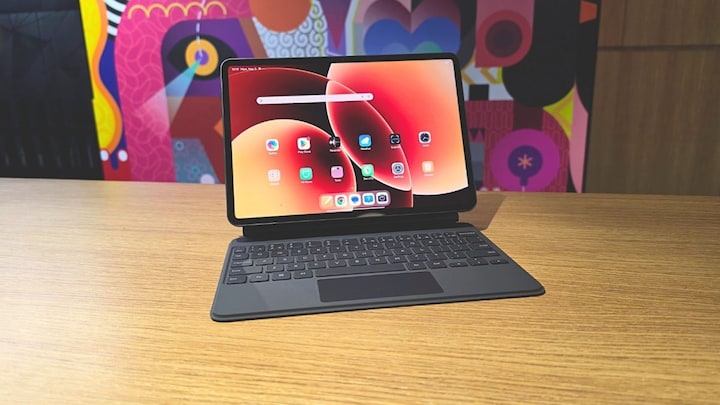
Xiaomi Pad 8 has got hardware upgrades, comes with Android 16 out of the box but has got a price hike too. Does it all give you the ideal package?
Overview of the Xiaomi Pad 8 Lineup
Xiaomi has been producing tablets for several generations, and the Pad series has consistently targeted users seeking a reliable, budget‑friendly experience. Over recent years, the Pad lineup has undergone incremental improvements, making the latest Xiaomi Pad 8 and its predecessor Xiaomi Pad 7 more capable of handling everyday tablet duties while remaining affordable.
The design philosophy behind Xiaomi Pad 8 emphasizes continuity rather than radical change. Xiaomi Pad 8 retains the familiar silhouette of earlier models, focusing instead on extending longevity, enhancing speed, and ensuring dependable performance for a variety of daily tasks.
This article examines whether the upgrades introduced in Xiaomi Pad 8, combined with a higher price point, align with the expectations set by previous generations.
Going Sleek – Design and Build of Xiaomi Pad 8
When it comes to design, Xiaomi Pad 8 does not deviate dramatically from the established aesthetic of the Pad series. The frame of Xiaomi Pad 8 is constructed from aluminium, while the back panel also utilizes aluminium, delivering a sturdy feel that resists everyday wear.
Compared with Xiaomi Pad 7, the thickness of Xiaomi Pad 8 measures 5.8 mm, a modest reduction from the 6.2 mm of Xiaomi Pad 7. The weight of Xiaomi Pad 8 stands at approximately 494 grams, slightly lighter than the 500 grams recorded for Xiaomi Pad 7. This reduction is achieved despite an increase in battery capacity, demonstrating Xiaomi’s commitment to refining ergonomics.
When a keyboard accessory is attached to Xiaomi Pad 8, the overall weight rises noticeably, an effect that becomes evident when the combined unit is carried in a bag. The form factor remains unchanged, and Xiaomi continues to forgo the introduction of a larger variant within the Pad series for the current market.
It is important to note that Xiaomi Pad 8 does not carry an IP rating for water or dust resistance. This omission aligns with long‑standing expectations for tablets in this price bracket, where such protection has seldom been a decisive factor for consumers.
The Right Display Pitch – Screen Characteristics
The visual experience of Xiaomi Pad 8 is defined by an 11.2‑inch LCD panel. Xiaomi Pad 8 offers two display options: a standard glossy version and an anti‑glare variant. While LCD technology does not achieve the deep blacks characteristic of AMOLED panels, the colour reproduction on Xiaomi Pad 8 remains crisp, and the peak brightness is sufficient for most indoor and outdoor lighting conditions.
This review evaluated the standard version of Xiaomi Pad 8, leaving the impact of the anti‑glare coating for future comparative analysis. User feedback generally suggests that anti‑glare screens reduce glare but may also diminish perceived colour vibrancy, prompting some users to favour the standard glossy display for media consumption.
Regardless of the chosen panel, Xiaomi Pad 8 supports Dolby Vision, enabling a broader colour gamut and enhanced dynamic range when viewing compatible content. This feature contributes to a richer viewing experience for television shows, movies, and streaming services.
Big Hardware Jump – Processing Power
Under the hood, Xiaomi Pad 8 is powered by the Snapdragon 8s Gen 4 chipset. Snapdragon 8s Gen 4 represents a notable step up from the Snapdragon 7s Gen 3 chipset found in Xiaomi Pad 7. This change propels Xiaomi Pad 8 into a performance tier capable of handling routine tasks with ease while also supporting smoother multitasking for productivity‑oriented workloads.
During a series of productivity tests, the responsiveness of Xiaomi Pad 8 proved markedly fluid. The combination of Snapdragon 8s Gen 4 and the optimized software stack suggests that Xiaomi Pad 8 will retain its performance edge longer than earlier iterations, even though Snapdragon 8s Gen 4 does not sit at the absolute flagship level.
Overall, the inclusion of Snapdragon 8s Gen 4 positions Xiaomi Pad 8 as a robust device that can comfortably manage both entertainment and light‑to‑moderate productivity scenarios without noticeable lag.
Android 16 From Xiaomi – Software Evolution
Xiaomi Pad 8 ships with Android 16 based HyperOS 3 out of the box. HyperOS 3 brings a cleaner experience by minimizing pre‑installed bloatware, and it delivers a set of new features that enhance the overall tablet experience compared with earlier MIUI‑based builds.
According to Xiaomi’s commitment, Xiaomi Pad 8 will receive four major operating‑system upgrades and six years of security updates. This long‑term support window provides confidence for users who wish to keep Xiaomi Pad 8 up to date over an extended lifespan.
The interface of HyperOS 3 mirrors the mobile version familiar to Xiaomi users, while AI‑driven tools are introduced to better leverage the hardware capabilities of Xiaomi Pad 8. These tools aim to streamline common tasks and improve overall efficiency.
Future updates have the potential to introduce more PC‑like functionalities, reflecting the broader industry trend of transforming Android tablets into hybrid productivity devices.
The Whole Setup – Accessories for Xiaomi Pad 8
Xiaomi Pad 8 is complemented by two primary accessories: the Focus Keyboard and the Pen Pro. The Focus Keyboard integrates a trackpad, offering a laptop‑like typing experience. The keys on the Focus Keyboard are well spaced, provide decent tactile feedback, and include backlighting for low‑light environments.
The Focus Keyboard connects to Xiaomi Pad 8 via magnetic contacts on the back of the tablet, eliminating the need for Bluetooth pairing or a separate charging source. This plug‑and‑play approach simplifies the transition from tablet to a quasi‑laptop setup.
Pen Pro, the stylus accessory for Xiaomi Pad 8, delivers an improved set of features aimed at narrowing the gap with higher‑end stylus solutions such as the Apple Pencil. Pen Pro supports pressure sensitivity and tilt detection, enabling precise drawing and note‑taking experiences.
Audio on Xiaomi Pad 8 is handled by a quad‑speaker stereo arrangement that now supports Dolby Atmos. Dolby Atmos adds spatial audio cues, offering a more immersive soundstage for movies, games, and music playback.
Sleek But Lasts Longer? – Battery Capacity and Charging
Battery capacity on Xiaomi Pad 8 has been increased to 9,200 mAh, up from the 8,850 mAh unit found in Xiaomi Pad 7. Xiaomi Pad 8 supports 45 W fast charging, allowing the battery to be replenished to full capacity in a little over an hour.
For users with intensive usage patterns, Xiaomi Pad 8 can sustain a full day of operation while retaining roughly 25 percent charge by day's end. For more moderate users, Xiaomi Pad 8 can comfortably extend across multiple days before requiring a recharge.
Real‑world testing of Xiaomi Pad 8's battery life confirms that the claimed endurance aligns with observed performance in a variety of usage scenarios, from media consumption to light productivity tasks.
Verdict – Value Proposition of Xiaomi Pad 8
Taking all aspects into account, Xiaomi Pad 8 addresses many expectations for an upgraded tablet in its segment. The hardware leap to Snapdragon 8s Gen 4, the larger 9,200 mAh battery, and the inclusion of Dolby Vision and Dolby Atmos collectively enhance the multimedia experience.
The decision to retain an LCD panel rather than shift to AMOLED is balanced by higher refresh rates and HDR support, delivering a satisfactory visual experience for most consumers. Android 16‑based HyperOS 3 out of the box, combined with an extended update roadmap, adds long‑term software confidence.
Price increases affect Xiaomi Pad 8 across the board, yet the added capabilities provide a compelling argument for those seeking a well‑rounded tablet without venturing into premium territory. In summary, Xiaomi Pad 8 presents a solid, future‑proofed package for users prioritizing performance, battery life, and a versatile accessory ecosystem.