Melania Trump’s Direct Response to the Rumours
When I was scrolling through my phone after finishing my morning chai, I stumbled upon a short video of the U.S. First Lady standing in front of the White House. In the clip, Melania Trump straightaway said that the claims linking her with Jeffrey Epstein are completely untrue. The core of the message was simple: "The lies linking me with the disgraceful Jeffrey Epstein need to end today." Melania Trump also added that she is "not Jeffrey Epstein’s victim" and that there has never been any relationship between her and Jeffrey Epstein or Ghislaine Maxwell.
What struck me was how directly Melania Trump spoke about the issue. Usually, such statements are made by spokespeople, but this time the U.S. First Lady herself took the microphone. The message was clear – no friendship, no introduction, no victimhood. Melania Trump further clarified that Jeffrey Epstein never introduced her to Donald Trump, the President, and that the two met at a party in New York back in 1998.
The Internet’s Reaction and the Dig‑Up of Old Photos
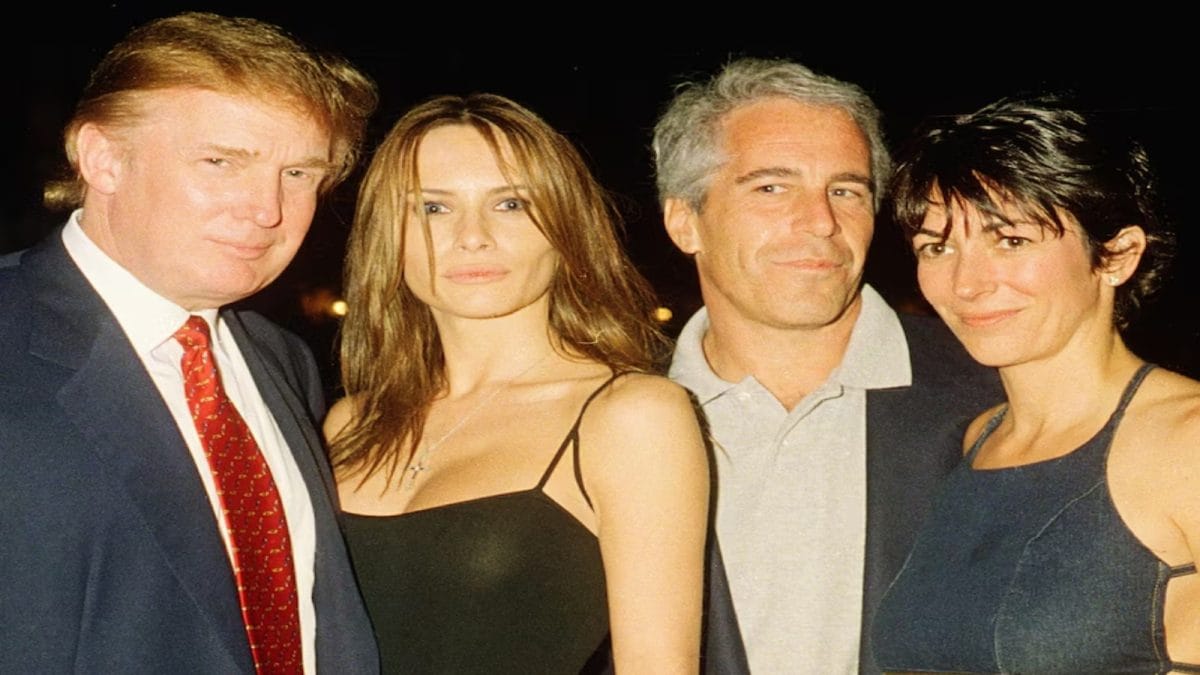
After Melania Trump’s statement, I noticed my social‑media feed buzzing with old photographs and articles. Netizens quickly started digging into archives, pulling up pictures from the early 2000s that showed Donald Trump and Jeffrey Epstein together at Mar‑a‑Lago and at various New York gatherings. Some of the images even showed party scenes where both men were seen chatting with other guests.
One tweet that kept popping up read, "Of course she does…Whats she gonna say? My husband bought me from Mr. Epstein? Cmon man" followed by a link. The tone of the comment was sarcastic, echoing the frustration many felt about the resurfacing of old material. While the tweet itself didn’t provide new proof, it reflected a wider sentiment that the internet rarely forgets, especially when it comes to high‑profile personalities.
Even though the pictures clearly show Donald Trump in the same room as Jeffrey Epstein, there is still no direct evidence that Melania Trump ever spoke with Jeffrey Epstein. The online chatter, however, kept looping around the same point – if the President was seen with Epstein, could the First Lady have known about him? The speculation persisted, despite Melania Trump’s clear denial.
Background: Who Is Jeffrey Epstein?
For those who might not be fully aware, Jeffrey Epstein was a convicted sex offender who died while awaiting trial on charges of sex‑trafficking minors. His case drew global attention because of the alleged connections he had with many influential figures. Ghislaine Maxwell, a close associate of Jeffrey Epstein, also became a central figure in the investigations.
Even though Jeffrey Epstein’s death happened years ago, the aftermath of his case continues to surface whenever old photos or documents get re‑examined. The so‑called “Epstein Files” – which include court documents, media reports, and archived photographs – often reappear online whenever a new claim is made about a possible connection.
How the Story Reached Us in India
Living in a tier‑two city in India, I usually get my news from a mix of local newspapers, WhatsApp groups, and online portals. The story about Melania Trump’s denial came up in a WhatsApp forward that my cousin sent me after returning from a business trip to the United States. The forward included the video clip of the statement, a snapshot of the tweet, and a short commentary that said, "First Lady says no ties – internet still digging!" It was interesting to see how quickly the story traveled across continents, landing in my inbox while I was making dinner.
Later that evening, a few friends gathered at a local tea stall and the topic popped up. We debated whether the images of Donald Trump and Jeffrey Epstein meant anything for Melania Trump. One friend, who works in a media agency, mentioned that political gossip tends to get blown out of proportion, especially when it involves scandals from abroad.
Personal Observations on the Whole Drama
Honestly, watching the whole thing unfold felt a bit like watching a daily soap opera. There’s the official denial, the flood of old photographs, the sarcastic comments on social media, and the lingering curiosity about what’s true and what’s not. The way Melania Trump framed her denial – using phrases like "lies must end today" – seemed designed to shut down further speculation, but the internet, as always, found ways to keep the conversation alive.
What also caught my eye was the repeated mention that Jeffrey Epstein never introduced Melania Trump to Donald Trump. That particular line reminded me of a phrase my mother often uses: "If someone didn’t introduce you, then there’s no point in arguing about it." It’s a simple way of saying that the connection is probably nonexistent unless proven otherwise.
From a practical standpoint, the episode also made me think about how quickly information spreads in today’s digital age. Within a few hours, my phone buzzed with messages from relatives, friends, and even strangers sharing the same news, each adding a little commentary, a meme, or a still image. It felt like a cascade – one piece of information leading to another, each layer adding its own spin.
Why the Internet Never Forgets
One thing that became crystal clear is the digital memory of the internet. Once a photograph or a piece of evidence is uploaded, it can be resurfaced at any time, especially when a related story breaks. In this case, the resurfacing of early‑2000s photographs of Donald Trump and Jeffrey Epstein was almost inevitable after Melania Trump’s denial.
Even though the images do not directly show Melania Trump with Jeffrey Epstein, the fact that the President was seen with him keeps fueling speculation. This pattern repeats itself across many political controversies – a statement is made, old material is dug up, and the cycle continues.
What This Means for Public Perception
From my perspective, the whole scenario highlights how public perception can be shaped by both official statements and the endless flow of online content. Melania Trump’s straightforward denial was meant to clear the air, but the influx of archived photographs and sarcastic tweets created a parallel narrative that many people still discuss.
In India, where we often talk about global politics over a cup of filter coffee, such stories become part of everyday conversation. The mix of official denial and internet speculation creates a sort of dual reality – one that the official narrative wants you to accept, and another that the internet keeps reminding you of.
Final Thoughts
Looking back at the whole episode, I feel that it’s a reminder of how powerful statements from public figures can be, but also how fragile they are when faced with the relentless tide of the internet. Melania Trump’s declaration that she is "not Jeffrey Epstein’s victim" and that "the lies linking me with the disgraceful Jeffrey Epstein need to end today" was clear and direct. Yet, the internet’s habit of digging up the past ensures that any claim, no matter how strong, will be examined again and again.
For me, the experience was a blend of watching a diplomatic rebuttal, noticing the flood of old photos, and hearing friends debate the relevance of these images over a plate of samosa. It showed how a story from the United States can quickly become a topic of discussion in a small Indian town, reflecting the interconnectedness of today’s world.
In the end, whether the internet continues to link Melania Trump with Jeffrey Epstein or not, the conversation will likely keep resurfacing whenever new material pops up. And we, the ordinary folks scrolling through feeds with our morning masala chai, will keep watching, commenting, and forming our own opinions, one post at a time.