How it all started – the everyday routine
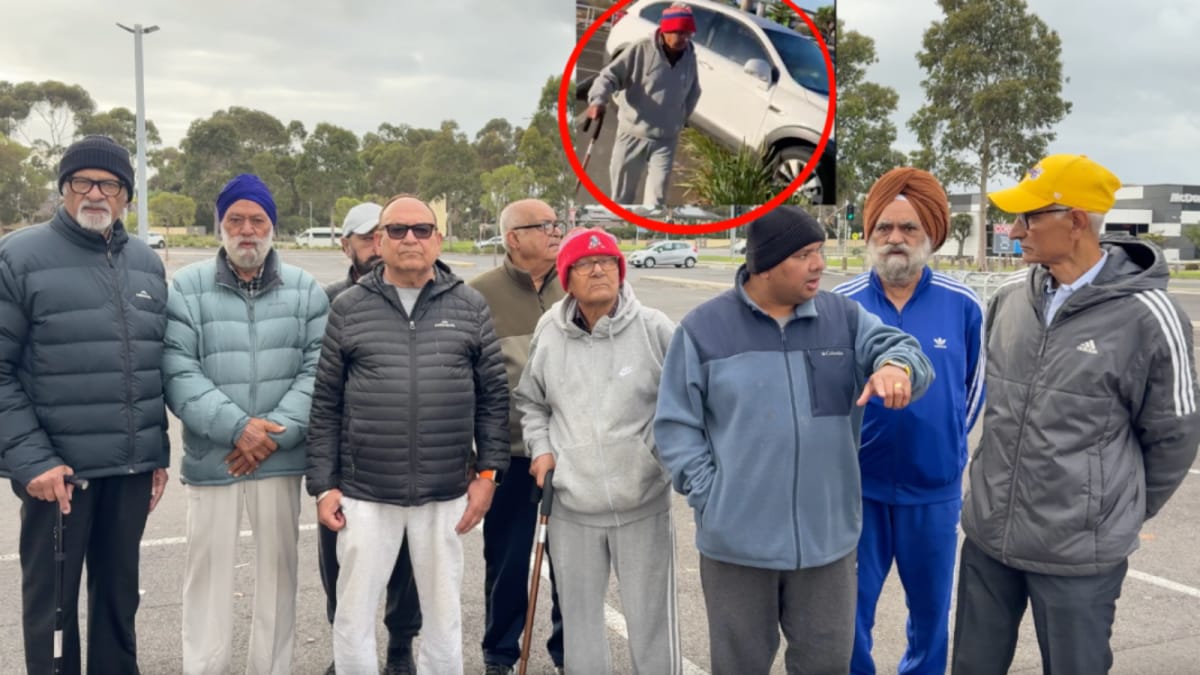
Honestly, I never expected a simple morning walk could turn into a nightmare. I live in Point Cook, a suburb that’s a mix of families, retirees and a bunch of us who moved here from India a few years back. Every sunrise, without fail, a small group of about twelve Indian‑origin seniors gathers at the parking lot of Sanctuary Lakes Shopping Centre. We walk, sip chai from a thermos, share the latest Bollywood gossip, and sometimes try to practice English with each other. It’s a ritual that feels like a little slice of home – a place for exercise, friendly banter and a sense of belonging. The group includes my father, my uncle, and a few neighbours we’ve known for years.
For most of us, these walks are more than just a health routine. They’re the only time we get to speak one another’s language comfortably, laugh about our kids’ school dramas, and feel that we’re part of a community. So when a new face started showing up a few weeks ago, I didn’t think much of it. It’s common for strangers to pass by, especially when the shopping centre gets busy. Little did we know that this particular stranger had a very different agenda.
The first hints of trouble
Over the next few days, a woman – I’ll call her the “accused” because that’s how the police reports refer to her – began approaching us. She’d stand a few metres away, watch us walk, and then start shouting things like “go back to your country” or “you don’t belong here”. The words cut through the morning air, making the whole group pause. I could see the confusion on my father’s face, and some of the older members even stopped walking, eyes fixed on her. It felt like a scene from a movie, only this was real, happening right in front of a busy parking lot.
We tried to ignore her at first, thinking maybe she was just having a bad day, but the slurs kept coming. It wasn’t just one-off; it was a pattern over several mornings. Some of the seniors told me they felt unsafe, especially because the remarks were directed at their skin colour and the fact that they are migrants. In my mind, I kept asking, “Why would anyone do this to people who have done nothing wrong?” The more she shouted, the more the calm of our walk turned into a tense standoff.
When words turned into violence
Last Thursday, I was walking a little ahead of the group, holding my walking stick, when the woman suddenly rushed toward us, clutching a plastic bag. Before anyone could react, she threw the bag straight at the senior members. It was filled with rubbish – basically a bunch of discarded flyers, empty soda bottles and a few pieces of broken glass. The bag hit the ground near my father, and the noise startled everyone. In that split second, I saw her hand reach for the keys of the small hatchback she was driving.
She didn’t just stand there; she stepped into the parking lane, accelerated and tried to drive straight towards us. I froze, my heart pounding like a drum at a wedding. My father, who was just a few steps behind me, didn’t have time to move out of the way. The car lurched forward, the engine roaring, and I could hear the screech of tires as she attempted to hit us. Some of the other seniors tried to step aside, but the vehicle was already heading straight at them.
Just as the car was about to make contact, a sudden honk sounded – an off‑duty police officer who was parked nearby had seen the whole thing. He scrambled out of his car, shouting for the driver to stop. The driver, the accused woman, looked startled for a moment, then slammed the brakes. The car lurched, bumping into my father’s shoulder and pushing him forward. I felt a sharp pain in my own arm as the impact rippled through the group.
Injuries and the rush to the hospital
After the car finally stopped, I rushed to help my father. He was holding his chest, looking dazed, and had a fresh bruise forming on his side where the car had hit him. I could see blood trickling from a small cut on his forehead. Another senior, Rohit Singh, who is actually my brother‑in‑law, was also hit by the vehicle. He fell to the ground, clutching his leg, and screamed in pain. Both of them were shaken badly. I called emergency services right away, and within minutes, an ambulance arrived. The paramedics tended to my father’s injuries and put Rohit Singh on a stretcher.
We were taken to the nearest hospital. In the ambulance, I kept asking the doctors “Is he going to be okay?” They reassured me that the injuries were not life‑threatening, but both my father and Rohit Singh needed observation for possible internal injuries. The doctors also gave us a pain‑killer injection. I could see the worry on the faces of the other seniors as they waited outside, whispering among themselves, “What will happen now? Will they be arrested?” The whole atmosphere felt heavy, like a monsoon cloud looming over a sunny day.
Police response and the ongoing investigation
Victoria Police arrived at the scene within a few minutes of the incident. The officers spoke with the seniors, took statements, and noted that an off‑duty officer had witnessed the attack. According to the police report – the same one that was mentioned in The Australia Today – the woman has not yet been arrested. The officers said they are treating the matter as a serious assault and that an investigation is ongoing.
One of the officers told me, “We will do everything we can to identify and locate the driver.” But as of now, no official arrest has been made. It feels like we’re stuck in a waiting game, hoping that the investigation moves quickly. The seniors are still uneasy, especially because the park and the shopping centre have always been places where we felt safe. Now there’s a lingering fear that someone could do something like this again.
What the seniors are feeling
Parmar, one of the oldest members of the group, told me that these walks are a lifeline. “It’s not just exercise,” he said, “it’s a space where we can speak our language, make friends, share stories about our families back home, and feel a sense of belonging.” He added that the repeated racist harassment has left them feeling “deeply disturbed”. The words that once made the morning bright now echo in their heads, making them question whether they can continue to walk there safely.
Rohit Singh, who was injured, kept repeating that he feels “lucky to be alive”. He said his father – an 80‑year‑old retired teacher – was also fortunate to survive the impact with only bruises and a scar. Rohit’s sentiment reflects both gratitude and anger. He wants the community to know that no elderly person should ever be made to feel unsafe in a neighbourhood they consider home.
Community reaction and broader concerns
News of the incident spread quickly through the local Indian‑Australian community. WhatsApp groups that usually discuss festivals, job openings, or school admissions turned into platforms for sharing outrage and support. Many people posted messages of solidarity, saying things like “We stand with our seniors” and “Racism has no place here”. Some local Indian businesses displayed signs in their windows, offering condolences and promising to stand against hate.
Beyond the Indian community, there’s a larger conversation brewing about safety in public spaces across Melbourne. Residents from other backgrounds have also voiced concerns about rising intolerance. Some community leaders have called for more visible policing in areas where seniors gather, while others suggest cultural sensitivity training for both police and the public.
My personal reflections and what I hope for the future
Looking back, I still can’t shake the image of that car barreling towards us, the sound of the rubbish bag hitting the ground, and the panic in my father’s eyes. It’s a reminder that even in a multicultural city like Melbourne, hate can surface in the most ordinary places. I keep thinking about the simple joy of sharing a cup of chai after a walk, and how that joy was ripped away in an instant.
But I also feel a spark of hope. The fact that an off‑duty police officer stepped in and that the police are now investigating gives me some comfort. I am determined to keep speaking up, because staying silent only lets such behaviour fester. I hope that our experience will push the authorities to act faster, make the streets safer, and send a clear message that racism, especially towards our elders, will not be tolerated.
For anyone reading this, especially fellow seniors, I’d say: look out for each other. Walk in groups, stay alert, and don’t be afraid to call for help if something feels off. And for the younger generation, remember that our elders have contributed so much to this nation – they deserve respect, safety, and the freedom to enjoy a simple morning walk without fear.