How I Stumbled onto the ‘No‑Notice’ Debate
It was a regular evening, I was scrolling through LinkedIn on my phone while waiting for the auto‑rickshaw outside my apartment to arrive. Among the usual posts about funding rounds and product launches, a headline caught my eye: the founder of a Gurgaon startup had fired an employee on the spot for missing a single event. The title was a bit sensational, but the story underneath was surprisingly detailed. I clicked, and the comments section instantly looked like a battlefield. I felt compelled to keep reading because, honestly, the whole idea of an employer demanding immediate availability without any notice seemed both extreme and oddly familiar in a country where hustle culture is almost a badge of honour.
The Trigger: A Missed Event and a Remote Offer
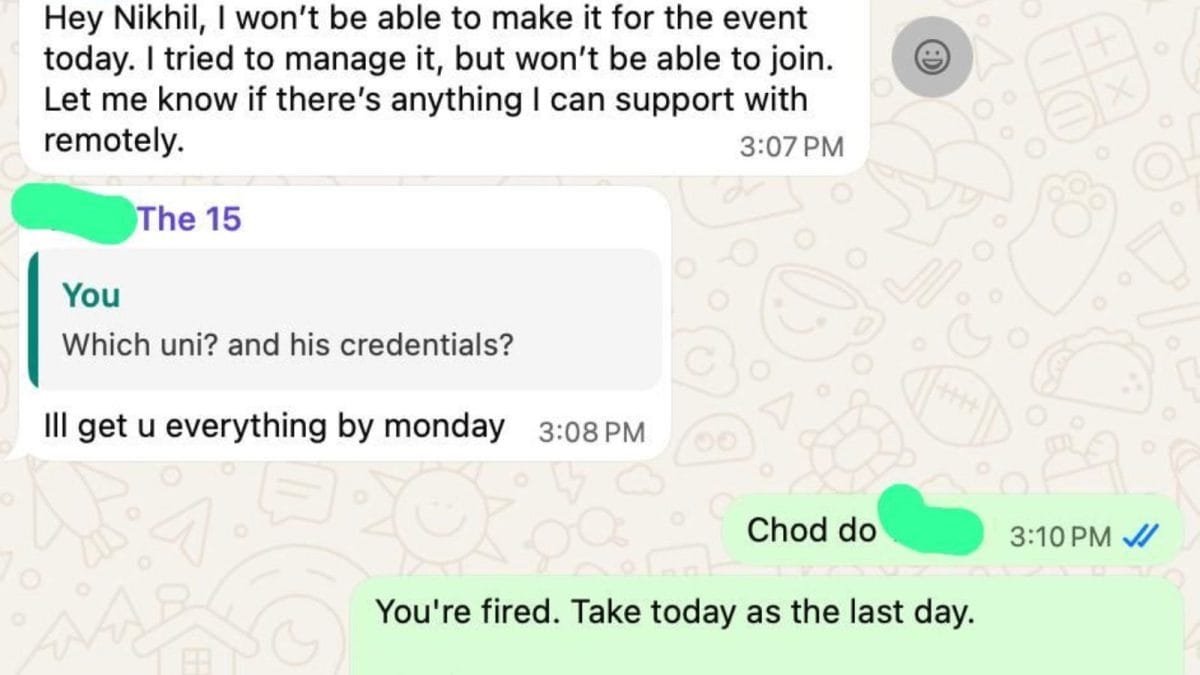
The whole drama began when an employee messaged the founder, Nikhil Rana, saying they could not attend an upcoming company event. The employee didn’t just say “I can’t make it”; they also offered to manage everything remotely, promising to stay online, coordinate with the team and ensure the event ran smoothly. In most workplaces, this would have been sufficient – a flexible arrangement, a sign of professionalism, and an attempt to keep things moving. But Nikhil Rana’s reply was swift and final. In plain text, the founder said the employee was fired on the spot.
What struck me was the speed of the decision. There was no discussion about alternate solutions, no request for a brief explanation, just a clear “You’re fired.” The post quickly went viral, sparking a heated discussion on LinkedIn about what Nikhil Rana called the “hustle culture” of Indian startups.
Nikhil Rana’s Manifesto on Startup Hiring
To defend the abrupt move, Nikhil Rana published a detailed statement outlining a strict manifesto about what a startup employee should embody. In the post, Nikhil Rana wrote: “Startups need people who take ownership. People who founders can depend upon. People with high agency. People who don’t wait for the perfect time and situation. People who can ‘make it happen.’” The language was emphatic, almost like a rallying cry for a new breed of worker.
Then Nikhil Rana went further, dismissing the traditional notice period as “theatre” and a “waste of time.” According to Nikhil Rana, a genuine startup should adopt a “no‑notice period policy” that permits instant exits whenever performance or commitment is in question. The founder framed this as bold leadership, a decisive step that separates serious talent from the rest.
Reading this manifesto felt a bit like listening to a motivational speaker who has taken a hard‑line approach to discipline. On one hand, the idea of absolute dependability sounds appealing in a cut‑throat market; on the other, it feels like a recipe for burnout, especially in a country where many people juggle multiple jobs, family duties, and unpredictable daily hassles.
The LinkedIn Firestorm: Voices from the Community
Almost instantly, LinkedIn users started weighing in. One comment likened the expectation of constant availability to “building a machine, not a human.” The writer said, “Why bother building expertise when you can just be on‑call 24/7, shape‑shifting to every founder’s whim, and calling it dedication? Clearly, the real benchmark now is how well you can function like a machine, but guess what – the only thing built for nonstop availability is AI, not people.”
Another user pointed out that the demand for “ownership” seemed to flow only one way: “Accountability seems to be one‑way traffic here. Employees get judged, founders get justified.” A third voice reminded Nikhil Rana that life does not revolve solely around the “startup grind.” That comment read, “Everyone faces emergencies – a sudden health crisis in the family, a power cut in the neighbourhood, a traffic jam that stretches for kilometres. Not everyone wants to share the painful details with their boss, but those situations are real and deserve empathy.”
Some commenters called the whole episode a “marketing gimmick gone wrong.” One user wrote, “This isn’t ‘high‑agency leadership,’ it’s just glorified toxicity. No‑notice firing over a missed event isn’t ownership, it’s poor management and zero respect for people.” Another argued that strong teams are built on trust, clarity, and mutual accountability, not on fear or impulsive actions.
There were also practical concerns. A user questioned how such a policy would affect the company’s growth: “You didn’t hire well or just hired because you wanted to. Each fire would kill the velocity if the person was needed.” Another joked, “Is that why there are only two people listed in your company?” The sarcasm highlighted worries that a tiny team cannot afford the loss of any member, especially when the founder’s policy encourages quick dismissals.
Balancing the Narrative: Looking for Context
While most of the discussion was critical, a few voices urged for a more balanced view. One commenter asked, “There’s a lot of context missing. What was the event? Was the employee a poor performer overall? Was his job directly tied to that event?” The same user added, “I aGree with the points about commoditising skills and ownership, but without enough background, this just makes no sense.” This reminder felt important to me because, as an observer, I only saw the snapshots Nikhil Rana chose to share. The full story might include past performance issues, the strategic importance of the event, or internal dynamics that we are not privy to.
In Indian workplaces, especially startups, it is common for founders to make swift decisions, sometimes without the luxury of prolonged deliberation. The culture often values speed over process. Yet, the backlash against Nikhil Rana’s move signals that the line between decisive leadership and reckless dismissal is being re‑examined by professionals across the country.
My Personal Take on the Whole Episode
Honestly, reading through the comments made me think about my own work experiences. I have seen colleagues stay up till midnight to resolve a client issue, just because the boss said “we can’t afford a delay.” I have also seen managers blink and fire someone for a missed deadline, citing “no‑notice” policies that sounded harsh but were hidden in the fine print of offer letters. In both cases, the human side got lost.
When I think about the Indian middle class, many of us commute in packed metros, balance home‑cooked meals with evening classes, and still try to meet workplace expectations. Expecting 24/7 availability without any leeway feels out of sync with that reality. My neighbour, for example, works as a delivery driver, and even he knows that a sudden rainstorm can make his bike unsafe; he cannot simply be “on call” forever.
In my own small startup stint, we once had a critical product demo scheduled on a Friday evening. One team member fell ill that day but offered to coordinate from home. The founder, rather than accepting the remote help, decided to postpone the demo and later blamed the team for “lack of commitment.” That experience taught me that flexibility can often succeed where rigidity fails. The Nikhil Rana episode reminded me that a founder’s personal philosophy can shape an entire company’s culture – for better or for worse.
Another thought that crossed my mind while reading the debate was the role of mental health. In recent years, India has started talking more openly about stress and burnout. A policy that dismisses employees for missing a single event, even if they propose a remote solution, sends a message that the individual’s well‑being is secondary to the hustle narrative. That kind of message can discourage talent from staying in the ecosystem, which is a loss for the country’s broader economic ambitions.
And yet, I understand where Nikhil Rana is coming from. In early‑stage startups, resources are tight, and a single failure can have cascading effects. When a founder feels that a team member’s departure would save the company from larger setbacks, the instinct to act fast can be strong. The challenge is finding a balance where urgency does not trample empathy.
Implications for Startup Culture in India
The Nikhil Rana incident is more than a single firing; it is a flashpoint that brings to light the evolving conversation about work expectations in Indian startups. On one side, there are founders who believe that “high‑agency” and instant commitment are necessary to compete globally. On the other side, there are employees and observers who argue that sustainability, trust and mutual respect are equally important.
One possible outcome is that more founders will start drafting clear “no‑notice” clauses, hoping to attract a certain type of employee. However, if the broader professional community continues to label such clauses as toxic, there could be a backlash that pushes companies to adopt more flexible policies. In many Indian cities, labour boards and legal frameworks are also catching up with the gig‑economy mindset, meaning that overly harsh dismissals might eventually face legal scrutiny.
What I see happening in my own network is a growing emphasis on “work‑life integration” rather than the traditional “work‑life balance.” People talk about setting boundaries, using tools like WhatsApp groups for quick updates, but also emphasizing the need to log off after a certain hour. If a founder like Nikhil Rana insists on a 24/7 mode, the market may simply choose other talent pools that value those boundaries.
In short, the conversation sparked by Nikhil Rana’s decision is likely to influence hiring practices, employee handbooks, and even how investors evaluate startup leadership. The mantra may shift from “move fast, break things” to “move fast, but respect people.” Only time will tell which side gains more traction.
Final Thoughts: Why This Matters to All of Us
For me, the Nikhil Rana episode is a reminder that every workplace decision sends ripples through the professional community. Whether you’re a founder, a senior manager, or an entry‑level employee, the way you treat people when they face genuine emergencies says a lot about the culture you’re building.
If we keep pushing the narrative that “availability at all times” equals dedication, we risk alienating a large section of the workforce who juggle family responsibilities, health concerns, and everyday life’s unpredictability. On the flip side, if we abandon all urgency, a startup may lose the edge it needs to survive.
The sweet spot, I think, lies somewhere in the middle – a clear set of expectations, a transparent process for handling absences, and an attitude that values both performance and humanity. That is the lesson I took away after scrolling through the whole debate on LinkedIn while waiting for my auto‑rickshaw.
So next time you hear about a founder like Nikhil Rana making a bold move, remember that there’s usually a deeper story underneath. And maybe, just maybe, a little more empathy could go a long way in shaping a healthier, more resilient startup ecosystem in India.