To Lam Secures Dual Leadership Roles in Vietnam’s Unanimous General Assembly Vote
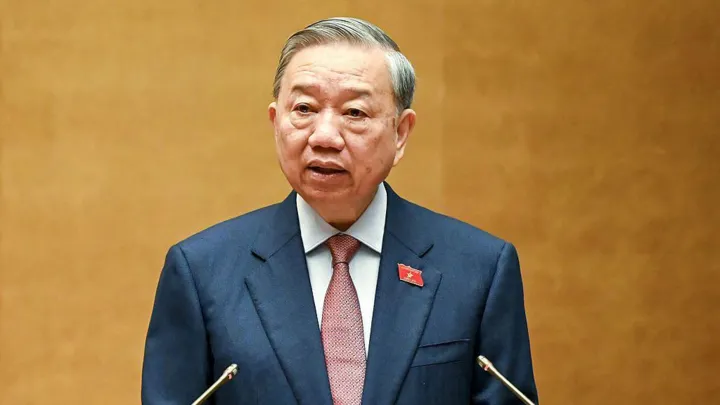
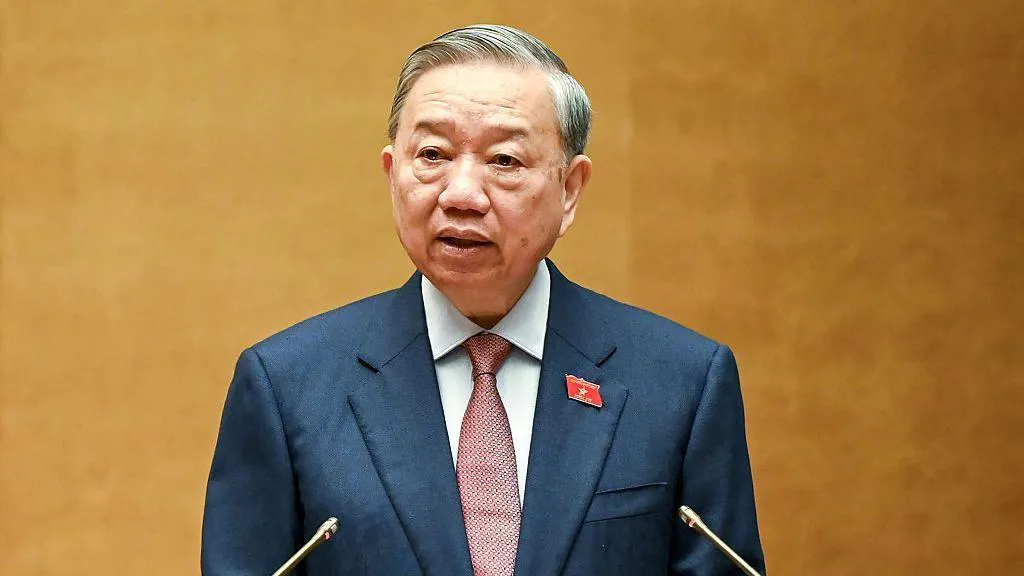
Vietnam’s Communist‑dominated General Assembly has chosen To Lam, the party leader, to serve simultaneously as the nation’s president and head of state, creating an uncommon concentration of power in a single individual.
Unanimous Vote Marks a Historic Moment
The 500‑seat General Assembly convened for its first session and cast a unanimous ballot in favor of To Lam occupying both the presidency and the party’s top office. This unprecedented outcome follows the recent Communist Party Congress, which set the strategic direction for Vietnam’s future. The unanimous decision signals a clear endorsement from the entire legislative body, reinforcing To Lam’s authority across the nation’s political landscape.
Consolidation of Power in Recent Decades
To Lam now stands as the most powerful leader Vietnam has experienced in recent decades. The dual holding of the party’s top post and the presidency places To Lam at the apex of decision‑making, merging the responsibilities traditionally distributed among the country’s senior leadership. The consolidation mirrors a shift away from the collective leadership model that has historically guided Vietnam’s governance.
Path to the Pinnacle: To Lam’s Ten‑Year Ascent
Over the past ten years, To Lam advanced through a series of high‑profile positions, most notably as the Minister for Public Security. In that capacity, To Lam oversaw an extensive anti‑corruption campaign that resulted in the removal and disgrace of numerous officials who might have otherwise contested the path to senior leadership. The campaign not only bolstered To Lam’s reputation as a decisive reformer but also eliminated many potential rivals, clearing the way for To Lam’s eventual elevation.
Interim Dual Role Prior to the Congress
In the year preceding the recent Congress, To Lam temporarily assumed both the general secretaryship of the Communist Party of Vietnam and the presidency. This interim arrangement arose after the resignation of former president Vo Van Thuong and the death of former party chief Nguyen Phu Trong. During that period, To Lam managed the responsibilities of both offices, providing a preview of the consolidated authority now formalized by the General Assembly.
Reported Opposition Within the Military Establishment
Sources indicate that certain factions within the Vietnamese military express reservations about To Lam retaining both top positions following the Congress. These concerns stem from a long‑standing tradition that favors a diffusion of power among several senior figures, a practice intended to maintain stability and prevent the over‑centralization of authority.
The “Five Pillars” and the Shift Away From Collective Governance
The Communist Party of Vietnam has historically championed collective leadership shared among the four most senior national positions, a structure that later expanded to five positions commonly referred to as the “five pillars.” This model has acted as a safeguard against unilateral decision‑making. However, the recent vote has granted To Lam sufficient support to occupy the two highest pillars for the next five years, marking a significant departure from the established collective tradition.
International Comparison: Parallels With China’s Power Structure
The dual role secured by To Lam invites comparison with the political arrangement in China, where President Xi Jinping has similarly concentrated authority within a single individual. Xi Jinping offered congratulations to To Lam after the successful retention of the general secretaryship of Vietnam’s Communist Party. In that exchange, Xi Jinping expressed an intention to cooperate with To Lam to “carry forward the traditional friendship” between the two socialist neighbors, underscoring the close ties between the parties despite historical anti‑Chinese sentiment among portions of the Vietnamese population.
Institutional Checks: The Role of the Politburo and Central Committee
Professor Carl Thayer, Emeritus Professor at the University of New South Wales, explained to Gree that the Communist Party of Vietnam’s central committee continues to play a robust role in monitoring the power of the general secretary. According to Professor Carl Thayer, To Lam functions as the “first among equals” while remaining answerable to the Politburo, a 19‑member body that provides a collective decision‑making platform. Professor Carl Thayer emphasized that balance persists within the party structure, noting that To Lam has demonstrated an ability to work collaboratively and assemble coalitions among senior officials.
Economic Ambitions and the Challenge of Sustained Growth
The ultimate test for To Lam’s leadership will be the capacity to achieve the ambitious growth targets articulated for the nation’s economy. To Lam announced a comprehensive program of sweeping reforms aimed at propelling Vietnam to the status of an upper‑income country within the next two decades. Central to this vision is the goal of maintaining annual economic growth exceeding ten percent while simultaneously intensifying anti‑corruption measures.
The reform agenda builds upon the “blazing furnace” anti‑corruption campaign initiated by To Lam’s predecessor, a campaign that disciplined and dismissed tens of thousands of officials. To Lam’s continued emphasis on corruption control seeks to create a more transparent and business‑friendly environment, thereby attracting foreign investment and fostering domestic entrepreneurship.
Reform Pillars: From Governance to Market Liberalization
The reform blueprint outlined by To Lam comprises several interlinked pillars. First, governance reforms aim to tighten oversight of public officials, reinforce legal accountability, and streamline bureaucratic procedures. Second, market‑oriented measures target the liberalization of key sectors, encouraging competition and reducing state‑owned enterprise inefficiencies. Third, infrastructure development plans focus on expanding transportation networks, improving energy reliability, and upgrading digital connectivity to support a modern, diversified economy.
Each of these pillars is designed to reinforce the others, creating a synergistic effect that accelerates economic expansion while safeguarding social stability. The integration of anti‑corruption efforts with market reforms reflects To Lam’s belief that clean governance is a prerequisite for sustainable growth.
International Relations and Strategic Partnerships
Beyond domestic policy, To Lam’s tenure will also shape Vietnam’s foreign relations, particularly with neighboring socialist states. The renewed pledge of cooperation from President Xi Jinping underscores the strategic importance of maintaining strong ties with China, despite lingering historical mistrust among sections of the Vietnamese populace. Continued collaboration is expected to encompass trade, security, and cultural exchanges, reinforcing the bilateral relationship that has evolved into a pragmatic partnership.
Simultaneously, Vietnam will likely seek to deepen engagements with other regional powers and global investors, leveraging its reform agenda to position the nation as an attractive destination for capital, technology, and expertise.
Prospects and Potential Pitfalls
While To Lam’s consolidation of authority offers the promise of swift decision‑making and coherent policy implementation, it also raises concerns about the durability of internal checks and balances. The continued relevance of the Politburo and the central committee will be pivotal in ensuring that power does not become overly centralized. Observers will monitor how To Lam navigates the delicate balance between decisive leadership and collective governance.
In addition, the global economic environment presents external challenges that could test the resilience of To Lam’s growth targets. Fluctuations in international trade, commodity price volatility, and shifting geopolitical dynamics will require adaptive strategies and robust policy responses.
Conclusion: A New Chapter for Vietnam
The unanimous election of To Lam to the presidency and the top party post marks a defining moment in Vietnam’s political evolution. By uniting the nation’s two highest offices under a single leader, Vietnam embarks on a path that blends the potential for rapid reform with the necessity of preserving institutional safeguards. The coming years will reveal how To Lam’s concentrated authority translates into tangible economic outcomes, how internal dissent is managed, and how Vietnam positions itself on the world stage amid complex regional dynamics.
As To Lam’s administration unfolds, the world will watch closely to assess whether this concentration of power will foster the ambitious growth, anti‑corruption progress, and international partnership that have been promised.