From Duolingo’s playful "Lesson ka Samay" to ChatGPT's emotional friendship angle, we look at who won the viral race.
Before most people had even finished watching Samay Raina’s comeback special, Still Alive, brands were already plugging into the conversation, flooding people’s timelines with witty creatives, quick puns, and reactive posts, all built around the same moment.
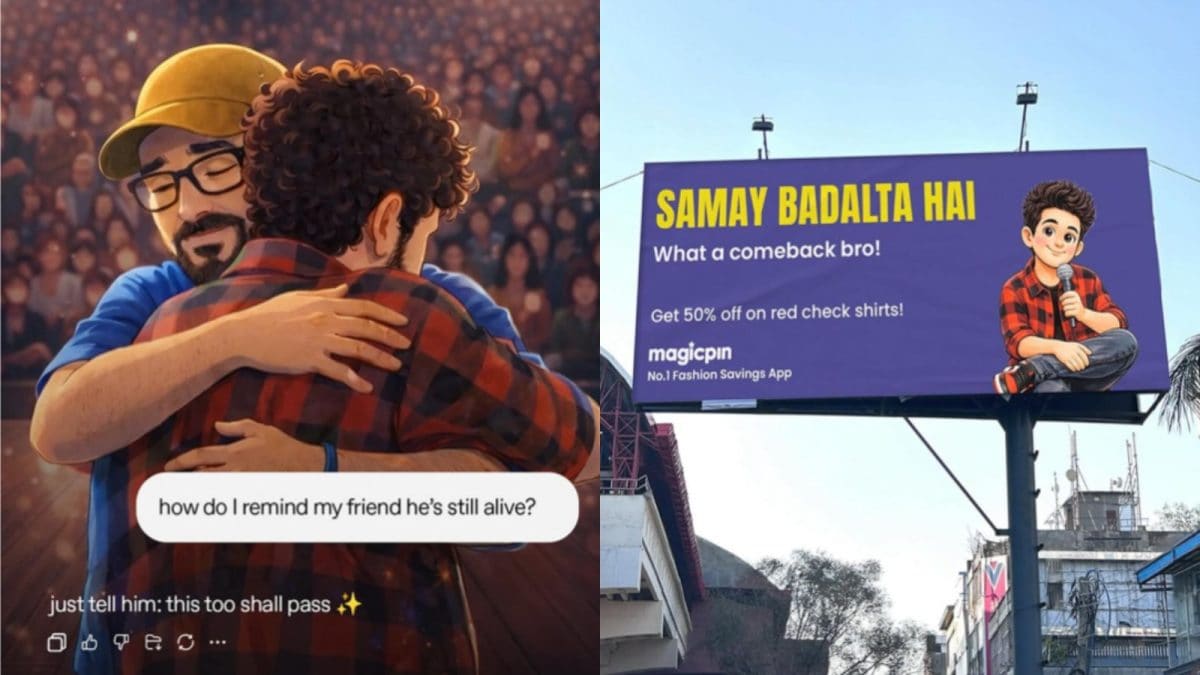
Fashion app Magicpin jumped in with “Samay badalta hai" to plug its offers, while Duolingo kept things playful with “lesson ka samay." Airtel took a slightly different route, using the trend to remind people to call their loved ones, adding a more personal layer.
After almost a year of silence following India’s Got Latent controversy, Samay Raina returned with Still Alive, a special that directly addresses the backlash and his time away. The tone is raw, self‑aware and very much in line with what his audience expects, which is exactly why it struck a chord so quickly.
Clips from his show began circulating almost immediately, turning into a shared online moment that people were quoting, remixing and reacting to. And as the buzz grew, brands moved in just as fast, turning it into a marketing opportunity.
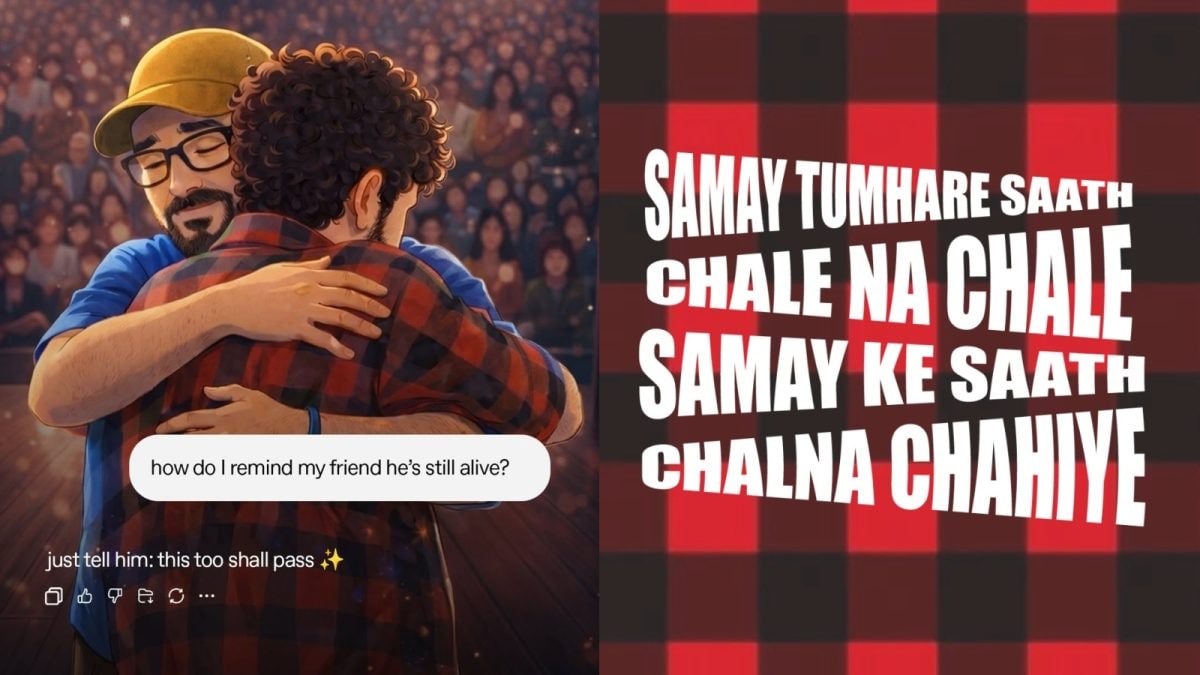
Other brands also jumped in at this viral moment with a softer tone: Biggies Burger and Unibic used “this too shall pass," turning the moment into something more reflective than funny. Parle’s 20‑20 cookies slipped in with “Treat ka sahi Samay," while GeeksforGeeks added a coding twist with its take on debugging struggles. Yes Madam marketed its self‑care services with “This too shall pass," showing Samay Raina getting a head massage.
A post shared by Parle 2020 Cookies (@parle2020cookies)
From cookies to mobile connections, the pattern is clear. When a moment this big hits, brands don’t wait. They jump in, plug into the buzz, and make sure they are part of the conversation.
Reactions online have been just as sharp. “They were not there when Samay needed someone. But they are here to get into the limelight," one user wrote. Another added, “His parents must be so proud… everything is about him today for just being an honest comedian." A third summed it up more bluntly: “This is what it means to take advantage of the right moment."
Why Samay Raina’s Return Became a Goldmine for Marketers
Honestly, when I first saw the Still Alive trailer on my phone while waiting for a chai at the roadside stall, I could feel the excitement building among the crowd. Everyone was whispering about Samay Raina’s bold confession, and the whole vibe felt electric. In India, a popular entertainer’s comeback is more than just a show – it becomes a shared cultural pulse that people talk about over tea, on WhatsApp groups, and even on the office water cooler.
That very instant makes the moment irresistible for brands. They see a massive spike in searches, hashtags, and meme‑making, and they know if they can slip a witty line into the chatter, they will ride that wave of attention. For Magicpin, the line “Samay badalta hai" was a perfect fit because the app constantly pushes location‑based deals that change with time. So the brand cleverly linked the idea of changing time with new offers, prompting users to open the app while the conversation was still hot.
Duolingo, on the other hand, decided to keep the tone light and educational with “lesson ka samay." You could imagine a user sitting on a Mumbai local, glancing at the ad and thinking, "Maybe now is a good time to practice my Hindi lesson," all while the train jerked forward. It’s a subtle nudge, but it works because it ties the popular phrase directly to the brand’s core service – learning languages.
Airtel’s approach was more emotional. By reminding people to call their loved ones, the telecom giant inserted a warm, personal touch into a trending meme. I saw several friends actually picking up their phones and dialing their parents after seeing the Airtel post – a tiny testament to how a brand can turn a viral hashtag into a real‑world action.
What’s interesting is that even unrelated categories, like snack foods, found a way to join in. Parle’s 20‑20 cookies used the line “Treat ka sahi Samay," which felt like a natural extension of the conversation. Picture a family gathering on a Sunday, a plate of 20‑20 cookies being passed around while someone quotes Samay Raina’s line, and you have a perfect domestic vignette of the brand’s integration.
In essence, the same core phrase – “Samay badalta hai" – became a versatile template that any brand could customize according to its own personality. That flexibility is what turned Samay Raina’s comeback into a marketing playground.
Brand‑by‑Brand Breakdown of the Creative Responses
Magicpin – The fashion‑shopping app went straight for a punchy headline, “Samay badalta hai" paired with bright graphics showcasing limited‑time discounts on apparel and food. The visual style mimicked the neon‑lit billboards you see in Delhi’s Connaught Place, making the ad feel instantly relatable to shoppers who love a good deal.
Duolingo – The language platform adopted a playful cartoon style, with a little tablet character holding a clock and saying “lesson ka samay." The post was captioned in simple Hindi and English, ensuring it reached both urban and semi‑urban audiences who follow the app for quick daily practice.
Airtel – The telecom giant posted a warm illustration of a child holding a phone with the caption “Samay badalta hai – call your family today." The image featured a typical Indian household background, complete with a thali and a TV set, reinforcing the message that the best use of time is connecting with loved ones.
Biggies Burger – The fast‑food chain’s post read “this too shall pass," paired with a picture of a juicy burger melting in the sun. The tag line hinted at the fleeting nature of cravings, encouraging people to satisfy their hunger now rather than later.
Unibic – The bakery brand went for an emotional note, using the same phrase “this too shall pass" alongside a photo of chocolate‑filled biscuits beside a steaming cup of chai. The visual suggested that a moment of comfort is just a bite away.
Parle 20‑20 cookies – The snack manufacturer’s creative used “Treat ka sahi Samay" placed over a bright, colourful pack of 20‑20 cookies. The background showed a school lunchbox, reminding parents that the right snack can make a child’s break time more enjoyable.
GeeksforGeeks – The coding education platform turned the phrase into a tech‑savvy joke: “debugging samay," with a screenshot of a code editor filled with red error lines. The post humorously suggested that even programmers face moments when they need a break.
Yes Madam – The self‑care service brand posted a soothing illustration of a head massage, with the caption “this too shall pass" in a gentle pastel palette. It subtly linked the idea of relieving stress with the brand’s relaxation services.
Each of these entries kept the core message intact while molding it to fit their own product world. The result was a chorus of voices that all sounded like they were part of the same conversation, which only amplified the overall buzz.
Public Reaction: Praise, Skepticism, and the ‘Right Moment’ Debate
Scrolling through the comments on Twitter and Instagram, you could feel the mixed emotions. One user wrote, “They were not there when Samay needed someone. But they are here to get into the limelight," which highlighted a common criticism that brands often jump onto trends only after the fact.
Another comment said, “His parents must be so proud… everything is about him today for just being an honest comedian," reflecting the supportive side of the audience who admired Samay Raina’s courage to address his past controversy head‑on.
A third commenter summed it up succinctly: “This is what it means to take advantage of the right moment." That line captured the essence of what many marketers try to do – spot the perfect timing and act on it.
In my own feed, I saw a friend sharing the Parle 20‑20 post with a caption, “Finally a snack that gets my meme game!” It made me laugh because it showed how even something as simple as a biscuit can become part of a larger cultural moment.
Overall, the online chatter suggested that while the audience appreciated the creativity, there was also a healthy dose of skepticism about brands simply riding the wave. Yet the fact that many users engaged with the posts – liking, sharing, and commenting – proved that the strategy worked in terms of reach.
What This Means for Future Brand Strategies in India
From my perspective, the Samay Raina episode sets a clear template for Indian marketers. First, keep your ears open for any cultural moment that resonates deeply – be it a movie release, a sports win, or a viral comedy special. Second, act fast. The window of relevance can be as short as a few hours, especially on platforms like Instagram Reels or YouTube Shorts where trends flash by like traffic lights.
Third, tailor the core phrase to your own product voice. Magicpin didn’t just copy Samay Raina’s line; it added “badalta hai" to hint at changing offers. Duolingo turned it into “lesson ka samay" which aligned perfectly with its learning proposition. This way, the brand feels part of the conversation rather than a forced plug.
Fourth, think beyond pure humor. Airtel’s emotional angle reminded people to call loved ones, showing that a brand can add genuine value to the trending dialogue. In a country where family connections are cherished, this approach can create a deeper connection with the audience.
Finally, be prepared for criticism. Some users will point out the opportunistic nature of such marketing. The key is to balance speed with authenticity – if the creative feels forced, it will backfire. My own experience with the trending posts was that the ones which added something extra – a useful tip, a relatable visual, or a gentle reminder – earned more goodwill.
All said, the Samay Raina comeback has become a case study on how a single entertainment event can cascade into a multi‑brand marketing cascade across the Indian digital landscape.
Conclusion: The Ever‑Changing Clock of Digital Culture
In most cases, the phrase “Samay badalta hai" is just a simple observation about time. But when Samay Raina used it as the centerpiece of his new special, it turned into a cultural catalyst that brands could not ignore. From Magicpin’s discount alerts to Duolingo’s language lesson reminder, from Airtel’s family‑call nudge to Parle’s snack‑time cue, each brand took the same core idea and molded it to suit everyday Indian life.
For me, watching the ads pop up while sipping my evening tea reminded how tightly woven entertainment and commerce have become in our digital age. It also showed the power of being present at the right moment – a lesson that applies not only to marketers but to anyone hoping to make an impact online.
So the next time you see a trending hashtag or a viral video, think about how quickly the conversation can shift, and how, if you’re ready, you can jump in and add your own voice. After all, as Samay Raina’s comeback proves, time changes – and those who adapt with it can catch the wave.