- Harish Upadhya
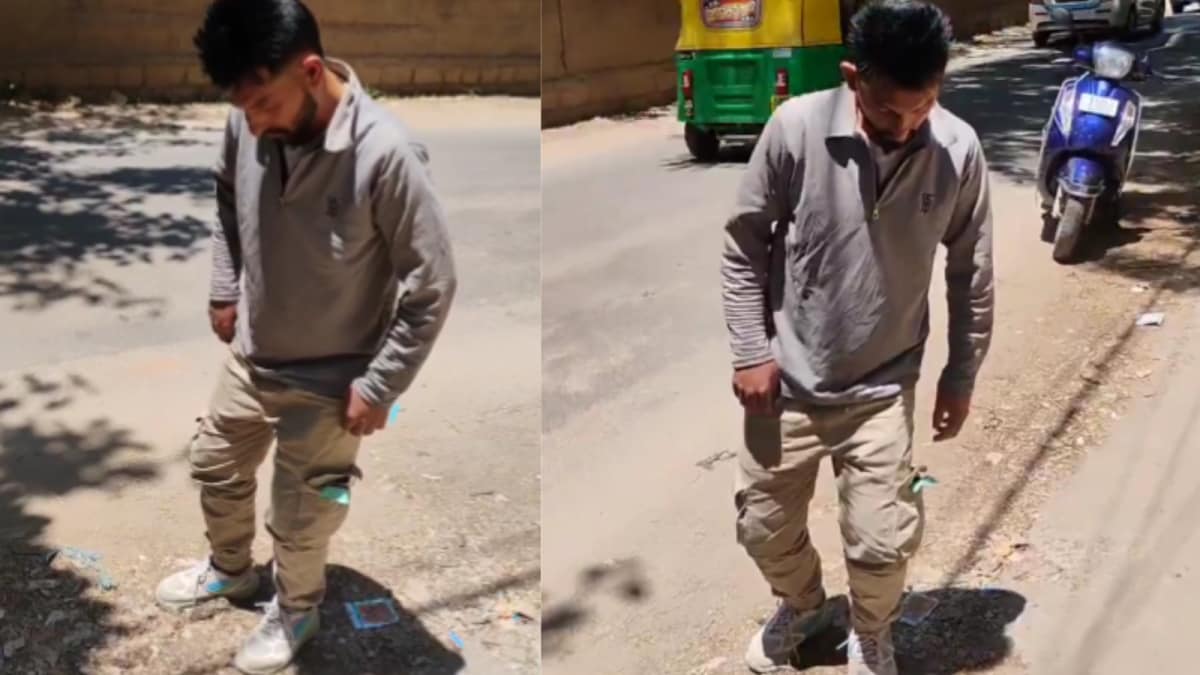
Bengaluru Viral 'Zombie Drug' Video: The accused, Hemanth of Vidyaranyapura, was arrested after the video went viral on Instagram, triggering widespread public alarm.
So, there was this video floating around Instagram a few weeks back that showed a person acting all over the place in a busy Bengaluru street. The caption screamed something about a "zombie drug" – a new, scary narcotic supposedly making its rounds in the city. Naturally, people went bonkers, sharing it, debating it, and even posting warnings to their friends and neighbours.
What most folks didn't know was that the clip was actually recorded and uploaded by a local lad named Hemanth, who lives in Vidyaranyapura. Within a couple of days, the police caught wind of the uproar and traced the source back to Hemanth. The Bagalur Police then registered a case at Bagalur Police Station for spreading misinformation and took Hemanth into custody.
What the Video Showed and Why It Went Viral
The clip, just a minute long, showed an individual stumbling, slurring words and looking quite confused while standing near a roadside tea stall. The video creator added text claiming the man was under the influence of a dangerous "zombie drug" – a term that instantly grabbed attention because it sounded like something out of a horror movie.
In India, especially in cities like Bengaluru, rumours about new drugs spread like wildfire on social media. Remember the panic about "phensuximide" a few years back? That was a whole other saga. So when people saw this video, they immediately started speculating – "Is this a new trend?" "Are our kids at risk?" – and the video was shared thousands of times.
Even my neighbour in Whitefield showed it to his kids, warning them to stay away from unknown substances. It just goes to show how quickly a single post can ignite fear across neighbourhoods, bus stops, and even college campuses.
Who Posted It and Why the Arrest Happened
Hemanth of Vidyaranyapura, the person behind the upload, claimed he just wanted to showcase an odd scene he witnessed – not that he intended to cause panic. The police, however, saw a different picture. They argued that by labeling the footage as a "zombie drug" case without any proof, Hemanth was spreading false information that could disturb public order.
Bagalur Police filed a complaint under the relevant provisions of the Indian Penal Code dealing with the circulation of rumours that can cause unrest. They tracked the Instagram handle back to Hemanth, and within two days of the post gaining traction, they arrested Hemanth at his residence. The police statement emphasized that anyone sharing unverified content that could incite fear may face legal action.
It reminded me of an incident in Pune where a video about "sugar‑free" candy turned into a massive health scare. The authorities intervened, and the person who posted it faced similar charges. It seems Indian law is getting stricter about digital misinformation.
Police Investigation: What They Actually Found
When the Bagalur Police handed the video over to Bengaluru City Police, they asked the person in the video to undergo a medical examination. Bengaluru City Police Commissioner Seemant Kumar Singh then made a public statement. He said the individual was not under the influence of any narcotic substance.
Medical experts discovered that the man had consumed a fair amount of liquor earlier in the day and was also taking prescribed arthritis medication. The combination of alcohol and the pain‑killer is known to cause dizziness, confusion, and unsteady gait – exactly what the video showed.
So, the "zombie drug" tag was completely baseless. It was simply a case of someone mixing drinks with their arthritis tablets, which is a fairly common, albeit risky, practice among many Indians who self‑medicate after a hard day's work.
Commissioner Seemant Kumar Singh’s Remarks
Commissioner Seemant Kumar Singh was quite outspoken about the whole episode. He said, "He was subjected to medical examination. Unnecessarily putting it on Instagram without verification of facts, giving it the name of drugs, and attributing it to general conditions in Bengaluru – claiming that people are consuming this drug – is totally illegal." He added that both the police and the public should not jump to conclusions about drug use without proper medical confirmation.
He also warned that such reckless sharing not only harms the reputation of the city but also puts innocent people under unnecessary scrutiny. In his view, the law must act as a deterrent to stop others from spreading similar rumors.
Honestly, his words reminded me of the old saying, "If you do not have evidence, keep your mouth shut." In a city where traffic already causes enough stress, an extra layer of fear about a non‑existent drug is just needless trouble.
Why This Matters: Larger Warning for Social Media Users
This whole drama serves as a stark reminder that misinformation can spread faster than a Mumbai local train during rush hour. A single unchecked post can lead to panic, wasted police resources, and legal trouble for the person who posted it.
Bagalur Police made it clear that sharing misleading videos with false captions – especially those that malign a city’s safety or attribute medical conditions to drug abuse – carries legal consequences. The law is clear: publishing false information that endangers public peace is punishable.
In Indian cities, from Delhi to Kolkata, we have seen similar scares – whether it was about "red chilli” causing blindness or a supposed "herbal cure" for COVID‑19. Each time, the pattern repeats: a sensational claim, rapid sharing, public alarm, and finally, a police crackdown.
For everyday folks like you and me, the takeaway is simple: before you hit share, check the facts. Ask yourself, "Do I know the source? Have I seen any official confirmation?" If the answer is no, maybe it’s better to let the post sit.
Personal Observations and Everyday Examples
When I was growing up in a small town near Mysore, we used to rely on word‑of‑mouth for most news. A single rumor about a "ghost bus" would have us staying away from that route for weeks. Nowadays, with Instagram and WhatsApp, the same rumor can reach a lakh people in minutes. The "zombie drug" video is just a modern version of those old tales, only now the stakes are higher because it involves health and law enforcement.
Even in my own family, my aunt once forwarded a message claiming that a particular brand of tea caused heart attacks. She believed it because the message looked official. We later found out it was a hoax. It took a chat with a doctor to clear the confusion. The experience made me very cautious about what I forward, especially when it relates to health or safety.
Similarly, during the recent monsoon, a video claiming that certain drains in Bangalore were contaminated with a new toxin went viral. The police had to step in and issue a statement that the water quality was normal. That episode, much like the "zombie drug" case, shows how quickly panic spreads when a sensational claim is paired with a local context.
Conclusion: A Lesson in Digital Responsibility
All in all, the "zombie drug" saga in Bengaluru teaches us that sensationalism without verification can land you in serious trouble – both legally and socially. Hemanth of Vidyaranyapura learned this the hard way when he was taken into custody for posting a misleading video. The police findings, confirmed by Commissioner Seemant Kumar Singh, proved that the erratic behaviour was simply a mix of alcohol and arthritis medication, not any new narcotic.
So, next time you see a dramatic caption about a "zombie drug" or any other shocking claim, pause. Check the facts. And remember, responsible digital behaviour is just as important as wearing a seatbelt on the Bangalore traffic – it protects you and the community around you.