From Alexander to Genghis Khan: How Iran’s Seven‑Millennium Heritage Defies Every Conquest
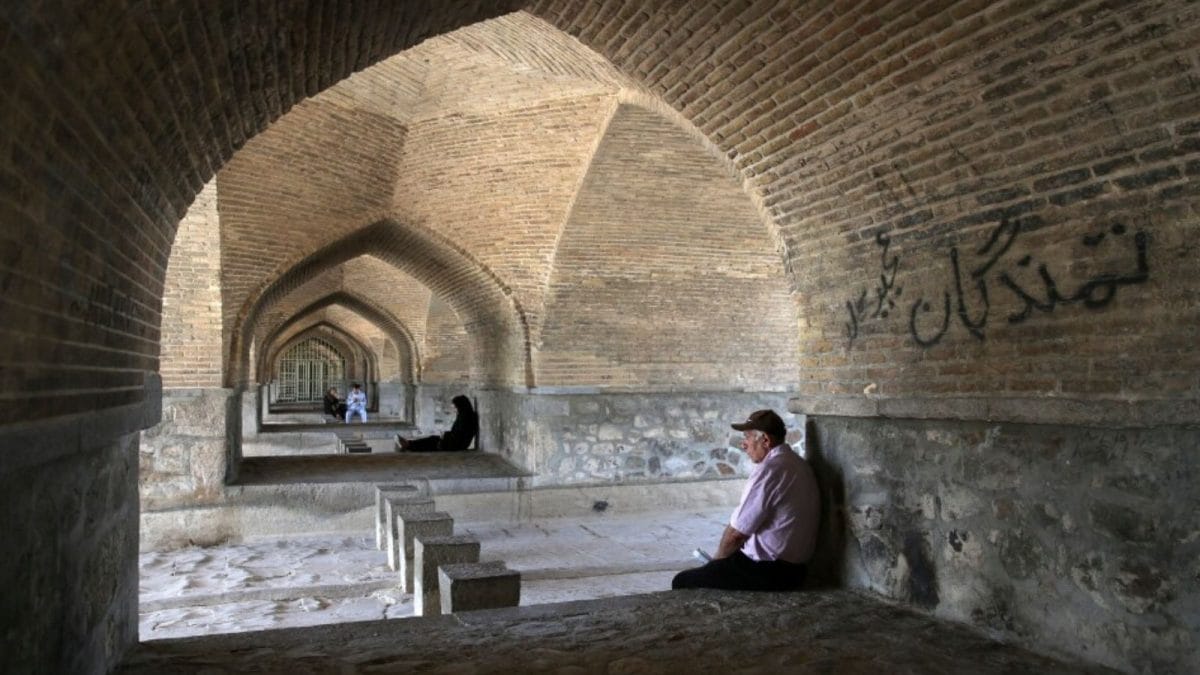
Iranian Civilization: An Unmatched Record of Longevity
When scholars rank ancient societies, many note that the core identities of Mesopotamia and Egypt were eventually absorbed or replaced. Iran, by contrast, has preserved a distinct cultural thread that stretches unbroken from pre‑historic settlements to the present day. The following narrative traces that continuity without inserting new facts.
Key Historical Milestones at a Glance
- Elamite Era (c. 3200–539 BC): One of the earliest urban societies in world history.
- Achaemenid Empire (550–330 BC): The first true superpower, renowned for tolerance and administrative efficiency.
- Sasanian Empire (224–651 AD): The pinnacle of pre‑Islamic Persian culture, influencing Roman and Byzantine institutions.
- Islamic and Modern Periods: After the Arab conquest, Persian language and culture were revived and remain central to Iran today.
Each of these eras contributes to the tapestry that defines Iran’s uninterrupted civilizational flow.
Pre‑History: Foundations of Human Settlement (c. 1,000,000 – 3000 BC)
Iran’s terrain ranks among the oldest continuously inhabited regions on Earth. Fossil evidence confirms hominin activity nearly one million years ago, establishing a deep‑time backdrop for later cultural developments.
Paleolithic Era: Stone tools attributed to Neanderthals have been uncovered in the Zagros Mountains and central Iran, notably at sites such as Bisitun Cave and Warwasi.
Neolithic Revolution: Around ten thousand BC, nascent agricultural villages emerged. Ganj Dareh provides the earliest known domestication of goats, while Chogha Golan offers evidence of early emmer wheat cultivation.
Early Urbanism: By the fourth millennium BC, sophisticated cultures such as the Jiroft culture in southeastern Iran produced unique chlorite vessels and incised symbols that may pre‑date contemporary Mesopotamian writing.
The Age of Great Empires (c. 3000 BC – 651 AD)
This period witnesses the consolidation of the Iranian plateau into centralized states and the emergence of the world’s first superpowers.
Elam (c. 3000–539 BC)
Centered in Susa, Elamite civilization engaged closely with neighboring Mesopotamia, occasionally raiding Babylon and even displaying copies of Hammurabi’s law code as trophies.
Median Empire (c. 728–550 BC)
Unified under Cyaxares, the Median Empire marked the first Iranian polity to exercise authority over a vast territory.
Achaemenid Empire (550–330 BC)
Founded by Cyrus the Great, the Achaemenid Empire pioneered the concept of a multi‑ethnic empire governed by a single legal charter, exemplified by the Cyrus Cylinder. Administrative tolerance and a sophisticated road network facilitated communication across a sprawling domain.
Transition to Hellenistic and Sasanian Eras
Following Alexander the Great’s incursion, Iran entered a Hellenistic phase that eventually gave way to the Sasanian Empire, which represented the cultural apex of pre‑Islamic Persia.
The Islamic Transition and the Mongol Catastrophe (651 AD – 1334 AD)
After the Arab conquest, Iran experienced a profound “Persianisation” of the Islamic world. Persian bureaucrats, poets, and scientists shaped the administrative and intellectual landscape of the new Islamic order.
Seljuk Dynasty (c. 1000–1218 AD)
The Seljuks, a Turkic dynasty that adopted Persian culture, presided over a golden age of science, art, and commerce along the Silk Road.
Mongol Invasion (1219–1258 AD)
Led initially by Genghis Khan and later by his grandson Hulagu, the Mongol onslaught devastated major urban centers such as Merv, Nishapur, and Rey. Irrigation canals were destroyed, and populations suffered catastrophic loss. Despite the sheer scale of destruction, the Mongols eventually established the Ilkhanate, converted to Islam, and embraced Persian administrative practices, becoming patrons of a distinctive Persianate culture.
Iran as a Hub of Global Innovation
Urban settlements on the Iranian plateau date back to the fifth millennium BC. Some modern assessments rank Iran as the world’s oldest country based on the institution of an organized government around three thousand BC. Despite successive conquests by Greeks, Arabs, Turks, and Mongols, Iran repeatedly asserted its national identity and “Persianised” its conquerors, influencing their art, literature, and governance.
Landmark Contributions
- The Cyrus Cylinder (c. 539 BC): Frequently cited as the earliest charter of human rights.
- The Royal Road: One of the first major postal and trade highways, facilitating rapid communication across a vast empire.
- Zoroastrianism: One of the oldest revealed monotheistic religions, exerting lasting influence on major world faiths.
- Scientific Legacy: During the Islamic Golden Age, Persian scholars such as Avicenna (medicine) and Al‑Khwarizmi (founder of algebra) laid the groundwork for modern science and mathematics.
The Iranian Paradox: Invaders Versus Continuity
The Iranian regime presents a calculated paradox when dealing with ancient heritage. Early revolutionary leaders dismissed pre‑Islamic history as “pagan” or “royalist” propaganda, yet contemporary officials increasingly invoke ancient roots to demonstrate geopolitical resilience.
Official discourse frames foreign invasions not as ruptures but as tests that ultimately affirm the superiority of Persian culture.
Alexander the Great
Referred to as “Alexander the Accursed,” the Macedonian conqueror is portrayed as a destroyer who burned Persepolis in a drunken stupor. Nevertheless, the Iranian regime highlights that Alexander later adopted Persian dress and court customs, illustrating that Iran absorbs and transforms its conquerors.
The Mongols
Similar to the Macedonian and Arab invasions, the Mongol period is cited as a time of devastation that failed to extinguish the Iranian spirit. Official messaging emphasizes that the Mongols eventually erected monuments in the Persian style and patronised Persian scholars.
Modern Narrative
The Islamic Revolutionary Guard Corps frequently contrasts Iran’s seven‑thousand‑year history with the comparatively brief histories of modern Western powers, using this disparity to delegitimize sanctions and military threats.
The Heirship of Cyrus the Great
State‑backed scholars and clerics have repositioned Cyrus the Great as a Quranic figure, Dhul‑Qarnayn, thereby integrating his legacy of human rights and justice into an Islamic framework. By claiming direct descent from ancient Persian empires, the Iranian regime justifies its “forward defence” policy and regional influence as a natural return to historic Iranian spheres of influence.
Cultural Phoenix: The Three Pillars of Iranian Survival
The continuity touted by the Iranian regime rests on three durable pillars.
Bureaucratic Genius
Whether under Alexander’s generals or the Mongol Khans, every invader recognised that governance of the plateau required Persian viziers, established tax systems, irrigation networks, and diplomatic expertise.
The Iranian Idea
This cultural identity proved more contagious than military force. By the time the Mongols formed the Ilkhanate, they were constructing Persian mosques, authoring works in Persian, and behaving like Persian shahs rather than steppe warriors.
Geographic Resilience
The rugged mountains and vast terrain of Iran hindered total conquest. Even when capital cities fell, regional centres survived, allowing local elites and administrators to restore order and rebuild after each invasion.
Key Frequently Asked Questions
Did conquerors such as Alexander the Great and Genghis Khan destroy Iranian civilization?
No. While Alexander the Great and Genghis Khan inflicted massive destruction, neither succeeded in erasing Iranian civilization. The Mongol invasions annihilated major cities and caused massive loss of life, yet Iran’s language, cultural practices, and administrative traditions survived and later revived under new dynastic rule.
Why does Iranian civilization exhibit such resilience?
Iranian civilization endures because of deep historical roots, a strong cultural identity, and an ability to absorb invaders culturally. Even after political collapse, society reorganised, rebuilt, and reasserted its distinct character.
What factors made Iran difficult to destroy permanently?
The mountainous landscape and expansive terrain prevented complete domination; regional power bases persisted despite the fall of major capitals. After invasions, local elites and administrators restored governance, as illustrated by the reconstruction efforts of the Ilkhanate following Mongol devastation.