Indian Expat Finds New Zealand Life Bland, Misses Vibrant Gossip of Home
An Indian woman living in New Zealand laments the perceived indifference of neighbours, contrasting the quiet lifestyle abroad with the lively community spirit of India.
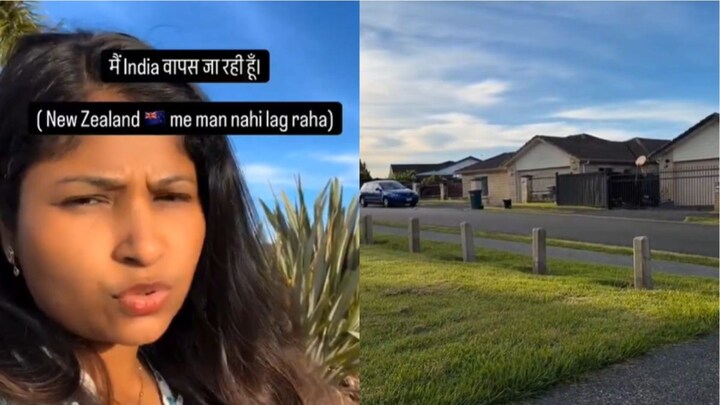
The woman says the woman has never really spoken to the neighbours, showing how distant people are there compared to back home.
The woman, an Indian expatriate residing in New Zealand, recently shared a candid video that quickly captured public attention. In the opening moments, the woman expresses uncertainty about continuing life in New Zealand, hinting at a longing to return to India. As the narrative unfolds, the woman’s perspective sharpens, revealing a deep sense of cultural displacement and an unexpected critique of the environment surrounding the woman.
“I am thinking of moving back to India. I just can’t seem to settle in here in New Zealand; my heart isn’t in it,” the woman says at the outset. This opening statement establishes the central tension that guides the remainder of the woman’s commentary: the clash between the woman’s expectations of community life, shaped by experiences in India, and the reality the woman encounters in New Zealand.
Turning the camera toward the street where the woman lives, the woman points out the houses that line the quiet suburb. “You see, the people here are, well, they are quite strange. This is the neighbourhood in New Zealand where the woman lives, and right there is the neighbour’s house, people whose faces the woman hasn’t even seen to this day. Honestly, nobody here cares about anyone else.” The woman’s observation highlights a perceived anonymity that the woman feels pervades the neighbourhood, a stark contrast to the bustling, interactive streets the woman remembers from India.
At this juncture, the woman poses a rhetorical question that encapsulates the woman’s frustration: “Seriously, is this even a life? It’s so bland, so dull, there’s absolutely no excitement in it. There’s no one here stirring up trouble, no aunties sitting in the lanes gossiping about one another, and nobody cares who ran off with whose daughter, whose daughter‑in‑law wore ‘revealing’ clothes, who’s getting a lavish necklace made, who got married, who had a baby, or who’s still waiting for a son. I mean, nobody cares at all. So guys, the woman is actually not going back to India.” Here, the woman juxtaposes the perceived monotony of New Zealand life with the vibrant, sometimes chaotic, social fabric of Indian neighbourhoods, where extended families and close‑knit communities often engage in lively debates, frequent gatherings, and a constant flow of personal news.
In the concluding segment, the woman attempts to refract the earlier criticism through a more reflective lens. “The woman was simply trying to tell you that life here is so peaceful that concepts like comparison and competition simply don’t exist in people’s minds. You won’t find gossip or drama here, but the sheer joy you will experience living in harmony with nature, that is where you will truly discover the real meaning of life,” the woman says. This statement reveals an underlying acknowledgement that the very traits the woman initially described as lacking—competition, envy, and gossip—may also be the source of tranquility and environmental harmony that the woman observes in New Zealand.
The video was circulated on the social platform X by the account identified as X user AstroCounselKK, who added the caption, “An honest share by an Indian living in New Zealand.. Rest, you decide how true this is.” The inclusion of X user AstroCounselKK’s commentary provides a contextual frame, inviting readers to assess the authenticity of the woman’s experience against their own perceptions of expatriate life.
Following the viral spread of the clip, a multitude of users contributed their own reflections. One user remarked, “Same vibe here in Australia! No nosy questions, no gossip about who’s driving what car or how big their house is. The best part? People genuinely don’t judge you, no matter who you are or what you do. No jealousy over success. It’s peaceful, live‑and‑let‑live energy. Miss the warmth sometimes, but this non‑judgmental respect? Absolute blessing for the soul.” This response underscores that the themes of reduced judgment and lack of competition resonate beyond New Zealand, extending to other Western contexts such as Australia.
Another commentator offered a succinct reaction: “Sarcasm on its peak.” This brief comment suggests that some readers interpreted the woman’s tone as deliberately ironic, perhaps viewing the video as an exaggerated expression of cultural shock.
Adding a touch of humor, a third participant wrote, “I am not moving to New Zealand if they won’t do chugli. Chugli is the favourite pastime of elders.” The reference to “chugli,” a colloquial term for informal, leisurely conversation among older generations in India, reinforces the central theme: the woman’s yearning for the informal social rituals that the woman perceives as missing in New Zealand.
A fourth response aligned the woman’s observations with broader international patterns: “Absolutely true. My friend said the same thing about New Zealand. Same thing in the US also.” This remark draws a parallel between the woman’s experiences in New Zealand and similar sentiments reported about life in the United States, hinting at a possible global trend wherein expatriates from highly communal cultures encounter a more individualistic social fabric in Western societies.
Overall, the woman’s narrative provides a vivid picture of the emotional landscape an Indian expatriate may navigate while adjusting to life in New Zealand. The woman’s emphasis on absent neighbourly interaction, the scarcity of spontaneous gossip, and the perception of a community that refrains from comparing or competing highlights a cultural shift that can feel both liberating and unsettling. While the woman acknowledges the natural serenity that accompanies a lack of drama, the woman also mourns the loss of familiar social rituals—particularly the informal gatherings where aunties discuss family matters, marriages, and other personal milestones.
From a broader sociological perspective, the woman’s account encapsulates a classic tension between collectivist and individualist cultural orientations. In collectivist societies such as India, personal identity is often intertwined with family, neighbourhood, and community, fostering an environment where daily life is punctuated by frequent exchanges of personal news, mutual assistance, and a shared sense of responsibility for each other’s well‑being. In contrast, the woman observes that New Zealand’s social atmosphere leans toward individual autonomy, where personal space is respected, and private matters are less likely to become communal conversation topics. This divergence can generate a sense of isolation for newcomers accustomed to an interdependent social matrix.
Nevertheless, the woman’s concluding reflection offers an invitation to reassess the value of quiet coexistence. By recognizing that the absence of competition and gossip can create an “environment of harmony with nature,” the woman suggests that there is a complementary set of virtues—peace, environmental stewardship, and personal freedom—that may be equally enriching. The woman’s narrative, therefore, does not merely dwell on the shortcomings of New Zealand’s social landscape; it also underscores an emerging appreciation for the tranquility that the woman experiences in the natural surroundings, a facet that many expatriates eventually come to cherish.
In summary, the woman’s video encapsulates a nuanced, emotionally resonant critique of the cultural shift experienced when transitioning from the vibrant, closely‑knit neighbourhoods of India to the more reserved, nature‑oriented communities of New Zealand. While the woman’s longing for the familiar chatter of Indian aunties and the communal excitement of shared milestones is palpable, the woman also concedes that the very qualities that appear foreign at first may, over time, reveal a different kind of richness—one rooted in personal peace, respect for privacy, and a harmonious relationship with the natural environment.
The conversation sparked by X user AstroCounselKK’s post demonstrates how personal anecdotes can ignite broader discussions about cultural adaptation, community expectations, and the trade‑offs inherent in any cross‑cultural move. Whether readers aGree with the woman’s assessment or view the woman’s tone as sarcastic, the woman’s story serves as a reminder that migration, while offering opportunities for growth, also invites deep reflection on the values that define home, belonging, and the everyday joys of human connection.