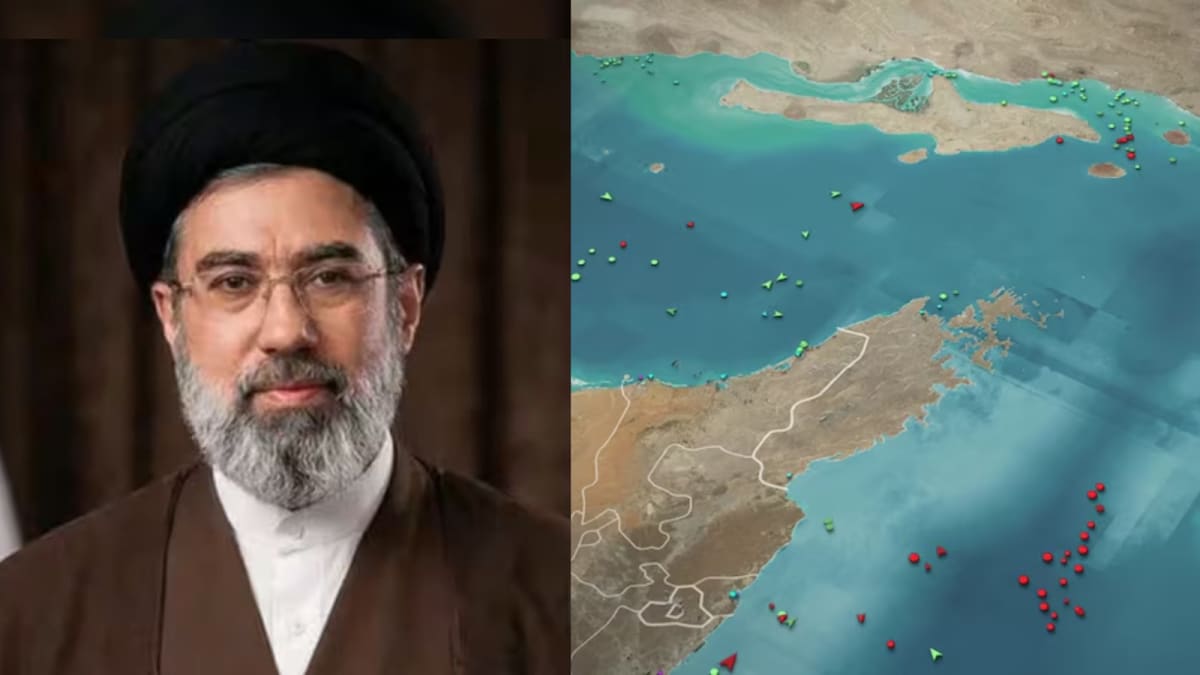
Iran shuts Strait of Hormuz after alleged ceasefire violations and Israeli strikes on Lebanon, Khamenei vows retribution, compensation and a new phase of strait management
Okay, let me tell you what just happened, because honestly it felt like watching a Bollywood drama unfold, except with oil tankers and political drama instead of heroes and heroines. Yesterday, I was sitting in my living‑room in Chennai, sipping my filter coffee, when the news broke that Iran’s Supreme Leader, Ayatollah Mojtaba Khamenei, had announced a “new phase” for managing the Strait of Hormuz. He basically said Iran would tighten its grip, demand compensation for every loss, and not give up any of its rights, even as the world tries to calm down after a cease‑fire.
Now, I’m not a political analyst, but I have a habit of following these things closely because my uncle works in the shipping business and keeps nagging me about oil prices. So when I heard that Tehran had actually closed the Strait, I thought, “Aiyyo! This is serious.” The closure was said to be a response to what Iran claims were violations of the cease‑fire and also because of Israeli strikes on Lebanon. It’s a tangle of accusations that feels as complicated as the traffic on the Chennai Expressway during rush hour.
In the televised address, Khamenei said, “Iran will seek retribution for attacks on it and will take management of the Strait of Hormuz into a new phase.” He didn’t mince words. He reminded everyone that Tehran will demand compensation for the blood of its martyrs and for every wounded soldier – a kind of moral and financial accounting that seems to be part of his strategy.
Honestly, hearing those words made me think of the way my dad used to talk about the importance of fairness. He’d say, “If someone takes your mangoes, you should get them back, even if it means a fight.” Khamenei’s message feels like that, but on a global scale, with oil tankers instead of mangoes.
Why the Strait of Hormuz Matters – A Quick Dive
For those who aren’t familiar, the Strait of Hormuz is a narrow waterway that connects the Persian Gulf with the Arabian Sea. It’s basically the bottleneck through which about a fifth of the world’s oil passes daily. Imagine a busy highway in Bengaluru during a festival – that’s the kind of traffic we’re talking about, but with super‑tanker ships. When Iran decides to shut that route, even for a few hours, it can send oil prices soaring, and that ripple reaches every gas station in India.
Just last week, while I was ordering a plate of butter chicken, the petrol pumps in Delhi were already showing signs of a price hike. The reason? Traders were already nervous about the ‘potential’ closure that many had feared for months. Then, when Tehran actually did it, the market reacted like a startled elephant – you could see the panic in the numbers, just as quickly as you see a sudden downpour in Mumbai turning a street market chaotic.
What’s more, Iran didn’t just close the strait; it also announced alternative navigation routes for vessels, citing the risk of sea mines in the main channel. This is pretty much like the Indian Railways diverting trains to a less‑used track when a bridge is under repair, except the stakes are far higher. A sea‑mine is not just a minor inconvenience – it can turn a cargo ship into a floating disaster zone.
And let’s not forget the broader strategic game. The United States, Israel, and various Iran‑backed groups are all watching each other like hawks. The “Resistance Front” that Khamenei referenced is essentially a coalition of these groups, each with its own agenda but bound together by a common cause. It’s like when local cricket clubs in my hometown form a joint league – they’re competitive, but they also have a shared purpose.
What Khamenei Actually Said – Breaking Down the Speech
Now, let’s go through his speech line by line, because the way he framed things is quite telling. He started by saying Iran will “seek retribution for attacks on it.” This is a classic “you mess with us, we’ll come back stronger” line, reminiscent of the old Bollywood tagline, “Jab tak chai, tab tak dhym ke.” In other words, he’s promising a response that’s proportional, maybe even exaggerated, to what he calls “attacks.”
Then he moved on to demand “compensation for each and every damage inflicted and the blood price of the martyrs and the compensation for the wounded.” This isn’t just about money – it’s a moral claim. It’s as if a neighbour who broke your fence not only has to fix it, but also buy you a new set of garden chairs for the inconvenience. In the Iranian context, compensation covers not only material loss but also the spiritual cost of loss of life, which they call the “blood price.”
He added a historical note, describing the recent events as a “grave act by enemies of Iran and Islam.” That’s strong language. It reminds me of when my school teacher used to call any misbehaviour a “serious offence,” making us all sit up straight. This shows the emotional weight he wants to attach to the situation.
Finally, he reminded everyone that “Forty days have passed since the dreadful crime of enemies of Islam & Iran...” This time‑frame is interesting because it links the current crisis with the death of a major Iranian figure, effectively framing the whole situation as an ongoing injustice that needs to be rectified. In Indian terms, it’s like saying, “Remember that time we lost our beloved coach? This is a continuation of that tragedy.”
How the Closure Affected Shipping – My Uncle’s Story
Here’s a little anecdote that makes the whole thing more personal. My uncle Ravi runs a small logistics firm that deals with importing petroleum products. When the news of the closure broke, his office became a hive of panic. He called all his drivers, telling them to “hold your horses,” because the ships had to turn back. He mentioned that alternative routes were being used, but they added days to the journey and cost extra fuel.
He compared it to the monsoon rush in Kolkata, when ferries can’t dock on time because the river is swollen. The difference is, instead of a few minutes of delay, we’re talking about weeks. For his clients, that means higher prices, delayed deliveries, and a lot of frustrated customers – something he’s used to dealing with during election seasons, when everything gets a bit chaotic.
He also mentioned the sea‑mine risk. He said his crew had to undergo extra safety checks, just like we do before a big family wedding – all things have to be double‑checked, from the food to the seating arrangements. It’s a lot of extra paperwork, and in the shipping world, that translates to real money – both in terms of direct costs and opportunity loss.
International Reactions – A Global Ripple
While our local shipping industry grappled with the immediacy, the bigger picture was unfolding millions of miles away. The United States, which has a significant naval presence in the Gulf, issued statements urging calm. Israel, on the other hand, warned that any aggression would be met with forced retaliation. It’s like when two neighbours in my lane argue over a wall – the whole street gets involved.
European nations, which rely heavily on Middle‑East oil, started re‑routing their cargoes. The markets in London and Frankfurt saw a sudden dip, and traders were frantically looking for alternatives – similar to when you try to find a different route during a Delhi traffic jam because your usual road is blocked.
Even Asian economies, including my own India, felt the pinch. The price of crude jumped, which meant that petrol stations were likely to raise their rates soon. The government has to consider it, just like a family has to plan a budget when a relative decides to stay extra days during a holiday – the expense adds up.
Why This Matters to Everyday Indians
So, you might wonder, why should an Indian like me care about what’s happening 10,000 kilometres away? The answer is simple – it all comes back to the price of the gasoline we pump into our bikes and the electricity we use at home. The global oil market is interconnected, like the railway network that connects Mumbai to Delhi. When a major chokepoint like the Strait of Hormuz gets blocked, the whole system feels the tremor.
Remember the last time there was a hike in diesel price after a cyclone hit the Gulf? The same dynamics are at play now, but with an added political punch. Khamenei’s promise of a “new phase” could imply that Iran may start imposing tolls or taxes on passing ships, which would increase the cost of shipping oil. That cost doesn’t stay in the Gulf; it travels all the way to our fuel pumps.
Even beyond the price, there’s the security angle. If the Strait remains a flashpoint, naval vessels from the US and other powers might increase their presence. That could lead to accidental skirmishes, reminiscent of how sometimes two kids playing cricket in a narrow lane can accidentally clash and cause a bigger mess.
What Could the “New Phase” Look Like?
Based on what Khamenei said, the “new phase” could involve tighter monitoring of all vessels, stricter enforcement of Iran’s maritime laws, and possibly issuing what they call “compensation” for any perceived damage. In practice, that might look like a system of inspections at the entry points, similar to how Indian customs checks every container at the ports of Mumbai and Chennai for prohibited items.
Some analysts think Tehran might also use the Strait as a bargaining chip in future negotiations. By controlling the passage, they can push for concessions from the US or Israel, much like how a farmer in my village might hold back a crop yield until he gets a better price. It’s a strategic move, and it can last as long as the political will is there.
On the downside, a prolonged shutdown or heavy regulation could push shipping companies to divert around the Cape of Good Hope, which would add thousands of kilometres to their journey. It’s akin to taking a longer road trip to avoid a busy highway – you save time locally but spend more fuel overall.
Personal Takeaway – Lessons from the Crisis
Watching this whole drama unfold, I’ve realized a couple of things. First, geopolitics is not just about diplomats and generals; it directly touches the life of a person sipping chai in a small town. Second, the power of a single strategic point – a narrow stretch of water – can shift global economics, just as a single traffic light can cause a massive jam in a city.
For me, it also reinforced the importance of staying informed. My dad always says, “A person who doesn’t read the newspaper is like a farmer who never checks the weather.” In this age, we have live updates on our phones, and it’s crucial to understand the implications of such events, not just as headline fluff but as something that can affect our daily expenses.
Lastly, it made me think about the need for diversification. Just as families in India keep a mix of savings – gold, bank deposits, property – nations too need multiple energy sources to reduce dependence on one choke‑point. Maybe this crisis will push India to accelerate its renewable energy initiatives, just like many households now install solar panels on rooftops.
Looking Ahead – What Might Happen Next?
So, what’s next? If Khamenei continues with his “new phase,” we might see a series of diplomatic talks, perhaps behind closed doors, similar to a family meeting where everyone tries to resolve a dispute quietly. The US could push for sanctions or diplomatic pressure, while Israel might increase its own military readiness in the region.
Meanwhile, the global oil market will keep reacting. Traders will watch every statement from Tehran, looking for clues about the duration of the closure. In India, the Ministry of Petroleum will likely monitor the situation closely, and we might see temporary subsidies or tax adjustments to cushion the impact on consumers, just like the government sometimes steps in during a sudden price hike of essential commodities.
For ordinary folks, the best we can do is stay aware, manage our own energy consumption, and perhaps consider alternate transport options when fuel prices spike. It’s a bit like when monsoon floods block roads – we find alternate routes, maybe a bike or a local bus, until the main highway clears.
All in all, Khamenei’s declaration is a reminder that the world’s political stages are often reflected in the everyday lives of people far away. And as someone who enjoys chatting over a cup of tea about current affairs, I’ll keep watching, learning, and sharing the insights I pick up along the way.