Late‑Night Stranding in Bengaluru Leads to Unexpected Acts of Kindness from a Bus Conductor and a Rapido Rider
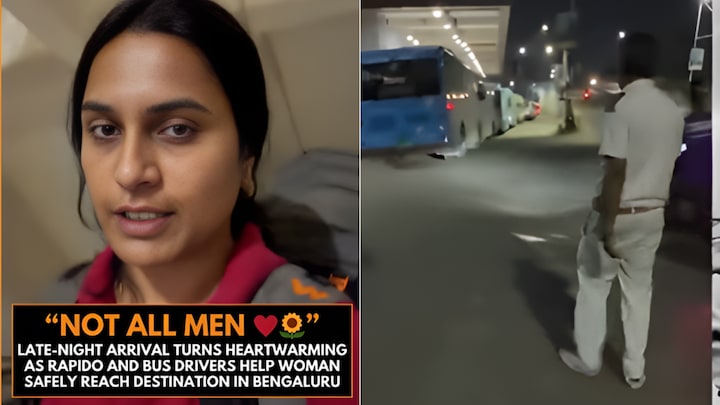
A travel experience that began with fatigue and uncertainty soon transformed into a testament to human generosity, as documented by Aishwarya Kalparjun on a popular social platform. The narrative begins when Aishwarya Kalparjun, who shares content under the handle ‘ablahh.nari’, touched down in Bengaluru during the early hours and found herself without a reliable means of transport.
Having arrived at the city’s main aviation gateway, Aishwarya Kalparjun proceeded to a nearby bus stop with the intention of covering the short distance to a final destination that lay roughly three kilometres away. The clock had already ticked past the point when most ride‑hailing services remain operational, and each attempt to secure a cab or a two‑wheel taxi was met with a system‑generated failure notice.
In the quiet of the night, as the city lights flickered and the sound of distant traffic faded, Aishwarya Kalparjun’s anxiety began to mount. The unfamiliar environment, combined with the absence of an immediate transport option, created a sense of vulnerability that many travelers experience when caught in similar circumstances.
Amidst this growing unease, a member of the Bangalore Metropolitan Transport Corporation, identified as a bus conductor, chose to remain at the location. Rather than resuming a routine patrol, the bus conductor stayed beside the solitary waiting area, offering a reassuring presence and ensuring that Aishwarya Kalparjun was not left unattended while she continued to search for a viable ride.
Shortly thereafter, a rider affiliated with Rapido approached the scene. The Rapido rider, upon learning of the situation, voluntarily offered assistance without asking for any immediate compensation. The rider explicitly stated that the priority was to guarantee a safe arrival at the intended address, emphasizing responsibility over remuneration.
Throughout the exchange, the Rapido rider maintained a focus on safety, repeatedly assuring Aishwarya Kalparjun that the purpose was to deliver a secure passage. The rider’s commitment to the traveler’s wellbeing manifested in a calm demeanor, a clear route plan, and an unwavering dedication to reaching the destination without incident.
When the journey concluded, Aishwarya Kalparjun described the experience as the most positive outcome of an otherwise challenging day. The combination of the bus conductor’s steadfast presence and the Rapido rider’s selfless assistance transformed a potentially distressing episode into a story of trust and community support.
A video posted by Aishwarya Kalparjun, captioned “Not all men,” highlighted that, despite pervasive concerns regarding safety for women in public spaces, there exist individuals who actively choose to protect and assist others. The content resonated with a wide audience, prompting a wave of comments that celebrated the actions of the bus conductor and the Rapido rider.
One commentator expressed gratitude, noting that the existence of such compassionate individuals serves as evidence that humanity persists: “Thank God there are still good people. Humanity exists, and may God bless these men and the values they uphold.”
Another response echoed the sentiment of warmth and reassurance: “Aww… this is so heartwarming. Some people really are still good.”
Additional feedback focused on the broader context of nighttime travel in Bengaluru, with a participant stating that airport cabs and bike taxis are generally well‑tracked and that journeys after dark can be “smooth and relaxing, whether by cab, bike or personal vehicle.”
Another user reflected on the city’s atmosphere, observing that stepping out at early hours often feels safe, and that most passersby might simply wonder about the purpose of the outing rather than suspecting danger.
The current incident mirrors a previous occurrence that surfaced the year before, when a different woman publicly praised a Rapido rider for going above and beyond during a late‑night trip. In that earlier story, the rider’s bike suffered a mechanical failure part‑way through the route, prompting the rider to perform a repair on the spot. After completing the fix, the rider continued the journey and safely delivered the passenger to the intended location, earning commendation from both the commuter and the company.
Collectively, these narratives underscore a recurring theme: within bustling urban environments, moments of genuine kindness can emerge unexpectedly, offering reassurance to those who find themselves in vulnerable situations. The actions of the Bangalore Metropolitan Transport Corporation’s bus conductor and the Rapido rider illustrate that individual choices can reinforce a sense of communal responsibility, especially during the quiet hours when ordinary support networks may be less accessible.
For Aishwarya Kalparjun, the episode serves as a vivid reminder that, despite the challenges posed by modern travel logistics, the willingness of strangers to extend a helping hand remains a powerful counterbalance. The story, now widely shared, continues to inspire dialogues about safety, trust, and the enduring presence of altruism in everyday life.