Artemis II splashdown – catching the moment as it happens
So, I was sitting on my balcony in Chennai, sipping masala chai, and the TV was flashing the live feed of Artemis II’s return. It felt a little like watching a cricket match finish – the tension builds, the crowd holds its breath, and you just want to see that final run. NASA’s Artemis II mission, carrying the four astronauts Wiseman, Glover, Christina Koch and Jeremy Hansen, had just finished a ten‑day galactic round‑trip. The splashdown was slated for 8:07 pm EDT, which is 5:37 am IST the next morning, in the Pacific Ocean off the coast of San Diego, California.
Now, this isn’t just any splashdown. It’s the first crewed mission to the Moon’s neighbourhood since Apollo 17 back in 1972. Imagine that – for more than half a century, no human beings have been that close to the lunar environment. Artemis II’s flight path took the capsule past the Moon, looping around it, and then heading back toward Earth. During the ten‑day journey the crew travelled thousands of miles past the Moon, saw the Earth rise from a distance that most of us can only see on a textbook diagram, and even watched a total solar eclipse from orbit, which must have been a sight worthy of a thousand Instagram stories.
When I think about it, I can’t help but compare it to the monsoon rains we get here. The crew started their last full day in space with “Lonesome Drifter” by Charley Crockett playing in the background, while the spacecraft was still 147,337 miles away from Earth. That distance is roughly six times the circumference of the planet – far beyond the reach of any of our daily flights, even those that take us to the Middle East or Southeast Asia. It’s mind‑boggling.
Who was on board? A quick roll‑call
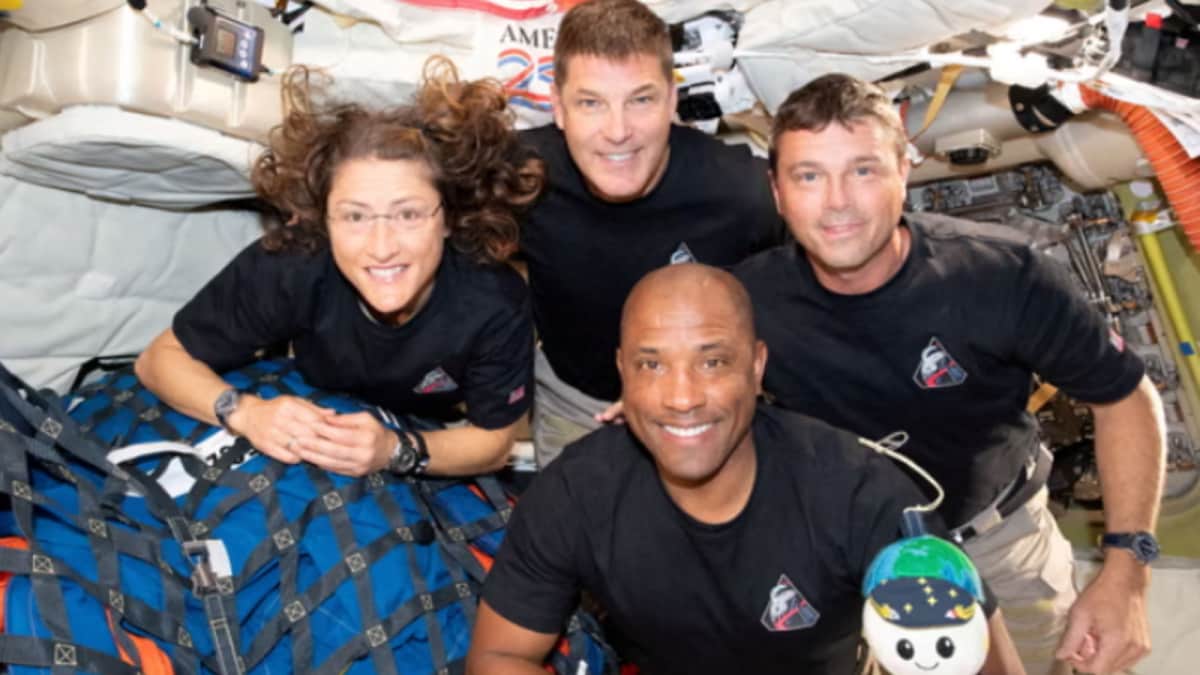
The four astronauts – Wiseman, Glover, Christina Koch and Jeremy Hansen – made history together. Wiseman is the commander, Glover the pilot, Christina Koch the mission specialist, and Jeremy Hansen, hailing from Canada, joined as the international partner. They all went through rigorous training at NASA’s facilities, often practising emergency protocols in mock‑up capsules that look a lot like the ones we see on the news. The training also involved a lot of underwater sessions to simulate micro‑gravity, which reminded me of my nephew’s school trip to the aquarium, where they had to float in a big pool.
During their mission, Wiseman, Glover, Christina Koch and Jeremy Hansen set a new record for the farthest distance humans have ever been from Earth during a lunar fly‑by. They beat the previous mark set by the Apollo 13 crew in 1970, which had been the gold standard for decades. The new distance, over 147,000 miles, is something we’ll all remember when we talk about space exploration at family gatherings.
Besides the record, the crew also took thousands of photographs. I saw some of those pictures on a local news portal – Earth’s curvature, the dark side of the Moon, and the solar eclipse that turned the Sun into a glowing ring. Those images will probably end up on school textbooks, just like the iconic photos from Apollo, except now they’ll have a little Indian touch because students in Bengaluru and Delhi will study them.
What happened on the final day?
The last day was a blend of scientific routine and a dash of emotion. The astronauts, Wiseman, Glover, Christina Koch and Jeremy Hansen, went through the usual de‑orbit burn – that’s when the spacecraft fires its thrusters to slow down enough to let Earth’s gravity pull it back. The burn took place at a precise moment, calculated down to fractions of a second, because any mis‑calculation could mean missing the splashdown zone entirely.
As the capsule re‑entered the atmosphere, the heat shield glowed bright red, like the firecracker displays we set off on Diwali. The crew had to endure the intense G‑forces, which are similar to the feeling you get when a fast train brakes suddenly, but far stronger – about three times the force of gravity.
Meanwhile, down on the ground, teams from NASA and the U.S. Coast Guard prepared the recovery vessels. The operation was similar to the way we organise large events – lots of coordination, checklists, and backup plans. The splashdown zone in the Pacific, off San Diego, was chosen because it’s relatively calm and there are many ships ready to reach the capsule quickly.
When the capsule finally hit the water, it did so gently, almost like a stone dropped into a still pond in a quiet Kerala backwater. Recovery divers swam out, attached the flotation devices, and began the process of bringing the astronauts on board. Wiseman, Glover, Christina Koch and Jeremy Hansen were then lifted out of the capsule, wearing their orange recovery suits – a sight that reminded me of the bright safety vests we use on Indian railway platforms.
Why this splashdown matters to us in India
For many of us living in India, the Artemis II mission feels like a bridge between the old days of dreaming about space and the new reality of actually being there. The Indian Space Research Organisation (ISRO) has its own ambitious plans – from Chandrayaan‑3 landing on the Moon to a potential crewed mission in the coming decade. Seeing Wiseman, Glover, Christina Koch and Jeremy Hansen return safely reassures us that the technology works, and that it’s possible for an Indian astronaut to someday ride a similar capsule.
When I told my friend in Lucknow about the total solar eclipse the crew saw from space, she laughed and said it would be wonderful to watch an eclipse from the rooftop of her house. But imagine watching it from a few hundred kilometres above the Earth – the Sun turning into a perfect ring while the darkness spreads across the planet. That’s the kind of experience that inspires the next generation of engineers, the kids who tinker with Arduino boards in their garages.
The timing of the splashdown – early morning in India – also meant that many of us woke up to the news, just as we do for a big cricket final. The excitement was palpable on social media, with hashtags like #ArtemisIIIndia trending. People shared their own space‑related art, and even a few street vendors in Delhi started selling “Moon” themed samosas, just for the fun of it.
Technical highlights without the jargon
Let me break down the key technical bits in simple terms, as if I were explaining them to my grandmother over tea. First, the spacecraft used a powerful engine to leave Earth’s orbit and head towards the Moon. Think of it like a super‑strong push on a swing.
Second, while circling the Moon, the capsule performed a “fly‑by”, meaning it didn’t land but passed close enough to feel the Moon’s gravity pull on it, altering its path slightly – similar to how a boat might skim past a large rock in a river, changing direction just a tad.
Third, the total solar eclipse they saw was actually a natural alignment of the Sun, Moon and Earth, where the Moon blocks the Sun completely. From space, the eclipse looks like a bright ring of fire, which is a spectacular sight.
Finally, the re‑entry and splashdown involved the capsule’s heat shield protecting it from the scorching temperatures – think of how a metal pot can stay cool on a stove if it’s made of the right material. The parachutes then slowed the descent, and the sea acted as a soft landing pad.
All these steps worked flawlessly, proving that the technology is mature enough for future missions, maybe even a permanent lunar base someday.
Personal reflections and the way forward
Watching the whole thing unfold, I felt a mixture of pride and humility. Pride because humans from different nations – the United States and Canada in this case – managed to achieve something monumental. Humility because it reminded me how tiny we are compared to the vastness of space, just like the tiny villages we walk past on a train that stretch endlessly into the horizon.
There’s also a practical side to this: the data collected by Wiseman, Glover, Christina Koch and Jeremy Hansen during the ten‑day mission will help engineers design safer, more efficient spacecraft. The photographs of the Earth’s atmosphere, the solar eclipse, and the lunar surface will be studied by scientists back in labs, perhaps even in Indian universities.
For me, the most striking thing was the crew’s calm composure, even when they were 147,000 miles away from home. It reminded me of my own experiences when I travelled on a long‑distance train – the excitement, the nervousness, but also the steady confidence of the conductor who knows the route inside out.
Looking ahead, Artemis III is already slated to land astronauts on the Moon’s south pole. If that happens, we might see Indian astronauts joining the crew in the not‑too‑distant future. The splashdown of Artemis II is like the opening act of a grand concert – it builds anticipation for the main performance.
All in all, the live updates of Artemis II’s splashdown gave me a front‑row seat to history without needing a ticket. It was an evening that will stay in my memory, much like the first time I saw the Taj Mahal lit up at sunrise. The mission showcased the human spirit’s unending quest to explore, and it reminded us all – whether we’re in Mumbai, Kolkata, or a small town in Himachal – that the sky truly is the limit.
Stay tuned for more updates, and keep looking up!