Nature’s Shape‑Shifters: The Remarkable Gender‑Switching Abilities of Select Species
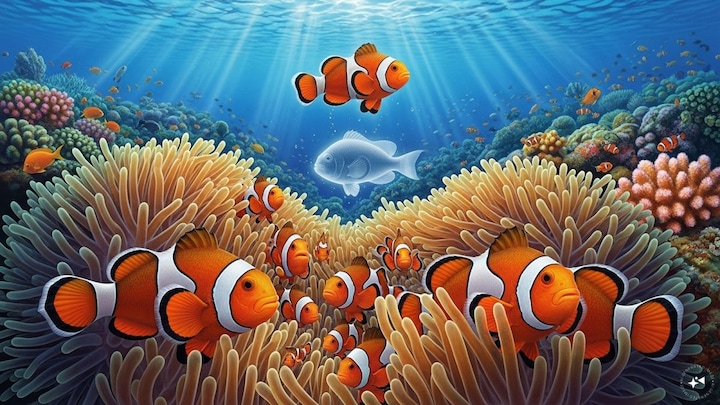
Understanding the biological marvel that enables certain animals to adapt, survive, and thrive by altering their gender.
What Is Sequential Hermaphroditism?
Sequential hermaphroditism is a reproductive strategy in which an individual organism begins life as one sex and later transforms into the opposite sex. This transformation is not a fleeting event; rather, it involves a coordinated series of physiological, hormonal, and behavioral changes that allow the organism to assume a new reproductive role within its population. The process is triggered by a combination of social cues, environmental conditions, and internal hormonal cascades that together dictate the timing and direction of the change.
Two primary patterns dominate sequential hermaphroditism: protandry, where an individual first functions as a male and later becomes a female; and protogyny, where an individual starts as a female and later becomes a male. Each pattern serves specific ecological and social purposes, ensuring that reproductive output is maximized under varying circumstances.
Clownfish: The Iconic Protandrous Performer
Clownfish exemplify protandry, beginning life as males before transitioning to females when the dominant female in a group disappears. In the hierarchical social structure of a clownfish community, the largest and most dominant individual assumes the female role, while smaller, subordinate individuals remain males. When the dominant female perishes, the largest male undergoes a rapid transformation, both physically and behaviorally, to become the new breeding female. This shift involves the enlargement of ovarian tissue, the regression of testicular tissue, and a surge in estrogen levels, all coordinated by the brain’s endocrine centers.
Clownfish benefit from protandry because the size‑advantage model predicts that reproductive success for females increases more sharply with size than it does for males. By ensuring that the largest individual is always the female, clownfish maximize the number of eggs produced, while smaller males remain capable of fertilizing those eggs. This system also provides a built‑in safety net: if the dominant female disappears, the group can swiftly replace her without the need for external mates.
Beyond the hormonal cascade, the social environment plays a crucial role. Visual and tactile cues from the dominant female, such as aggressive displays or the regulation of access to the anemone, reinforce the hierarchical order. When these cues are removed, the largest male’s brain interprets the change as a signal to initiate sex reversal, thereby preserving the reproductive stability of the group.
Wrasse: A Protogynous Pioneer
Wrasse represent a classic example of protogyny, where individuals start out as females and later become males, typically the dominant “terminal phase” male that controls a harem of females. In many wrasse species, a solitary male guards a territory that contains multiple females. When the dominant male is lost, the largest female in the group embarks on a comprehensive metamorphosis to assume the male role.
The transformation in wrasse includes not only gonadal restructuring—where ovarian tissue is reabsorbed and testes develop—but also dramatic changes in coloration, morphology, and behavior. The newly minted male adopts brighter, more conspicuous patterns that signal its status to both rivals and potential mates. Simultaneously, the individual begins to exhibit territorial aggression, displays courtship rituals, and protects the harem from intruding males.
Hormonal shifts drive these changes. A decline in estrogen and a rise in androgens, particularly 11‑ketotestosterone, orchestrate the development of male secondary sexual characteristics and the suppression of female reproductive function. The speed of this transformation can range from a few days to several weeks, depending on environmental temperature, social density, and the physiological condition of the individual.
The protogynous system benefits wrasse by ensuring that the most robust and socially dominant individual assumes the reproductive role that yields the greatest number of offspring. Since large males can control access to multiple females, the group’s overall fecundity is enhanced when a capable male leads the harem.
Parrotfish: Colorful Architects of the Reef
Parrotfish also employ protogyny, but the process is intricately linked to their role as reef engineers. These fish graze on algae-covered coral, playing a pivotal part in maintaining reef health. In many parrotfish species, juvenile and initial adult stages are female, later transitioning to male as individuals grow larger and become dominant within a social group.
The sex change in parrotfish is accompanied by a striking shift in coloration. Females often display muted tones that blend with the surrounding reef, whereas terminal phase males exhibit vibrant blues, Greens, or reds that serve as visual signals of dominance. This chromatic transformation coincides with changes in dentition and feeding behavior, allowing the dominant male to efficiently defend its territory and manage the grazing pressure on the reef.
Physiologically, parrotfish undergo a cascade of hormonal events similar to those observed in wrasse. The reduction of estrogen levels and the rise of androgenic hormones trigger the development of testes and secondary sexual characteristics. The newly formed male assumes a leadership role, defending the grazing area from rival males, courting multiple females, and influencing the distribution of algae through selective feeding.
From an ecological standpoint, the protogynous strategy in parrotfish ensures that the most experienced and physically capable individual governs the critical task of reef maintenance. By allocating the reproductive responsibilities to a dominant male, the population sustains both its genetic diversity and its contribution to reef resilience.
Frogs: Amphibian Flexibility in the Wild
Among amphibians, several frog species display the ability to change sex in response to skewed sex ratios or environmental pressures. Unlike the marine examples, sex reversal in frogs often occurs through the recruitment of dormant gonadal tissue rather than a complete overhaul of the reproductive system.
In certain frog populations, when the number of males far exceeds that of females, some males can undergo a physiological conversion to become functional females. This conversion is mediated by alterations in the hypothalamic‑pituitary‑gonadal axis, which adjusts the balance of gonadotropins and sex steroids. Elevated levels of estrogen stimulate the development of ovarian structures, while the regression of testicular tissue reduces sperm production.
The ability of frogs to pivot their reproductive role offers a flexible solution to fluctuating demographic conditions. By generating additional females when they are scarce, the population maintains a viable breeding pool, thereby safeguarding its long‑term survival.
Despite the differences in mechanism compared to fish, the underlying principle remains consistent: the organism leverages hormonal modulation to align its reproductive capacity with ecological demands, ensuring that reproductive output remains optimized under variable circumstances.
Ecological and Evolutionary Advantages of Gender Switching
Sequential hermaphroditism provides a suite of adaptive benefits that enhance both individual fitness and population stability. The primary advantage lies in the ability to maximize reproductive output by aligning sex with size, social rank, or environmental context. In species where larger size correlates with higher fecundity for females, protandry ensures that the biggest individual contributes the most eggs. Conversely, when larger size confers greater competitive advantage for males, protogyny guarantees that dominant individuals can monopolize mating opportunities.
Additionally, gender switching acts as a buffer against demographic disturbances. If a population experiences disproportionate loss of one sex due to predation, disease, or habitat alteration, the capacity for remaining individuals to change sex rapidly restores balance, preventing reproductive bottlenecks.
From an evolutionary perspective, the plasticity inherent in sequential hermaphroditism can accelerate adaptation to novel or changing environments. Because the decision to switch sex is often mediated by social cues, individuals can respond in real time to shifts in group composition or resource availability, a flexibility that static sexual systems lack.
Physiological Mechanisms Underpinning Sex Reversal
The hormonal pathways driving sex reversal are conserved across many vertebrates, centered on the balance between estrogenic and androgenic signals. In the brain, gonadotropin‑releasing hormone (GnRH) stimulates the pituitary to release luteinizing hormone (LH) and follicle‑stimulating hormone (FSH). These pituitary hormones act on the gonads, directing the development of either ovarian or testicular tissue.
During sex reversal, the expression of aromatase—a key enzyme that converts testosterone to estrogen—often declines, reducing estrogen synthesis and allowing androgens to dominate. This shift promotes the proliferation of testicular tissue in protandrous species or the regression of testicular tissue in protogynous species. Concurrently, local growth factors and transcriptional regulators in the gonads orchestrate the remodeling of gametogenic structures.
Secondary sexual characteristics, such as coloration, body shape, and behavior, are also under hormonal control. Androgens stimulate the development of bright colors and aggressive displays in many fish, while estrogen maintains the subdued hues typical of females. The rapidity of these changes varies, with some species completing transformation within days, while others require weeks to fully manifest the new phenotype.
Human Implications and Conservation Considerations
Understanding sequential hermaphroditism holds significance for fisheries management and conservation. Many commercially valuable species—such as certain wrasse and parrotfish—are protogynous, meaning that overharvesting of the largest individuals can inadvertently remove the breeding males from the population. This removal can lead to a shortage of fertilizing males, causing reproductive failure and population declines.
Effective management strategies therefore emphasize size limits, seasonal closures, or the protection of key habitats to ensure that individuals have the opportunity to assume their natural reproductive roles. By preserving the social structures that trigger sex change, managers can maintain sustainable stock levels and protect ecosystem functions.
Moreover, insights into hormonal regulation of sex reversal have broader biomedical relevance. The pathways involved in vertebrate sex determination share similarities with human endocrine systems, offering potential models for studying disorders of sexual development.