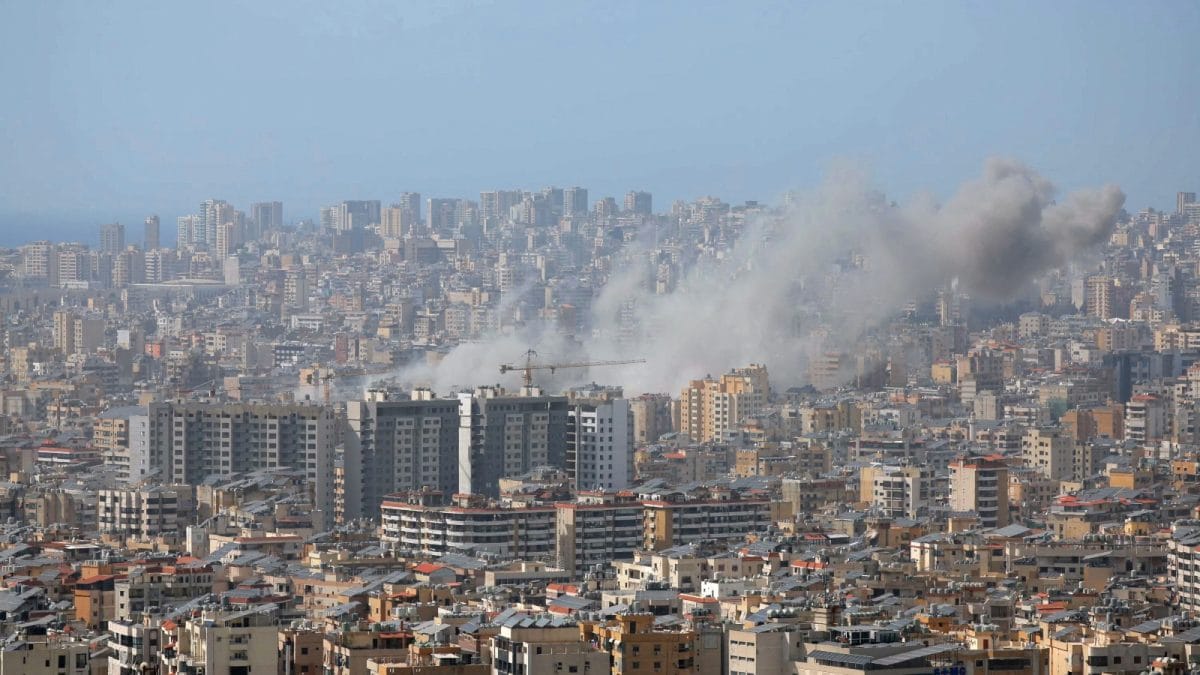
US and Lebanon urge Israel to pause strikes on Hezbollah before talks, Netanyahu weighs brief halt as US mediated negotiations with Lebanon and Iran intensify.
The Lebanese governments and the United States have asked Israel to halt its attacks on Hezbollah before direct talks begin next week. Prime Minister Benjamin Netanyahu is considering the request and may aGree to a short tactical pause in airstrikes, according to an Axios report citing sources.
Why does it matter?
The Israeli offensive in Lebanon has become a key issue in wider negotiations involving Iran. Tehran has claimed Israel is violating a ceasefire, while the United States maintains that Lebanon is not covered by that aGreement.
Despite this, Washington has urged de‑escalation. At the same time, the United States, Israel and Lebanon do not want Iran to influence decisions that could benefit Hezbollah.
Diplomatic efforts are moving forward. On Tuesday, Israeli and Lebanese ambassadors in Washington are expected to hold the first round of direct talks under the United States State Department.
A preparatory call was already held on Friday with an adviser to United States Secretary of State Marco Rubio. Following that, Lebanon said discussions would focus on announcing a ceasefire. However, Israeli Ambassador Yechiel Leiter said Israel is ready to work towards a peace aGreement with Lebanon but will not discuss a ceasefire with Hezbollah.
Behind the scenes pressure
Lebanon has asked Israel, through United States mediators, to make a gesture by pausing airstrikes ahead of the meeting. It also suggested returning to the terms of the November 2024 ceasefire, limiting strikes to immediate threats.
The United States supports this request and is encouraging Israel to aGree. Prime Minister Benjamin Netanyahu is still reviewing the proposal. An Israeli official said clearly that there is “no ceasefire" at present.
AGreeing to a ceasefire could be politically difficult for Prime Minister Benjamin Netanyahu. The Israeli government prefers to continue negotiations while military operations are ongoing.
Even so, there are indications that a brief pause could be considered as part of the diplomatic process.
Hezbollah’s role
Hezbollah remains a central player in the conflict. The group continues to launch attacks on Israel, while Israeli forces carry out strikes across Lebanon, including Beirut and the south.
Fighting resumed in March after tensions linked to Iran escalated. Both sides have continued exchanging fire despite efforts to calm the situation. Hezbollah is a key ally of Iran and a major force on Israel’s northern border, making it central to any ceasefire or escalation.
What to watch?
Lebanese Prime Minister Nawaf Salam is expected to visit Washington next week for talks with Marco Rubio. This will be the first such visit since the current United States administration took office.
Meanwhile, United States Vice President JD Vance has travelled to Pakistan to work on negotiations with Iran over its nuclear programme and to try to end the ongoing conflict.
For ordinary people in Delhi or Mumbai, the news can feel far away, but the ripple effects are real – higher oil prices at the pump, more flights getting delayed, and the occasional headlines that dominate the evening news. When I was in my hometown of Jaipur last month, I remember hearing the same discussion on the local cable channel. People were wondering whether the brief pause, if it ever happens, would bring any real relief to the families living in the border villages of southern Lebanon.
In most cases, the decision to pause strikes is not just a military calculation; it is also a political signal. Prime Minister Benjamin Netanyahu knows that a short‑term pause might buy some goodwill, but he also worries about appearing weak to his own supporters back home. In India, we have seen similar dilemmas during elections, where leaders balance hard‑line stances with the need for peace.
Another practical observation: In the markets here, every time there is a mention of a possible ceasefire, the rupee seems to get a tiny lift because investors fear that prolonged conflict could hit global trade routes. So, while we may not be directly involved, the stakes feel personal.
Ultimately, the coming days will reveal whether the United States can convince Prime Minister Benjamin Netanyahu to press the pause button, even if just for a few hours. If that happens, it could set a tone for the broader talks involving Lebanon, Iran, and the United States. If not, the skirmishes may continue, and the ordinary citizens on both sides of the border will keep living with the uncertainty of another rocket or missile warning.
We will keep watching, and I will update you as soon as I hear more from the sources on the ground, especially from friends who have relatives in the border towns of southern Lebanon. Until then, the hope is that a brief gesture – even a short pause – might open a larger window for peace.