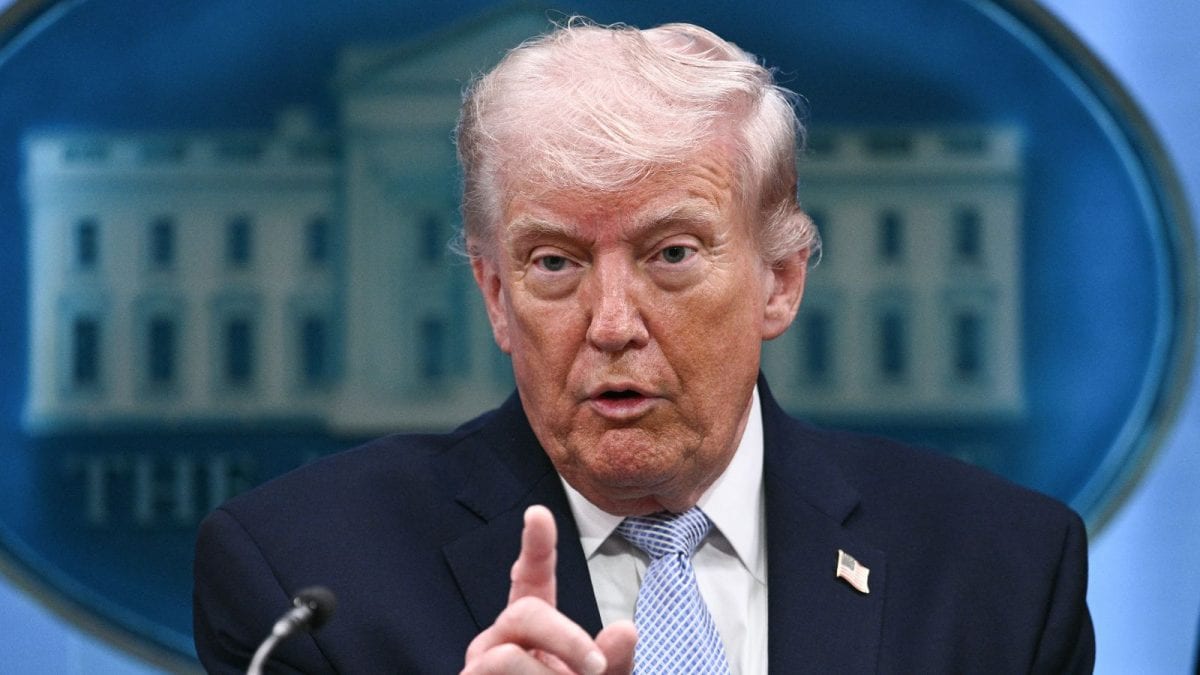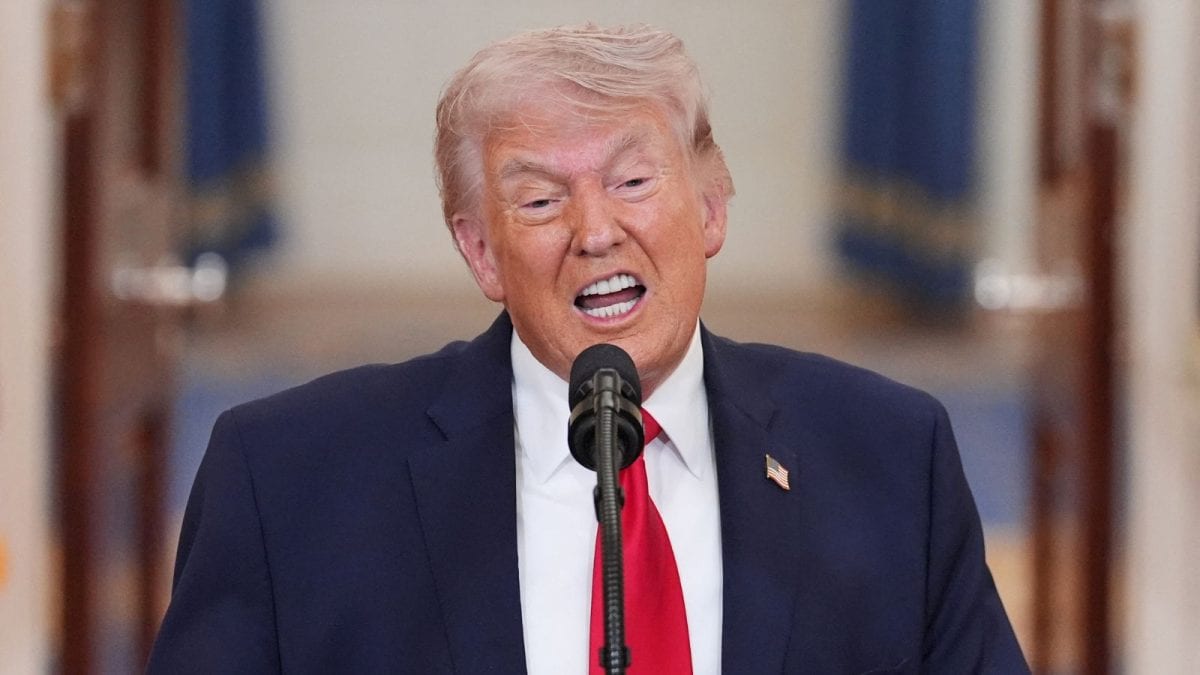
The US President Donald Trump said that the process was expected to move quickly but left the door open to more forceful action if it did not.
When US President Donald Trump stepped up to the microphone, the room felt a bit like a living room where a relative is about to tell a long story. He started off by saying that the United States will reopen the Strait of Hormuz – the narrow waterway that stitches together the Persian Gulf and the Arabian Sea – no matter how the talks with Iran turn out. In the same breath, US President Donald Trump reminded everyone that the whole point of the talks was to bring an end to more than a month of clashes that have been spilling over the region.
What made the statement stand out for me was the way US President Donald Trump mixed confidence with a hint of warning. He painted a picture where Iran, after a series of military setbacks, is looking very weak. He said, "They’re militarily defeated, and now we’re going to open up the Gulf with or without a deal. But that’ll be open. The Navy’s gone, the Air Force is gone, all anti‑aircraft is gone, the leaders are gone, and the whole place is gone." That line sounded like something you would hear in a Bollywood action film, but it was being delivered in a press briefing.
US President Donald Trump went on to say that the process of reopening the waterway should happen pretty quickly. Yet he also added, almost as a safety net, that if the talks stumble the United States could finish the job one way or another. "I think it’s going to go pretty quickly, and if it doesn’t, we’ll be able to finish it off one way or the other," US President Donald Trump said.
Why the Strait of Hormuz matters to India
Now, you might wonder why this matters to an Indian audience. In most Indian households, the price of petrol and diesel is a conversation starter every morning. A big chunk of the crude that ends up in Indian refineries travels through the Strait of Hormuz. If that corridor shuts down, the price of oil can jump, and that is felt in the cost of a cup of chai, a two‑wheeler ride, or a metro ticket.
Imagine you are waiting at a bus stop in Delhi, watching the traffic crawl, and you hear news that a major oil route is at risk. The immediate thought is how the fuel prices will change, how the cost of cooking gas will go up, and whether the next month’s grocery budget will need to be adjusted. That is the kind of practical impact the reopening of the waterway has on everyday Indians.
Besides the economic angle, the security of the Gulf is also tied to India’s broader strategic interests. The Indian Navy often patrols the Arabian Sea, and a stable Gulf helps keep the maritime routes safe for Indian merchant ships. So when US President Donald Trump says the United States will act regardless of the deal, it sends a clear signal that the region’s stability is being taken seriously, at least from a US perspective.
Vice President JD Vance’s move to Islamabad
While US President Donald Trump was making his bold claim, Vice President JD Vance was boarding a plane to Islamabad. Vice President JD Vance’s trip was described as leading an "high‑stakes American delegation" aimed at pushing the peace process forward. In most Indian news channels, the picture of Vice President JD Vance walking out of the airport with a briefcase full of papers made it look like a scene from a diplomatic thriller.
What was unusual, at least to me, was the timing. The delegation's arrival came just after a series of short‑lived ceasefire attempts on the ground, and after a few weeks of rockets flying over the border. The expectation was that Vice President JD Vance would bring a fresh approach, perhaps something more practical, something that could be understood even by a shopkeeper in Mumbai who knows nothing about geopolitics.
In Indian terms, Vice President JD Vance’s role can be compared to a senior manager being sent to negotiate a big contract for a multinational company. He is not the CEO, but he carries enough authority to make decisions that could affect the bottom line – in this case, the bottom line being regional peace and oil flow.
What the Iranian side is saying
The Iranian delegation, according to the reports, is being led by Parliament Speaker Mohammad Baqer Qalibaf. Alongside him are Foreign Minister Seyed Abbas Araghchi, Defence Council Secretary Ali Akbar Ahmadian and Central Bank Governor Abdolnaser Hemmati. The team also includes several members of parliament.
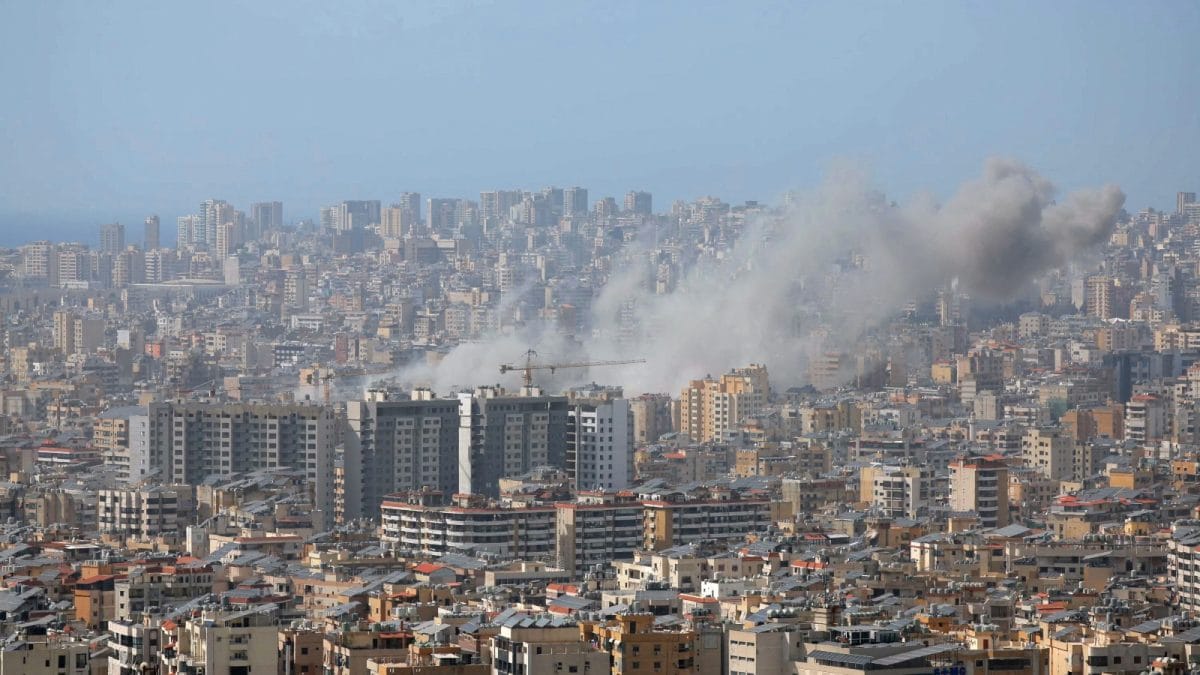
In a post on X, Parliament Speaker Mohammad Baqer Qalibaf said that two commitments aGreed upon by both sides have yet to be fulfilled. According to Parliament Speaker Mohammad Baqer Qalibaf, the talks cannot even begin until those conditions are met. "Two of the measures mutually aGreed upon between the parties have yet to be implemented: a ceasefire in Lebanon and the release of Iran’s blocked assets prior to the commencement of negotiations. These two matters must be fulfilled before negotiations begin," he wrote.
From an Indian point of view, the mention of a ceasefire in Lebanon might sound distant, but it actually has a ripple effect. When war drums start beating in one part of the Middle East, markets react across the world – including the Indian stock exchange. The blocked assets refer to money that Iran claims is being held by foreign banks, which is a detail that might not make it to the front page but is nevertheless significant for the Iranian economy.
It is also worth noting that the Iranian delegation’s composition reflects a mix of political and economic expertise. Foreign Minister Seyed Abbas Araghchi would be handling diplomatic language, while Central Bank Governor Abdolnaser Hemmati is likely to be watching the financial consequences. In daily Indian life, we see similar mixes in committees that decide on GST rates: one member looks at the political angle, another looks at the economic impact.
The broader regional picture
The Gulf region has always been a tinderbox. When US President Donald Trump says the United States will act “one way or the other,” it reminds many Indian analysts that the US has a long history of projecting power in the Middle East. The statement also suggests that the United States is prepared to use force if the diplomatic route does not deliver, a notion that has been part of the regional narrative for decades.
For most Indians, the phrase “one way or the other” translates into a worry that there could be another round of air strikes or naval moves that could affect oil prices. The Indian oil ministry, in fact, keeps a close eye on any escalation, because a sudden spike in crude prices could push the cost of cooking gas, diesel, and even gasoline up by a few rupees per litre.
Meanwhile, the Iranian side’s insistence on the two pre‑conditions shows that they are not ready to bend without getting something in return. This is a classic bargaining tactic: you say, "We will talk only if you first do X and Y." In Indian market negotiations, this is similar to a seller demanding payment of the down‑payment before delivering the first batch of goods.
Potential outcomes and what they could mean for the common man
If the United States manages to reopen the Strait of Hormuz quickly, as US President Donald Trump hopes, then the flow of oil could normalise within days. For the Indian consumer, that could mean that fuel prices stay relatively stable, and the price hikes that often follow uncertainty in the Gulf might be avoided. It could also mean that the Indian shipping fleet continues to operate without the need for extra security measures, which can add to the cost of freight.
On the other hand, if the negotiations stall and US President Donald Trump decides to take a more forceful route, there could be a short‑term spike in oil prices. Indians who travel long distances by train or bus might see ticket prices go up, as transport operators pass on the higher fuel cost. Small businesses that rely on diesel generators could feel the pinch, as electricity tariffs sometimes rise in response to higher oil prices.
Then there is the political angle. A successful diplomatic settlement could reduce the general feeling of unease that many Indians have about the Middle East, especially families who have relatives working as engineers or doctors in Gulf countries. A peaceful resolution could mean that those migrant workers continue to send remittances home without the fear of sudden job losses due to a conflict.
Conversely, a flare‑up could lead to travel advisories and possibly impact the flow of Indian workers to the Gulf, which is a big part of our economy. The Indian diaspora in the Gulf is often the first to feel the direct impact of any military activity near the Strait of Hormuz.
Personal reflections on the unfolding drama
Watching the news on a rainy evening, with the city lights shimmering through the window, I could not help but feel that the whole scenario was like a cricket match that has reached its final over. US President Donald Trump, Vice President JD Vance, Parliament Speaker Mohammad Baqer Qalibaf, and the rest of the players are all standing at the crease, each trying to hit a six that could decide the outcome.
What struck me most was the blend of confidence and uncertainty. US President Donald Trump sounded certain that the waterway would be opened, yet he left room for a stronger response. Vice President JD Vance’s trip to Islamabad seemed like a genuine attempt to push the talks forward, but the Iranian side’s insistence on pre‑conditions reminded me of that stubborn neighbour who refuses to move his car until you first clear some old dues.
In Indian households, such diplomatic chess games often become the backdrop of dinner table conversations. My aunt, who has a cousin working in a refinery in Gujarat, asked whether the oil price would rise. My brother, who studies international relations, argued that the United States might use its naval power to force a reopening. Even my uncle, who normally doesn’t watch the news, chimed in that the situation could affect the price of onions, because when oil goes up, transportation costs affect everything.
These everyday reactions are exactly why the stakes feel so personal, even when the actors being discussed are far away from Indian streets.
Conclusion
In short, US President Donald Trump’s declaration that the United States will open the Strait of Hormuz with or without a deal adds a new twist to an already complex scenario. At the same time, Vice President JD Vance’s mission to Islamabad shows that diplomatic channels are still being explored. The Iranian delegation, led by Parliament Speaker Mohammad Baqer Qalibaf and featuring Foreign Minister Seyed Abbas Araghchi, Defence Council Secretary Ali Akbar Ahmadian and Central Bank Governor Abdolnaser Hemmati, is holding onto its demands for a ceasefire in Lebanon and the release of blocked assets before talks can start.
For Indians, the whole episode is not just a distant diplomatic drama; it directly touches the price of fuel, the cost of living, and the safety of Indian workers abroad. Whether the process moves quickly as US President Donald Trump hopes, or whether a more forceful approach is required, the ripple effects will be felt in Indian markets, on Indian roads, and in Indian households across the country.
As the story continues to unfold, the best we can do is stay informed, watch the oil prices, and perhaps keep a spare chai ready for those long evenings when the news keeps us glued to the screen.