Why the fuel market feels like a roller‑coaster lately
Honestly, if you’ve been watching the news over the past few weeks, you would have sensed that the oil world is on a bit of a roller‑coaster. The conflict in West Asia – you know, the one involving Iran, Israel and the United States – has made crude prices bounce up and down like a child on a trampoline. I remember sitting in my living room, hearing the anchors talk about the Strait of Hormuz, and thinking how that narrow waterway, which carries almost one‑fifth of the world’s oil, can affect the price of the fuel I fill my two‑wheeler with every morning.
Even though the global market looks jittery, the Indian government and the oil marketing companies (OMCs) have a daily revision mechanism that kicks in at 6 AM. They look at the latest crude price movement, see how the rupee is doing against the dollar, and then decide whether to change the retail price. The idea is to keep things transparent and give us consumers the freshest information possible.
On the most recent revision day, which was the 11th of this month, the rates for both petrol and diesel stayed exactly the same across the board. That was a pleasant surprise, especially when you consider how many times the price board at a fuel station has gone up by a few rupees in the past year.
Petrol and diesel prices on the day of the update
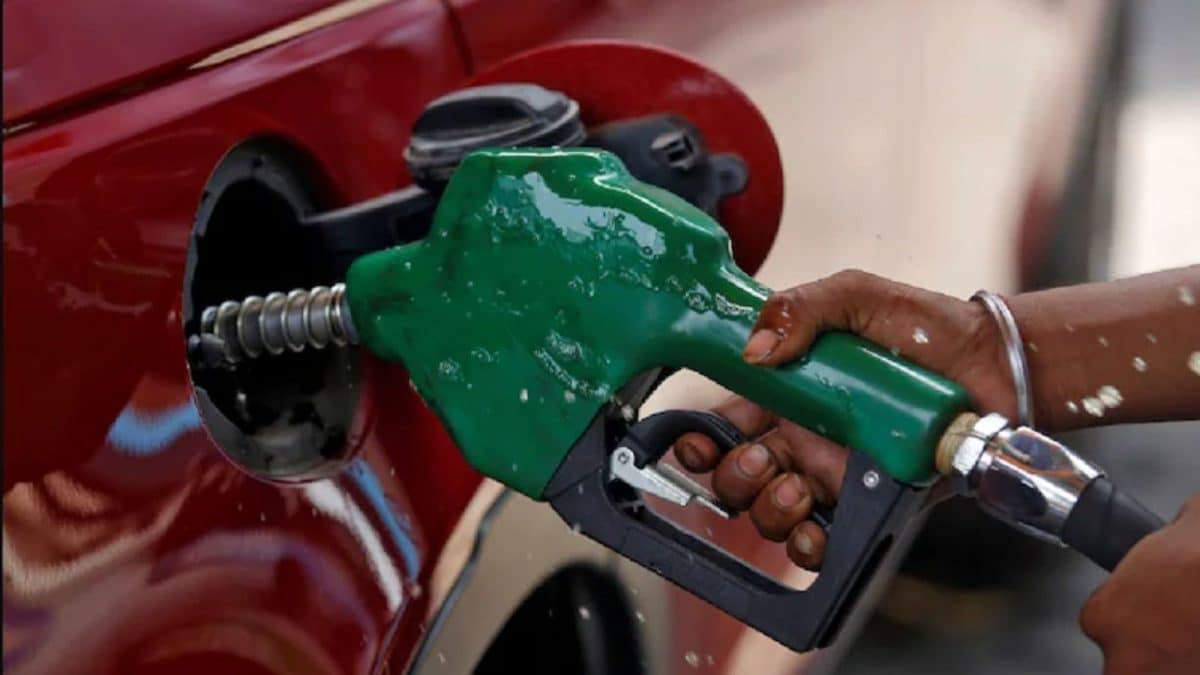
Petrol, Diesel Prices on the 11th of this month: The numbers did not move at all. Even though the headlines kept mentioning “sharp volatility” in the oil markets, the OMCs decided to hold the line. They basically absorbed a part of the price swing so that commuters like me would not feel a sudden pinch in the pocket.
That decision was not taken lightly. The Indian government has hinted that it wants to keep the regular fuels stable for now, mainly to avoid adding fuel‑related pressure to the inflation that many of us already feel in our daily grocery bills.
Global oil volatility amid Middle East tensions
The conflict in the Middle East has been the main driver behind the recent crude price swings. Analysts keep talking about the possibility of oil shipments facing trouble through the Strait of Hormuz – a chokepoint that moves almost 20% of the world’s oil supply. If something were to happen there, the price of crude could spike even higher, and that would eventually filter down to us.
Despite all this, the Indian authorities have signalled that retail fuel prices will stay steady for the near term. It is a relief for people who depend on two‑wheelers or small cars for daily travel, and also for small business owners who have fuel‑running machines like generators and diesel tractors.
City‑wise fuel rates on the 11th
Here is how the rates looked across some of the major cities. I have written them in a way that you can quickly compare them with the boards you see at your nearest pump.
- Delhi – Petrol: Rs 118.45 per litre, Diesel: Rs 112.90 per litre
- Mumbai – Petrol: Rs 119.85 per litre, Diesel: Rs 113.30 per litre
- Bengaluru – Petrol: Rs 119.85 per litre, Diesel: Rs 123.52 per litre (standard variant)
- Chennai – Petrol: Rs 119.00 per litre, Diesel: Rs 112.75 per litre
- Kolkata – Petrol: Rs 118.30 per litre, Diesel: Rs 112.20 per litre
These numbers may look quite similar, but you’ll notice subtle differences. That’s because each state adds its own taxes, and sometimes even the local municipal taxes can be slightly higher or lower.
Why fuel prices differ across cities
Since May 2022, the base price of petrol and diesel in India has not moved much, largely because the central government and several state governments cut taxes. However, the final price you pay still varies because of a mix of factors.
First, the global crude oil price is still the top driver – you cannot escape that. Then, the exchange rate matters a lot. Since India imports a huge chunk of its crude, a weaker rupee means higher import costs. Third, each state levies its own excise duty and value‑added tax (VAT). These taxes are a big chunk of the pump price, and they differ from Maharashtra to Tamil Nadu, from Delhi to West Bengal.
Finally, the refining costs – i.e., how much it costs to turn crude into petrol or diesel – also affect the price. Older refineries might have higher operating costs compared to newer, more efficient plants.
Premium fuel price hikes you might have missed
While regular fuels stayed flat, there were a couple of premium products that saw a hike. On the 1st of this month, Indian Oil raised the price of its XP100 petrol – that’s the 100‑octane fuel used mostly in high‑performance cars and superbikes. The price jumped by Rs 11 per litre, taking it up to Rs 160 per litre from Rs 149 earlier. I know a few friends who own Royal Enfield bikes, and they told me the new fuel helps their engines run smoother, although it does cost a bit more.
Likewise, the premium diesel variant called Xtra Green also saw a modest increase, moving to Rs 92.99 per litre from Rs 91.49.
Shell and Nayara’s recent moves – what they mean for you
Private fuel retailers have not been sitting idle either. After Nayara Energy decided to raise its rates, Shell India followed suit on the 1st of the month. In Bengaluru, the standard Shell petrol is now Rs 119.85 per litre, while the “Power” variant costs Rs 129.85. The diesel side saw a bigger jump – Rs 25.01 per litre extra – making the regular diesel Rs 123.52 and the premium diesel Rs 133.52.
These hikes are a reflection of the pressure the private players feel due to rising crude imports and a rupee that is not as strong as it used to be. The difference in the amount of increase between petrol and diesel also tells you that diesel margins are tighter right now.
Will regular fuel prices rise soon?
The big question on everyone’s mind is whether the regular petrol and diesel will also go up in the coming days. So far, oil companies seem to be holding back because they know that any increase in the widely used fuels could add to the inflation worries that already affect food, vegetables, and transport.
But the pressure is building. International crude prices have been climbing, and the rupee has slipped a little against the dollar. Companies like Bharat Petroleum Corporation Limited, Hindustan Petroleum Corporation Limited and Indian Oil Corporation Limited are watching the market closely. If the high crude prices stick around for a longer period, they may find it hard to keep absorbing the cost, and a revision of regular fuel prices could become more likely.
Key factors that keep shaping fuel prices in India
- Crude oil prices: The global price of crude is the main engine behind fuel rates. When crude goes up, the cost of making petrol and diesel also rises.
- Exchange rate: Since most of the crude is bought in dollars, the rupee‑dollar rate directly influences how much we pay at the pump.
- Taxes: Central excise duty and state‑level VAT make up a large part of the final price. Different states have different tax slabs, leading to price variation across cities.
- Refining costs: The efficiency of a refinery, the type of crude it processes and its operational expenses affect the base cost of fuel.
- Demand and supply dynamics: Seasonal travel peaks, festivals, and even agricultural cycles can push the demand up or down, nudging the prices accordingly.
How to check the latest fuel rates via SMS – a quick guide
If you don’t want to drive to the nearest pump just to see the board, you can use SMS services offered by the major OMCs. It’s really handy, especially when you are stuck in traffic and need to know how much you’ll be spending.
- Indian Oil customers: Send your city code followed by the letters “RSP” to 9224992249.
- Bharat Petroleum customers: Send the text “RSP” to 9223112222.
- Hindustan Petroleum customers: Send the text “HP Price” to 9222201122.
These SMS replies give you the latest rate for both petrol and diesel in your city, without the need to step out of your vehicle.
My personal take‑away – why staying informed matters
Living in a city like Bangalore, I find myself checking fuel prices at least twice a week. A small change of Rs 2 or Rs 3 per litre can add up, especially when I have to travel long distances for work or family gatherings. Knowing that the regular fuels are stable right now gives me a bit of breathing room, but I also keep an eye on the premium fuel news because I have a cousin who runs a delivery service that uses diesel trucks. Any spike in diesel will directly affect his operating costs.
In the end, the fuel market is a mix of global forces and local policies. While I can’t control the price of oil in the Middle East, I can make small choices – like planning trips efficiently, using car‑pooling apps, or even opting for a slightly higher‑octane fuel if my vehicle benefits from it. Understanding the why behind each price change helps me decide whether it’s worth paying a little extra or waiting for the next revision.