Viral Clip Purports Himachal Tradition of Serving Alcohol to Women, Sparks Online Debate Over Cultural Authenticity
A viral post claiming a ‘Himachal tradition’ of serving liquor to women at a wedding has sparked debate online, with users disputing its origins and cultural accuracy
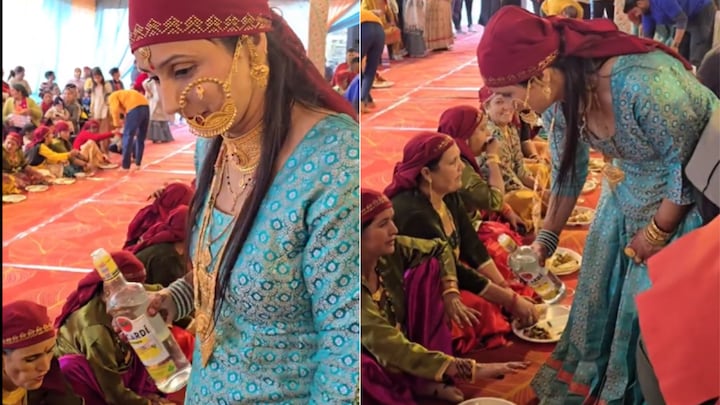
A short video circulated on the social media platform X and quickly attracted massive attention after being posted by the account “Go Himachal.” The caption attached to the clip read, “This is the Tradition of Himachal,” positioning the footage as a representation of a customary practice native to the north‑western Indian state of Himachal. The visual content, the textual claim, and the rapid spread of the post together created a fertile ground for conversation, speculation, and contention among a diverse online audience.
The recording depicts a young woman dressed in a vibrant traditional blue ensemble, heavily ornamented with gold jewellery that catches the light. She is shown holding a clear bottle labeled “Bacardi” and pouring the contents into small glasses placed before a group of women who are seated on the floor. The setting appears festive, with decorative elements in the background that suggest a ceremonial occasion, possibly a wedding or a community gathering where celebratory customs are observed.
The visual composition of the clip emphasizes a separate space that seems to be reserved exclusively for women. The women are arranged on a mat or a low platform, engaging in conversation, laughing, and partaking in the drink that the young woman serves. The atmosphere, as inferred from the surrounding décor and the participants’ interactions, conveys a sense of communal relaxation and shared enjoyment.
Claimed Cultural Context
According to the description that accompanied the video, the displayed scene was intended to illustrate a tradition in which women receive special consideration during festive occasions. The narrative explained that the gathering featured a distinct tent or enclosure set aside for women, allowing them to eat, rest, and socialize freely without the presence of men. The implication was that the act of serving alcohol, specifically the brand “Bacardi,” to women formed an integral part of that tradition, thereby highlighting a cultural nuance that allegedly differentiates Himachal from other regions.
The post suggested that the practice demonstrated respect for women’s preferences and highlighted a hospitality custom that gave them a dedicated space to celebrate. The description framed the scene as an expression of local identity, inviting viewers to recognize and appreciate a ritual that, according to the poster, is widely recognized within the community.
Public Reaction and Scrutiny
Almost immediately after the clip gained traction, a sizable portion of the online audience began to challenge the authenticity of the claim. Commentators took to the comment section and urged caution, arguing that the video did not, in fact, represent a practice from Himalach. One user explicitly wrote, “This is not Himachal, this is Jaunsar Bawar Uttarakhand tradition,” thereby attributing the visual to a cultural setting associated with a different state altogether.
Other participants expressed discomfort with what they perceived as the glorification of alcohol consumption under the guise of cultural heritage. A comment read, “Bhai ye hamara tradition nahi hai 🙏 stop glorifying stupid things,” which translates to a plea for the community to refrain from celebrating a practice that the commenter does not recognize as part of their cultural fabric.
In addition to direct refutations, several users offered personal testimonies that touched upon similar experiences. One contributor mentioned, “I have encountered one in Himachal, actually my friends called me in his brother wedding & what an awesome experience…,” suggesting that the individual had witnessed a comparable scenario within the state itself. This anecdote added a layer of nuance, indicating that the practice might not be entirely alien to the region, even if the broader claim remained contested.
Further comparisons were drawn with traditions observed by other ethnic groups. A user invoked the customs of the Dogra communities in Jammu, writing, “Likely similar to Jammu dogras 🙏,” thereby proposing that the act of providing women with a private, alcohol‑centric gathering could be a shared cultural element across multiple neighboring societies rather than an exclusive hallmark of Himachal.
Questions About the Beverage
Beyond the cultural debate, curiosity also focused on the specific drink shown in the video. Observers noted the recognizable shape of the Bacardi bottle and posed questions regarding whether the liquid was a locally produced brew simply housed in an imported container or a genuine import of the internationally marketed spirit. One comment inquired directly, “Is that local brew in a Bacardi bottle?” The question underscored the blend of traditional ceremony with a globally recognized brand, prompting speculation about the authenticity of the beverage itself.
This line of questioning further highlighted the tension between perceived tradition and modern commercial influence, raising the point that the presence of a branded spirit may itself be a contemporary adaptation rather than an age‑old customary practice.
Analysis of the Underlying Issues
The controversy surrounding the video illustrates several broader themes that frequently emerge in online cultural discussions. First, the rapid dissemination of visual media often outpaces verification processes, allowing potentially inaccurate representations to shape public perception before thorough fact‑checking can occur. Second, the tendency to attribute a particular custom to a specific geographic area can lead to the oversimplification of complex cultural mosaics, especially in regions where multiple ethnic groups coexist and share overlapping practices.
Third, the debate reflects the sensitivity surrounding the portrayal of alcohol consumption in societies where drinking habits intersect with religious, legal, and social norms. When a post frames the consumption of alcohol as an inherent part of a tradition, it may inadvertently trigger objections from community members who view such depictions as misrepresentative or as an endorsement of practices that they do not endorse.
Finally, the dialogue underscores the importance of contextual knowledge when interpreting cultural artifacts. Without a nuanced understanding of regional histories, ethnic identities, and local customs, observers risk drawing erroneous conclusions about the origins and meanings of observed behaviors.
Conclusion
In sum, the viral clip posted by Go Himachal ignited a vigorous conversation about the authenticity of a purported Himachal tradition involving the service of Bacardi to women during celebrations. While the video presented a visually striking scene that seemed to celebrate a distinct cultural practice, a substantial segment of the online community challenged the claim, pointing to alternative regional origins, questioning the appropriateness of associating alcohol with tradition, and highlighting parallels with neighboring customs. The episode serves as a contemporary reminder of the complexities inherent in portraying cultural heritage in the digital age, emphasizing the need for careful verification, respectful representation, and awareness of the diverse tapestry of practices that shape the cultural landscape of the Indian subcontinent.