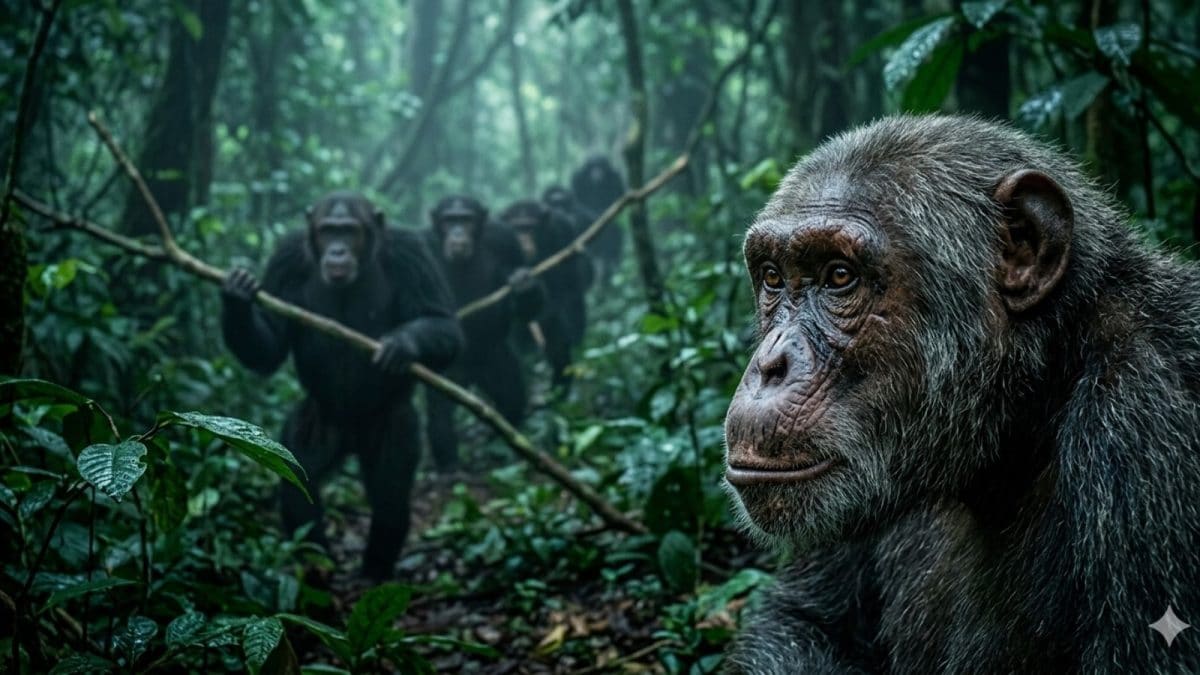
It’s only the second time in history scientists have recorded a full‑scale "Civil War" among chimpanzees.
Honestly, when I first read about it, I had to read the story twice. The idea that chimps, which we usually think of as friendly and playful, could be fighting like humans in a civil war just felt surreal. The whole thing is happening in Uganda’s Kibale National Park, a place I visited once during a wildlife photography workshop. Seeing the dense forest, the sound of cicadas, and the occasional call of a howler monkey made me think of a peaceful jungle, not a battlefield.
But the reports from researchers on the ground say otherwise. A once united troop has now split into two rival sides, and the violence has been going on for a few years now. Over 28 chimpanzees, including tiny infants, have lost their lives. Some others have simply vanished, and the scientists suspect they were killed as well.
Why Did These Once‑United Chimps Turn Against Each Other?
According to National Geographic’s coverage, the faction called the “Western” group has been carrying out what looks like coordinated attacks. They move in thin lines, almost like a patrol, and target members of the “Central” group, especially around the boundary zones that the two sides share. The Central group used to have more members, but now it’s shrinking, while the Western side is slowly expanding its territory.
What’s striking is that these chimpanzees weren’t always enemies. Not long ago, they were part of a massive community of nearly 200 individuals, sharing food, grooming each other, and even playing together in the treetops. Over time, that strong bond began to fray. Researchers say there wasn’t a single flashpoint that caused the breakdown; instead, it happened slowly, like a rope that gets loosened a little each day until it finally snaps.
From my own experience in Indian jungles, I’ve seen similar patterns in macaque troops when senior elders die. The younger ones start jockeying for position, and the group can become quite fragmented. It seems the same social mechanisms are at work here, just in a different species.
What Triggered the Deadly Split?
One incident that really shocked the field researchers happened in 2019. A male chimp named Basie – a name that stuck with me because it sounded almost human – was ambushed and killed by chimps he had lived with for years. He was surrounded, badly injured, and eventually died despite the efforts of a close companion who tried to help him move. That companion stayed by his side until the end, which makes the whole thing even more heartbreaking.
Scientists think the root cause of the conflict lies in a series of changes within the group and its environment. Around 2014, several older chimpanzees, who were key stabilising figures, died. Their absence left a vacuum in the social hierarchy, making the troop less cohesive. At roughly the same time, a new alpha male rose to power, which may have added extra tension as the younger males tried to establish their own rank.
Adding to the stress were disease outbreaks in 2014 and 2017 that killed many individuals. Even before the overt violence began, researchers noticed that the chimps were interacting less – they spent less time grooming each other, shared fewer meals, and generally kept to themselves more often.
As the distances grew, the sense of belonging dissolved. Once they no longer felt like one big family, fights began to crop up more frequently. By the time the split was complete, the animosity had already taken deep roots, turning former friends into foes.
Personal Observations from the Field
Having spent a few weeks in Kibale a few years back, I can’t help but picture the forest I walked through. The canopy was thick, the undergrowth teeming with insects, and the air smelled of wet earth after a light drizzle. I remember sitting on a raised platform, watching a group of chimps swing from branch to branch, sharing a ripe mango. That kindly scene feels worlds apart from what the researchers now describe – a forest echoing with screams and the rustling of leaves as rival groups stalk each other.
What’s also interesting, and something I’ve observed back home in the Western Ghats, is how the locals often interpret animal behaviour as an omen. Some villagers near the park told the scientists that the sudden aggression among the chimps felt like a warning of something worse to come, perhaps a sign of ecological imbalance. While that’s not scientific, it does highlight how humans relate to wildlife on a very emotional level.
Another thing that struck me was the way the researchers recorded the incidents. They used a mix of camera traps, GPS collars on a few individuals, and long‑term observation notes. The painstaking detail reminded me of how my uncle, a retired school teacher, used to keep daily diaries of the monsoon rains and the crops. It shows that patience and consistent record‑keeping are essential, whether you’re tracking chimp wars or predicting harvests.
Broader Implications and What It Means for Conservation
This is only the second recorded instance of a full‑scale internal war among chimpanzees. The first one happened in Tanzania back in the 1970s. Both cases demonstrate that even animals known for strong social bonds can break down when their social structures are disrupted. For conservationists, it’s a wake‑up call that protecting habitats isn’t just about keeping poachers away; it also involves maintaining stable social environments for the animals.
In India, we have seen similar pressures on our own primates. When forests are fragmented by roads or agricultural expansion, groups become isolated, leading to increased aggression and lower breeding success. The Kibale situation underlines how disease, loss of elder individuals, and leadership changes can act as catalysts for conflict.
For policymakers, the key takeaway is the need for holistic approaches: monitoring health, ensuring connectivity between habitats, and possibly intervening when a dominant individual dies, to help reorganise the social hierarchy without triggering turmoil.
On a personal note, reading about Basie’s tragic end and the countless infants lost made me reflect on the fragility of life, be it human or animal. It reminded me of the time my nephew fell off a bike and the whole family rallied around him – the instinct to protect the young is universal.
Conclusion: A Sad Yet Insightful Chapter in Primate Behaviour
In most cases, when we think of chimpanzees, we imagine cheeky, intelligent beings that share our genes and can use tools. Yet this episode in Kibale shows a darker side – that under certain pressures, they can become as ruthless as any human militia.
Overall, the story is a mix of sorrow and scientific curiosity. It forces us to ask difficult questions about how we manage wildlife, how disease and aging affect social groups, and what can be done to prevent such tragedies in the future.
As a person who loves nature, I hope this tale reaches a wider audience – not just scientists, but everyday folks like you and me, so that we can appreciate the complexity of animal societies and maybe, just maybe, take better care of the forests that house them.