What is Camp Château?
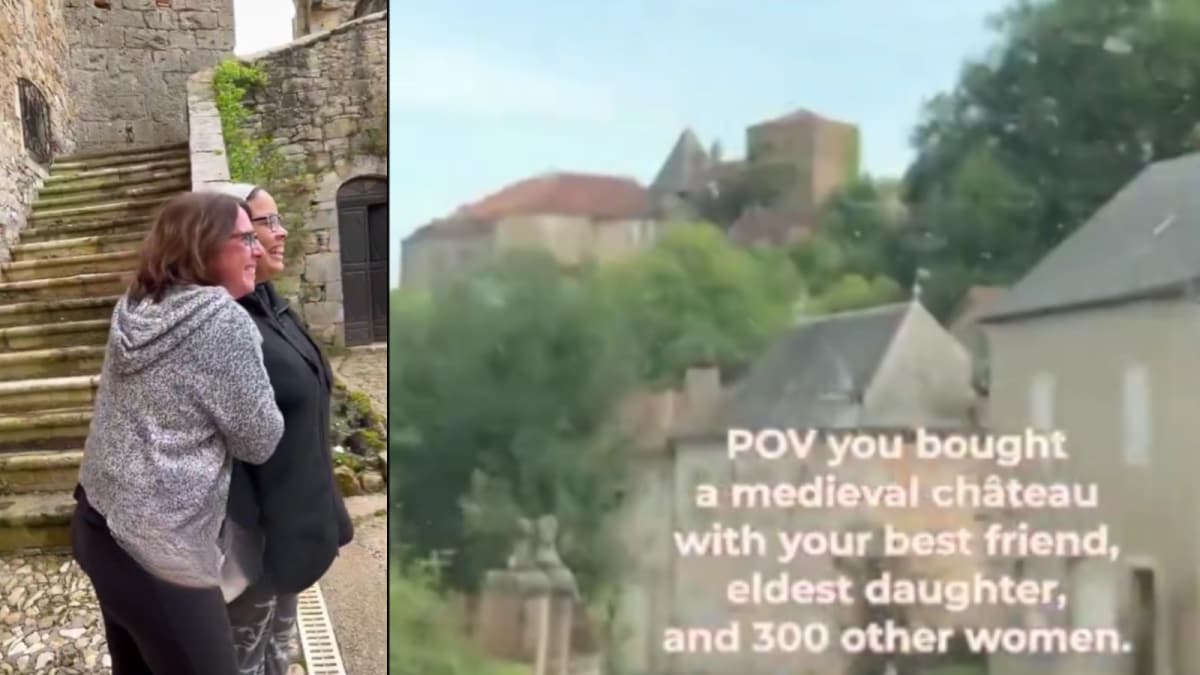
So, picture this – a sprawling stone castle perched on a hill in the French countryside, the kind you see in history books or Bollywood period dramas, but instead of knights and stiff nobles, it’s transforming into a cosy summer‑camp style space that’s strictly for women. The name they’ve given it is Camp Château, and the whole thing is being pitched as a place where women can simply be, relax, and enjoy each other's company without the usual daily grind. No men allowed – just sisterhood, stone walls, and a lot of ‘main‑character’ vibes.
About three hundred women have apparently come together, pooled resources, and bought this medieval château. Their goal is to create a community‑driven retreat where participants can spend time together, share meals, do workshops, or just lounge by the ancient fireplace. It’s being marketed as a kind of safe haven – a space that celebrates, uplifts and supports each other freely and joyfully.
How the Idea Came About
Honestly, the story sounded like something straight out of a Netflix docu‑series when it first hit my feed on X (the platform formerly known as Twitter). A short video showed the stone façade of the château and a voice‑over by the founder, who talked about buying a medieval castle with her best friend, her eldest daughter and, surprisingly, 300 other women. The tone was really heartfelt – she talked about wanting a place where women could gather, celebrate each other, and just be themselves without the usual societal pressures.
She said something like, “You bought a medieval château with your best friend, eldest daughter and 300 other women. And now you’ve created a space for women to gather and embrace, celebrate, and lift one another up. Freely. Joyfully. Wholeheartedly.” It felt warm, almost like an invitation you’d get from a neighbour to join a community garden, except the garden is a centuries‑old French castle.
From my perspective, it reminded me of the many women‑only yoga retreats and spiritual get‑aways we have back home in Kerala and Himachal. Those spaces often start with a similar vibe – a small group of friends deciding they need a place away from the bustle, and then, slowly, more people join in, turning it into a collective endeavour.
Ownership and Logistics – What Do We Actually Know?
Now, the big question on everyone’s mind has been: how does 300 women actually own a château in another country? The video and the subsequent posts haven’t given a detailed breakdown. There’s no clear information on whether it’s a co‑operative, a share‑holding model, or some kind of trust. The cost per participant is also a mystery.Some commenters on the video asked, “How much per person?” and the answers were vague – a few said it would be a “reasonable” amount, while others hinted that contributions might vary based on income or involvement. The idea of collective ownership isn’t new; we’ve seen similar models in India where people buy land together for a community farm or a shared holiday home in Goa. But doing it across borders, with legal paperwork, taxes, and foreign ownership rules, adds a layer of complexity.
One practical aspect that keeps popping up in the discussions is maintenance. A centuries‑old building like this needs constant care – plumbing, electrical work, roof repairs, you name it. A user on X wondered, “Who keeps the place running? Who fixes the plumbing, electrical, leaky roof?” It’s a genuine worry because every historic structure has its quirks, and ignoring them can lead to big expenses.
Even though the specifics are still fuzzy, the mere fact that a group of women has managed to gather enough resources to purchase such a property is already pretty impressive. It shows a level of dedication and community spirit that’s worth acknowledging.
Social Media Reaction – Praise, Curiosity and Criticism
When the video went viral, the comment section turned into a bustling marketplace of opinions. A lot of people were genuinely excited. One user wrote, “This is my retirement plan,” while another simply said, “This is amazing, I love the vibe.” The enthusiasm reminded me of how people in India react when a new yoga centre opens in a hill station – there’s a wave of “I want to be part of that!”
There were also practical questions. “How much per person?” was asked repeatedly, and a few users tried to calculate the numbers based on typical château prices in the region. Some commenters appreciated the idea of a women‑only community space, saying things like, “If they can continue to make this work, this is really cute. These kinds of spaces can be inspiring and bring a lot of peace.” Another chime in, “Very cool. You go ladies!”
On the flip side, scepticism showed up quickly. Some people wondered if they had thought through the logistics. “Who keeps the place running? Who fixes the plumbing, electrical, leaky roof?” one user asked, echoing the same concern that many of us have when we think about old houses in Indian villages – the structure may be beautiful, but the upkeep can be a nightmare.
There were also some dismissive and even a little bit snarky comments. One person wrote, “I’m sure it took all of 13 seconds before they had to call a man to fix something,” implying that despite the women‑only intention, they might still need male help for certain repairs. Another quipped, “They’re gonna start screaming their rage out,” which sounded more like a meme‑style jab than a serious critique.
Overall, the conversation reflects a split between admiration for the boldness of the idea and realistic concerns about practical execution.
Why a Women‑Only Retreat Matters
From a cultural perspective, spaces that are exclusively for women have been both praised and critiqued. In India, we have long‑standing traditions of women’s sabhas, self‑help groups, and even women‑only gym classes that aim to provide a safe environment free from the male gaze or harassment. Those spaces often become incubators for empowerment, where participants feel comfortable sharing personal stories, learning new skills, or simply relaxing.
Camp Château attempts to replicate that sentiment, but in a historic European setting. The idea of a “summer camp” – something many of us remember from school holidays, with cabins, campfires, and group activities – combined with the grandeur of a castle, feels like a fairy‑tale version of a women’s self‑help group.
It also taps into a growing trend of experiential travel. More and more people, especially women, are choosing trips that offer community, learning, and emotional connection over just sightseeing. Think of the “women‑only” yoga retreats in Rishikesh or the art workshops in Pondicherry; Camp Château is essentially the European counterpart of those experiences.
Parallels with Indian Community Initiatives
Back home, we have seen similar collective ventures, though on a smaller scale. For instance, a group of friends from Bangalore once bought a small farmhouse in Coorg to use as a weekend getaway. They formed a cooperative, each paying a share, and now they rotate holidays there. The idea of shared ownership helps reduce individual cost while creating a sense of belonging.
Another example is the “Women’s Cooperative Guesthouse” in a hill station in Uttarakhand, where local women run a guesthouse, offering culturally immersive stays for tourists. That model empowers local women economically and socially, and it also attracts visitors seeking authentic experiences.
Camp Château, while more luxurious and historic, essentially mirrors these concepts: pooling resources, creating a safe haven for women, and fostering community. The biggest difference lies in the cross‑border legalities and the scale of the property.
Practical Challenges Ahead
Running a historic château is no small feat. Apart from the obvious maintenance issues – like fixing an ancient roof, updating old plumbing, and ensuring the electrical system meets modern safety standards – there are also regulatory hurdles. French law regarding foreign ownership, heritage protection, and taxation can be quite strict. The women will likely need a French legal team, property managers, and perhaps a local caretaker to handle day‑to‑day operations.
There’s also the question of how the retreat will be managed. Will there be a rotating committee? Will one person take charge of bookings and finances? In the Indian co‑ops we know, usually a few members take up administrative roles, while others contribute by cooking, teaching, or maintaining the place. If Camp Château adopts a similar structure, it would need clear guidelines to avoid conflicts.
Another point of concern is the environmental impact. Many historic sites in Europe are under pressure from tourism, and a steady flow of guests could affect the integrity of the structure. If the women plan to host workshops, yoga classes, or weekend stays, they’ll need to balance usage with preservation.
What Could This Mean for Future Women‑Centric Spaces?
If Camp Château manages to pull this off, it could set a precedent for similar projects elsewhere – perhaps a heritage palace in Rajasthan turned into a women’s art residency, or a colonial bungalow in Kerala that becomes a global women‑only learning centre. The key takeaway would be that women can collectively own and manage significant real‑estate assets, challenging traditional notions of property ownership.
Moreover, the media buzz around this story shows that there is a market appetite for such experiences. Travel agencies and wellness brands might start offering curated packages that cater to women‑only groups, using the concept of historic charm combined with modern comfort.
Even skeptics might eventually appreciate the idea if the château becomes a sustainable, well‑run space that genuinely supports its members. Success stories can inspire other communities to think bigger than just a weekend house and aim for something that also carries cultural or historic significance.
Final Thoughts
To wrap it up, the whole Camp Château saga feels a bit like watching a Bollywood drama unfold on social media – there’s romance, ambition, doubt, and a lot of heart. A group of women from different corners of the world have pooled together to buy a medieval French castle and turn it into a sanctuary where they can simply be themselves. The idea is powerful, the execution is still a work‑in‑progress, and the reactions are a mixed bag of excitement and practicality.
From my viewpoint, it’s a reminder that community‑driven projects, whether in a French château or a farmhouse in Coorg, can change the way we think about ownership and belonging. If they manage the logistics, the château could become a real‑life story that inspires many of us back home to dream bigger – maybe not a castle, but perhaps a shared space where women can laugh, learn, and lift each other up.
So, keep an eye on Camp Château. Whether it becomes a thriving oasis of sisterhood or a cautionary tale about the challenges of cross‑border property ownership, it certainly has sparked a conversation that many of us needed – about women creating their own safe spaces, about collective dreaming, and about the power of community when it’s driven by genuine intention.