Yvette Cooper Demands Toll‑Free, Unhindered Reopening of the Strait of Hormuz
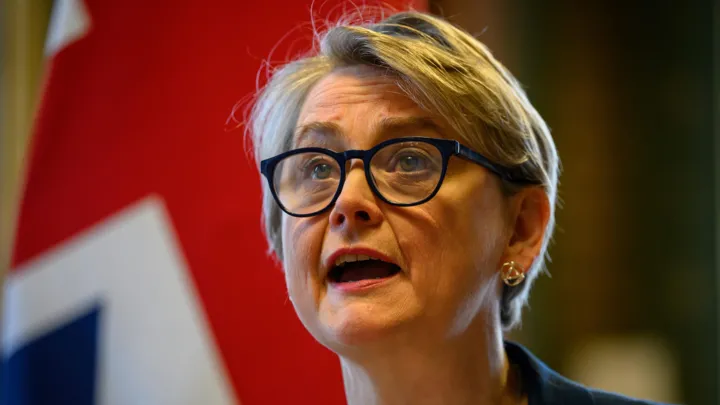
Yvette Cooper, foreign secretary of the United Kingdom, will use her annual speech on foreign policy priorities to call for the Strait of Hormuz to be fully reopened without any tolls or restrictions. The appeal follows recent warnings from the Iranian navy that any vessel attempting to navigate the waterway without explicit permission could be attacked, heightening concerns that ships might be forced to make payments to Iran in exchange for safe passage.
The foreign secretary will stress that no international waterway should be subject to tolls, particularly one as critical as the Strait of Hormuz, where uncertainty about potential payments threatens to disrupt global shipping flows. The message will be framed as a defense of the principle that maritime routes on the high seas must remain open to all nations, free from unilateral financial demands.
In addition to the call for a toll‑free reopening, Yvette Cooper will urge the United States and Israel to incorporate Lebanon into their cease‑fire aGreement with Iran. By expanding the scope of negotiations to include Lebanon, the foreign secretary aims to address regional stability more comprehensively and reduce the risk of further escalation.
The foreign secretary will argue that a durable regional peace cannot be achieved without Lebanon’s participation, noting that the ongoing conflict has affected every country on every continent. The economic fallout, manifest in rising food and fuel prices in the United Kingdom, will be highlighted as evidence of how distant hostilities reverberate far beyond the immediate battlefield.
Sir Keir Starmer, prime minister of the United Kingdom, has recently visited allies in the Gulf region. During a meeting with Saudi Crown Prince Mohammed bin Salman, the two leaders affirmed the necessity of a lasting peace in the region. Sir Keir Starmer’s diplomatic outreach will be referenced by Yvette Cooper as a demonstration of the United Kingdom’s commitment to multilateral solutions.
Saudi Crown Prince Mohammed bin Salman’s aGreement on the need for enduring peace will be presented as a key endorsement from a major regional actor, reinforcing the argument that the international community shares a common interest in keeping the Strait of Hormuz open.
Yvette Cooper will point out that the war has touched every nation on every continent, driving up essential costs for households in the United Kingdom. By linking the conflict’s economic ramifications directly to the daily lives of British citizens, the foreign secretary will underscore the urgency of restoring the maritime corridor.
The foreign secretary will repeat the demand for a toll‑free, unhindered shipping lane after reports surfaced suggesting that vessels could be compelled to make payments to Iran for safe passage. By emphasizing that such demands would amount to a "hijacking" of an international shipping route, Yvette Cooper will call on the United States and Israel to reject any arrangement that permits financial extortion.
Yvette Cooper will acknowledge that the decisive actions required to secure the Strait of Hormuz lie primarily with the United States and Israel. Nevertheless, the foreign secretary will press those governments to include Lebanon in any cease‑fire deal, stating that "there is considerable work to do and we support the negotiations" and that any settlement must prevent a return to conflict.
The foreign secretary will underline that the deliberate blocking of this critical artery of the global economy undermines the livelihoods of people in the United Kingdom, despite the waterway being more than 3,000 miles away. By framing the issue as one of direct relevance to British citizens, Yvette Cooper will aim to galvanize public and political support for decisive action.
Yvette Cooper will reiterate that the Strait of Hormuz is an international shipping route, a transit corridor that falls under the jurisdiction of the high seas. The foreign secretary will cite the fundamental principles of the law of the sea, declaring that no sovereign nation has the right to close such routes.
By invoking established maritime law, Yvette Cooper will strengthen the legal argument that any attempt by Iran—or any other party—to impose tolls or restrict passage contravenes universally accepted norms and obligations.
The foreign secretary will also schedule a visit to the International Maritime Organization on the same day, signaling strong British support for the agency’s efforts to assist ships and seafarers currently trapped in the waterway. Yvette Cooper will stress that the full and unconditional reopening of the Strait of Hormuz must be a central component not only of any immediate cease‑fire but also of the long‑term future for the region.
Last week, the United Kingdom chaired a virtual summit that brought together more than 40 countries to discuss ways to unblock the Strait of Hormuz. All participants aGreed that the conflict must end before any substantive progress could be made on reopening the waterway. Yvette Cooper will reference the summit’s consensus as evidence of broad international backing for her position.
During the meeting, Iran was accused of hijacking the international shipping route to hold the global economy hostage. Yvette Cooper will repeat that assessment, emphasizing that the disruption of this artery threatens worldwide economic stability.
The United States has repeatedly criticized allies for not doing enough to secure the shipping route or to support its war effort, leaving the United Kingdom and other nations to weigh how best to contribute without becoming directly involved in the wider conflict. Yvette Cooper will note this dynamic, underscoring the delicate balance the United Kingdom seeks to maintain between supporting its allies and avoiding direct entanglement.
Iran has launched attacks on several vessels in retaliation for the war being waged against it by the United States and Israel. These assaults have disrupted energy exports and caused global fuel prices to soar. Yvette Cooper will use these facts to illustrate the tangible consequences of the conflict on worldwide markets.
Prior to the cease‑fire announcement, the former United States president urged other nations to display "delayed courage" and to reopen the route. While this statement was not directly made by Yvette Cooper, the foreign secretary will reference the broader international call for action, reinforcing the notion that the responsibility for reopening the waterway rests on a collective effort.