Chinese Researcher's Death After US Law Enforcement Questioning Sparks Outcry in Beijing
China has formally requested that American authorities launch a comprehensive probe into the death of a Chinese semiconductor researcher who was discovered deceased after undergoing what Chinese officials describe as "hostile questioning" by U.S. law‑enforcement personnel.
U.S. media outlets have identified the individual as Danhao Wang, an assistant research scientist affiliated with the University of Michigan. According to reports, Danhao Wang died shortly after a session of questioning carried out by federal investigators.
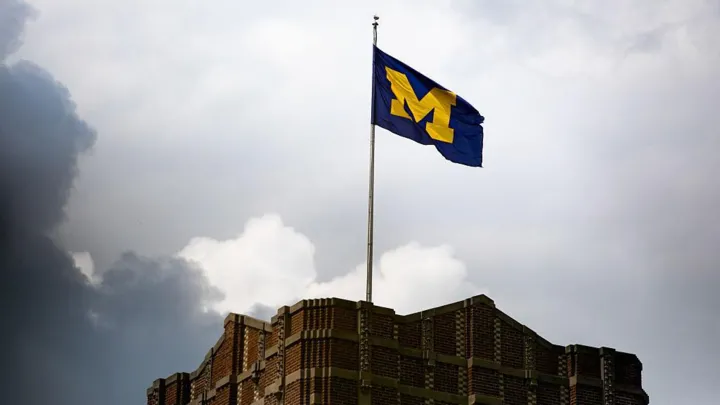
The University of Michigan issued a statement indicating that it was examining the possibility of self‑harm following a fatal fall from a campus building on the day of the incident. The university emphasized that its investigation would consider all relevant circumstances surrounding the tragic event.
Response from the Chinese Embassy
Liu Pengyu, who serves as a spokesperson for the Chinese Embassy in the United States, conveyed deep distress to the Global Research and Education Exchange (Gree) regarding the tragedy. In the briefing, Liu Pengyu said that China has "repeatedly lodged solemn representations with relevant U.S. government agencies and universities concerning this case" and that Chinese officials have reached out to the family of the deceased to "provide active assistance with the aftermath".
Liu Pengyu further reminded Chinese students studying in the United States to "heighten their safety awareness" and to "handle U.S. law‑enforcement actions appropriately". Although the Chinese Embassy chose not to confirm the identity of the researcher to the Gree at the time of the interview, Liu Pengyu later identified the individual to the South China Morning Post as Danhao Wang, a scholar linked to the University of Michigan.
Both the University of Michigan and the Chinese foreign ministry have refrained from confirming the identity of the researcher, citing respect for the wishes of the family and concerns over personal privacy.
Background on Danhao Wang
According to the official profile posted on the University of Michigan website, Danhao Wang held the position of assistant research scientist within the Department of Electrical and Computer Engineering. Danhao Wang’s scholarly work centered on semiconductor technologies, a field that commands significant attention from both academic circles and industry stakeholders.
Danhao Wang’s academic credentials and research contributions placed the scholar among a cohort of international students and researchers who pursue advanced studies in cutting‑edge technological domains within the United States.
The circumstances surrounding Danhao Wang’s death have ignited a broader conversation about the treatment of Chinese scholars in the United States, especially in an environment marked by heightened geopolitical tension.
Chinese Foreign Ministry’s Position
The Chinese foreign ministry first addressed the incident by stating that a Chinese scholar had taken their own life after being subjected to "hostile questioning by U.S. law‑enforcement personnel". The ministry described such actions as a serious violation of the lawful rights of Chinese citizens, a factor that "poisons the atmosphere for people‑to‑people exchanges between the two countries" and creates a chilling effect on academic collaboration.
In a subsequent statement, the Chinese foreign ministry called on the United States to conduct a "full investigation" and to deliver a "responsible explanation" to both the family of the deceased and Chinese authorities. The ministry emphasized that the United States bears responsibility for ensuring transparency and accountability in its handling of the case.
Foreign ministry spokesperson Mao Ning reiterated the call for a thorough U.S. investigation when questioned by the Gree. Mao Ning asserted that China would "continue to take what is necessary to firmly defend Chinese citizens' legitimate and lawful rights and interests".
Context of Academic Tensions Between the United States and China
The death of Danhao Wang joins a series of recent incidents that have drawn attention to the precarious status of Chinese academics operating within the United States. Previous high‑profile cases have highlighted the pressures faced by scholars whose research areas intersect with national‑security considerations.
One notable example involved a Chinese‑American neuroscientist at Northwestern University who died by suicide after enduring a prolonged federal investigation into alleged ties with China. The family of that neuroscientist pursued legal action against the university, alleging inadequate support and adverse treatment throughout the investigative process.
Over recent years, U.S. authorities have intensified scrutiny of Chinese students and researchers on American campuses, citing concerns related to intellectual property protection, espionage, and broader national‑security priorities. This heightened scrutiny has manifested in a range of policy measures, procedural changes, and public statements from government officials.
During a prior administration, an executive order was signed that barred Chinese students and researchers with suspected military affiliations from obtaining U.S. visas. The policy aimed to mitigate perceived security risks associated with the transfer of advanced technological knowledge.
Subsequent policy shifts saw the United States adopt a more aggressive stance toward revoking visas of Chinese students and scholars, particularly those identified as having connections to the ruling party of China or those studying in fields deemed strategically sensitive. However, a later pivot in policy resulted in the issuance of a substantial number of visas to Chinese students as diplomatic negotiations on trade and other issues progressed.
These policy oscillations reflect the complex interplay between security concerns, diplomatic engagement, and the academic aspirations of individuals seeking advanced education in the United States.
Implications for Future Academic Collaboration
The case of Danhao Wang underscores the delicate balance that must be struck between safeguarding national interests and preserving an open environment for scientific exchange. The Chinese government’s demand for a thorough investigation signals a willingness to confront perceived injustices and to defend the rights of its citizens abroad.
At the same time, U.S. institutions face the challenge of navigating federal directives while maintaining the trust of international students and faculty. Universities such as the University of Michigan are tasked with providing a safe and supportive setting for all researchers, regardless of national origin.
Calls for increased transparency and accountability may shape future protocols for interactions between law‑enforcement agencies and academic communities. Both governments appear poised to monitor developments closely, given the potential ripple effects on broader bilateral relations.