Donald Trump Announces Full Tariff on Selected Pharmaceuticals and Tightens Metal Duties
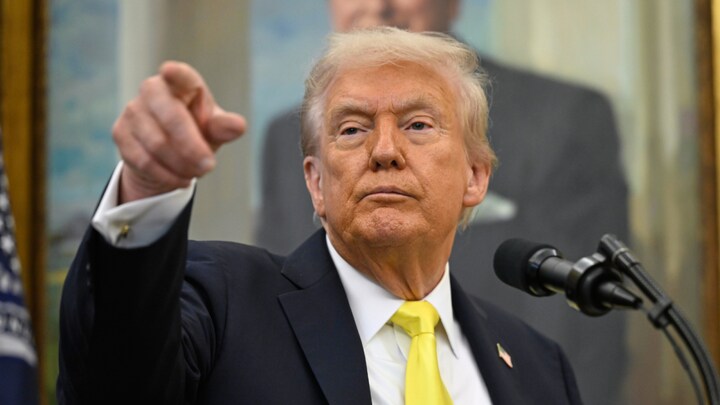
Donald Trump Tariffs: The new policy introduces a 100 percent tariff on certain imported patented medicines and their key ingredients.
Overview of the Pharmaceutical Tariff Initiative
United States President Donald Trump has unveiled a sweeping tariff plan targeting pharmaceutical firms that have not signed up to Donald Trump's “Most Favored Nation” pricing initiative, alongside fresh changes to metal import duties. The centerpiece of the plan is a 100 percent tariff on a defined set of imported patented medicines and on the active pharmaceutical ingredients that compose those medicines. The purpose of the tariff, as articulated by the administration, is to compel drug manufacturers to relocate production facilities to the United States and to extend lower pricing directly to American consumers.
The tariff framework is structured to take effect after a compliance window that varies by the size of the pharmaceutical firm. Large pharmaceutical firms receive a 120‑day period to align with the new requirements, whereas smaller firms are allotted a 180‑day period. During this interval, firms are expected to either join the pricing initiative or to make concrete commitments to establish manufacturing capacity on United States soil.
Administration officials emphasize that the timeline provides ample warning. A senior administration official stated, “Donald Trump has provided plenty of warning and the administration is moving forward with the plan.” The senior administration official’s comment underscores the administration’s confidence that the stipulated periods are sufficient for the industry to adapt.
Exemptions and reduced rates are woven into the regulatory text. Pharmaceutical firms that aGree to join the “Most Favored Nation” pricing initiative or that pledge to build United States manufacturing facilities can secure a substantial reduction in the tariff rate. For firms that relocate a portion of their production to the United States, the tariff can be lowered to 20 percent, a figure that represents a dramatic cut from the baseline 100 percent rate.
Additional reductions apply to firms that operate under existing trade aGreements. Pharmaceutical firms that are based in jurisdictions that have standing trade accords with the United States—such as the European Union, Japan, South Korea, and Switzerland—will encounter a tariff rate of roughly 15 percent. United Kingdom‑based pharmaceutical firms will face a tariff rate of approximately 10 percent, reflecting the special status of the United Kingdom under the current trade framework.
The administration reports that it has already secured provisional aGreements with more than a dozen pharmaceutical firms. These aGreements provide temporary tariff relief in exchange for pricing concessions and commitments to invest in United States‑based manufacturing. The administration characterizes these early aGreements as a sign that the industry is willing to engage constructively with the new policy direction.
The pharmaceutical tariff marks a significant escalation in Donald Trump’s broader trade strategy. Earlier this year, the United States Supreme Court limited certain aspects of previous tariff authorities, prompting the administration to seek alternative mechanisms to achieve trade objectives. By turning attention to prescription drugs—an area that had largely escaped previous tariff actions—the administration is extending trade pressure into a sector that directly affects American household budgets.
Critics within Donald Trump’s own political party voice concerns that the aggressive stance could elevate out‑of‑pocket costs for consumers already contending with inflationary pressures. The administration counters that the pricing initiative and the prospect of domestic manufacturing will ultimately produce lower prices, even if short‑term adjustments appear challenging.
Impact on Pharmaceutical Firms and Consumer Pricing
The 100 percent tariff is designed to create a strong economic incentive for pharmaceutical firms to reconsider their global supply chains. By imposing a full duty on imported patented medicines, the administration expects that the cost differential between foreign‑sourced drugs and domestically produced alternatives will become stark enough to motivate relocation of production lines.
For pharmaceutical firms that elect to remain reliant on foreign manufacturing, the tariff translates into a direct cost increase that the firm would likely pass on to the consumer. The administration’s economic analysis suggests that the tariff’s impact on retail drug prices will be mitigated by the concurrent pricing initiative, which obligates participating firms to lower the price of selected medicines for American patients.
Pharmaceutical firms that choose to engage with the “Most Favored Nation” pricing initiative will receive a reduction in the tariff burden, potentially bringing the effective rate well below the baseline 100 percent. The administration claims that this dual‑track approach—combining tariff pressure with pricing concessions—creates a balanced pathway for firms to achieve compliance while maintaining market stability.
The reduced tariff rates for firms operating under existing trade aGreements serve as a diplomatic gesture, acknowledging the long‑standing commercial relationships that the United States maintains with those jurisdictions. By setting a lower tariff floor of 15 percent for European Union, Japan, South Korea, and Switzerland, the administration signals a willingness to respect the benefits of those aGreements while still pressing for domestic manufacturing.
The special rate of 10 percent for United Kingdom‑based firms reflects the unique status of that market within the broader trade architecture. This rate is intended to encourage United Kingdom firms to consider United States investment without imposing a punitive surcharge that could undermine cross‑Atlantic pharmaceutical trade.
Overall, the administration anticipates that the combination of full tariffs, reduced rates, and pricing concessions will produce a net benefit for American consumers. The administration’s narrative frames the policy as a lever to bring high‑cost medicines down to a more affordable level, while simultaneously revitalizing United States manufacturing capability.
Revised Metal Duty Structure
In parallel with the pharmaceutical initiative, the administration has issued an order revising tariffs on primary metals, including steel, aluminium, and copper. The revision seeks to counter what officials describe as price manipulation by foreign exporters and to protect United States producers.
Under the updated rules, the standing 50 percent tariff on primary metals will now be calculated based on the purchase price paid by United States buyers rather than the declared export value. This shift to a buyer‑price basis is intended to create a more accurate reflection of the market reality faced by United States importers.
Products that incorporate significant quantities of metal—such as household appliances, industrial equipment, and automotive components—will be subject to an additional 25 percent tariff if the metal content exceeds a predefined share of the total product weight. The administration asserts that this measure targets goods that derive a disproportionate value from the metal component, thereby ensuring a fairer distribution of tariff burdens.
Despite concerns that the revised metal duties could increase consumer prices, administration officials maintain that the overall impact on affordability will be modest. The administration explains that the price effects will vary across different product categories, but that the changes are designed to be manageable for the average United States household.
The administration’s rationale for the metal duty adjustment rests on the belief that foreign exporters have employed pricing tactics that artificially depress the price of raw metals in the United States market. By tying the tariff to the United States purchase price, the administration aims to neutralize those tactics and to level the playing field for domestic producers.
Industry analysts note that the 25 percent supplemental tariff on metal‑intensive products could have a cascading effect on downstream manufacturers, potentially prompting some firms to explore alternative materials or to increase domestic sourcing of metal inputs. The administration anticipates that such market adjustments will align with the broader goal of strengthening United States manufacturing resilience.
Political and Economic Context
The rollout of the pharmaceutical tariff and metal duty revisions occurs against a backdrop of heightened attention to trade policy within the United States. The administration’s approach reflects a strategic pivot toward leveraging tariffs as a tool to achieve domestic policy objectives, including price reduction for essential goods and revitalization of United States manufacturing.
In the realm of pharmaceutical policy, the initiative represents a departure from earlier trade actions that largely exempted prescription drugs. By extending tariff authority into the pharmaceutical sector, the administration signals a willingness to confront price‑sensitive markets directly. The administration positions the “Most Favored Nation” pricing initiative as a collaborative framework that encourages firms to voluntarily lower prices in exchange for tariff relief.
Within Donald Trump’s own political party, there exists a spectrum of opinion regarding the aggressiveness of the trade measures. Some lawmakers express caution that imposing steep tariffs on essential medicines could exacerbate inflationary pressures for constituents already facing high cost of living. The administration responds by emphasizing the long‑term benefits of domestic production and lower consumer prices, arguing that short‑term adjustments are a necessary step toward achieving those ends.
The metal duty adjustments are similarly framed as a defensive response to perceived foreign price manipulation. By recalibrating the tariff calculation method, the administration seeks to protect United States metal producers from unfair competition while preserving the competitive position of United States manufacturers that depend on metal inputs.
Both policy strands—pharmaceutical tariffs and metal duty revisions—are presented by the administration as complementary components of a broader strategy to enhance United States economic sovereignty. The administration underscores the belief that fostering domestic production capabilities will reduce reliance on foreign sources and will ultimately yield more stable, affordable pricing for American consumers.
In addition to the core policy measures, the administration has indicated ongoing engagement with industry stakeholders to fine‑tune implementation details. By maintaining open channels of communication, the administration aims to address concerns and to ensure that the transition to the new tariff regime proceeds smoothly.