Donald Trump slams NATO after candid discussion with Mark Rutte at the White House
Donald Trump claims NATO failed to assist the United States during the Iran conflict, while Mark Rutte describes the White House meeting as a very open and frank exchange.
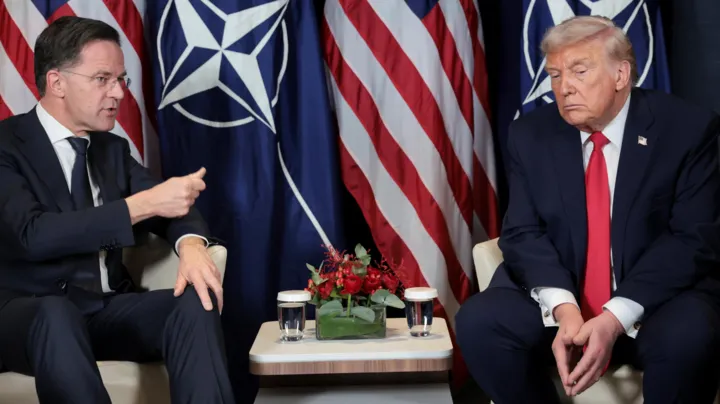
Donald Trump has once again directed harsh criticism toward NATO, asserting that the alliance did not come to the United States’ aid during the Iran conflict. The criticism followed a private meeting between Donald Trump and NATO Secretary General Mark Rutte that took place at the White House.
After the meeting, Donald Trump posted a statement on Truth Social in which Donald Trump wrote: "NATO WASN’T THERE WHEN WE NEEDED THEM, AND THEY WON’T BE THERE IF WE NEED THEM AGAIN." The post highlighted Donald Trump’s frustration with what Donald Trump perceives as a lack of support from NATO members.
In a separate interview with CNN, Mark Rutte characterized the conversation with Donald Trump as “very frank” and “very open,” acknowledging that the two leaders held sharply divergent views on the alliance’s performance.
Background to the White House Discussion
In the days leading up to the meeting, Donald Trump floated the possibility of withdrawing from NATO after a number of NATO member states apparently resisted calls to assist in reopening the Strait of Hormuz. The proposed reopening aimed to alleviate heightened global oil prices, an issue that has featured prominently in Donald Trump’s public statements.
While the White House declined to release a detailed transcript of the discussion, it confirmed that Mark Rutte spent more than two hours at the White House on the day of the meeting. The precise duration of the one‑on‑one session between Donald Trump and Mark Rutte remains undisclosed.
Observers had anticipated that the meeting would serve as an effort to persuade Donald Trump that continued participation in NATO aligns with both Donald Trump’s strategic interests and the broader security interests of the United States.
Despite these expectations, Donald Trump’s remarks indicate a lingering skepticism toward NATO and a belief that many member nations failed to provide sufficient assistance prior to and during Operation Epic Fury.
Donald Trump’s Public Statements on NATO’s Performance
During a press briefing, White House Press Secretary Karoline Leavitt relayed a direct quotation from Donald Trump, stating that NATO was “tested and they failed.” Karoline Leavitt added that NATO nations had “turned their backs on the American people,” emphasizing that the United States funds the defense budgets of its allies.
Karoline Leavitt also noted that Donald Trump would have a “very frank and candid conversation” with NATO Secretary General Mark Rutte, reinforcing the notion that the upcoming discussion would involve an unfiltered exchange of viewpoints.
Since the onset of the Iran conflict, Donald Trump has repeatedly warned that the United States might consider withdrawing from the 32‑member transatlantic alliance if member nations do not demonstrate a willingness to stand alongside the United States in future crises.
Mark Rutte’s Perspective on NATO Contributions
When questioned about NATO’s role in the ongoing Iran conflict, Mark Rutte highlighted the contributions of many European nations, citing assistance with basing, logistics, and overflight permissions. Mark Rutte described the overall picture as “nuanced,” suggesting that while some members may have fallen short of expectations, a substantial segment of the alliance has provided concrete support.
Mark Rutte further asserted that the world is presently safer than it was prior to the conflict, attributing the improvement to Donald Trump’s leadership in degrading Iran’s nuclear capabilities.
According to Mark Rutte, NATO members largely aGree that the war in Iran is not illegal and that degrading Iran’s nuclear program is a shared strategic objective.
Historical Context and Legislative Constraints
At the close of the previous year, the United States Congress approved legislation that bars any U.S. president from withdrawing unilaterally from NATO without securing a two‑thirds majority vote in the Senate or an act of Congress. This legislative measure reflects longstanding bipartisan support for the alliance.
Relations between the current administration and NATO had already been strained before the Iran conflict, largely due to disaGreements surrounding Donald Trump’s proposals concerning Greenland. Donald Trump referenced the Greenland issue in a follow‑up Truth Social post, writing: "REMEMBER GreeNLAND, THAT BIG, POORLY RUN, PIECE OF ICE!!!"
The Iran conflict has amplified Donald Trump’s grievances, presenting what many analysts consider the most serious test NATO has faced in recent memory.
Implications for the Alliance
Donald Trump’s public admonishment of NATO raises questions about the durability of the alliance in the face of persistent criticism from the United States’ highest office. If Donald Trump were to act on threats of withdrawal, the collective defense commitments of NATO would be profoundly affected.
Mark Rutte’s response underscores a willingness within NATO leadership to engage openly with United States leadership, even when disaGreements are stark. By emphasizing logistical and operational contributions from European members, Mark Rutte aims to counter the narrative that NATO as a whole failed to support United States objectives.
The divergent narratives offered by Donald Trump and Mark Rutte illustrate the difficulty of reconciling national expectations with the realities of multinational cooperation. The upcoming weeks are likely to reveal whether diplomatic engagement can bridge the gap or whether the United States will pursue a more confrontational stance toward the alliance.
Conclusion
The White House meeting between Donald Trump and Mark Rutte has brought to the fore deep‑seated tensions surrounding NATO’s role in contemporary security challenges. Donald Trump’s assertion that NATO “wasn’t there when we needed them” reflects a profound disappointment with perceived inaction, while Mark Rutte’s description of the discussion as “very frank and open” suggests a willingness to confront criticism directly.
With legislative safeguards preventing a unilateral departure from NATO and with ongoing diplomatic efforts aimed at aligning strategic priorities, the future of the alliance hangs in a delicate balance. Whether the United States will continue to endorse NATO as a cornerstone of transatlantic security, or whether Donald Trump will pursue a more isolationist policy, remains an open question that will shape the security architecture for years to come.