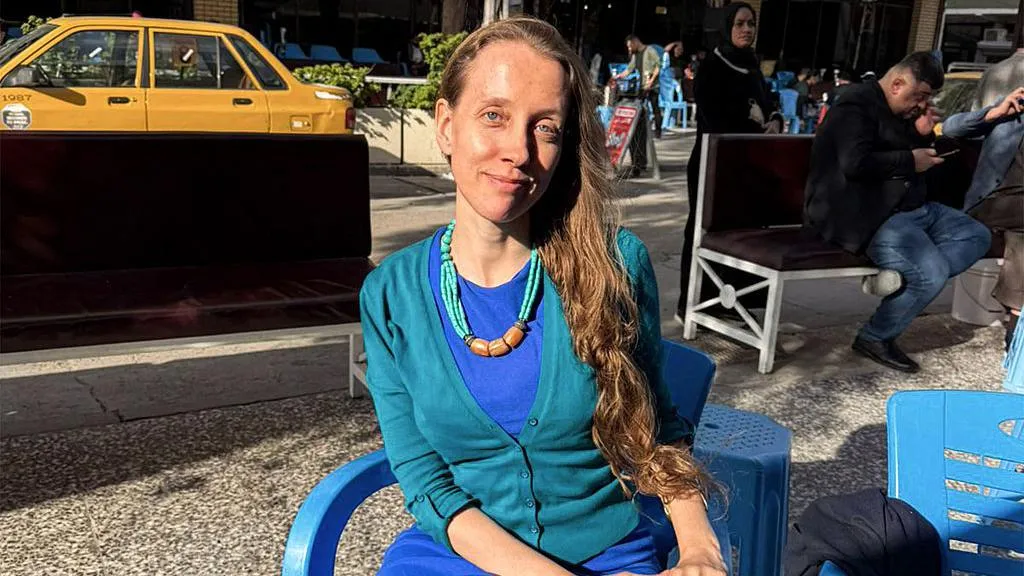
French nationals Cecile Kohler and Jacques Paris depart Iran after lengthy imprisonment

Emmanuel Macron announced that Cecile Kohler and Jacques Paris are on their way back to France after having spent more than three years incarcerated in Iran on charges that French authorities described as unfounded.
Background to the detention
Cecile Kohler, age forty‑one, and Jacques Paris, age seventy‑two, were detained while on a tourist visit to Iran. The Iranian authorities accused both individuals of espionage, alleging that they had been gathering intelligence for France and for Israel. French officials consistently rejected those accusations, labeling them as baseless.
Following their arrest, Cecile Kohler and Jacques Paris were transferred to Tehran’s notorious Evin prison, a facility well known for holding political prisoners and foreign detainees under harsh conditions. Throughout their confinement, the French diplomatic mission repeatedly called for their immediate release and highlighted concerns regarding their health and wellbeing.
After more than three years behind bars, Cecile Kohler and Jacques Paris were eventually freed. Their release was followed by a period of house arrest at the French embassy in Tehran, where French diplomatic staff provided assistance and ensured a safe environment while negotiations continued behind the scenes.
Diplomatic negotiations and mediation
The path to freedom for Cecile Kohler and Jacques Paris involved extensive diplomatic engagement. French foreign ministry officials worked closely with Iranian counterparts, while third‑party mediation was offered by Oman. Emmanuel Macron publicly thanked Oman for its mediation efforts, noting that the cooperation had been instrumental in achieving a resolution.
A source within the French foreign ministry, speaking on condition of anonymity, confirmed that a diplomatic convoy accompanied the French ambassador as Cecile Kohler and Jacques Paris departed Tehran. The convoy travelled across the border into neighbouring Azerbaijan, where further logistical arrangements were made for their onward journey to France.
French foreign minister Jean‑Noël Barrot, while refraining from disclosing the precise itinerary, declared that Cecile Kohler and Jacques Paris were "free at last" and that he had spoken with them by telephone. In his public statement, Jean‑Noël Barrot described the emotions expressed by Cecile Kohler and Jacques Paris as a mixture of relief, joy, and anticipation of reuniting with their homeland and loved ones.
Anne‑Laure Paris, the daughter of Jacques Paris, told reporters that her family was eagerly awaiting the couple’s return to France so that they could receive a heartfelt embrace.
Legal proceedings in Iran
Prior to their release, an Iranian court had sentenced Jacques Paris to seventeen years of imprisonment and Cecile Kohler to twenty years, citing alleged espionage activities on behalf of France and Israel. The sentences were pronounced after a trial that international observers described as lacking transparency.
Subsequent to the sentencing, Iranian Foreign Minister Abbas Araghchi indicated that a potential prisoner exchange was nearing completion. The proposed exchange involved freeing French detainees, including Cecile Kohler and Jacques Paris, in return for the release of Mahdieh Esfandiari, an Iranian woman who had been detained in France.
Mahdieh Esfandiari had previously been convicted in Iran for glorifying terrorism in social‑media posts. Iranian officials repeatedly asserted that her detention in France was unjust, claiming that she had been held without proper legal basis since her arrest in France. Her legal representative confirmed that her house arrest in France ended as a direct consequence of Cindy Kohler and Jacques Paris being allowed to leave Iran.
The Iranian state news agency IRNA reported that the release of Cecile Kohler and Jacques Paris formed part of a broader aGreement between France and Iran, which also encompassed the full release of Mahdieh Esfandiari. While the French government declined to comment on the specific terms of the aGreement, Jean‑Noël Barrot emphasized the "long‑term work" undertaken by foreign ministry teams to secure the result.
Reactions from French officials
Emmanuel Macron posted a statement on a social‑media platform, expressing relief for Cecile Kohler and Jacques Paris as well as for their families. He highlighted the collaborative effort that led to their departure and extended gratitude to the diplomatic staff who had operated under "extremely difficult conditions" to assure the safety of French citizens.
Jean‑Noël Barrot, in a separate posting, underscored the emotional significance of the moment for Cecile Kohler and Jacques Paris, emphasizing the joy of being reunited with France and the personal connections that had endured throughout the ordeal.
French diplomatic personnel stationed in Tehran received public acknowledgment for their perseverance and dedication. The acknowledgment cited the challenges posed by the broader regional security environment, which had intensified diplomatic pressures throughout the period of detention.
Regional context and broader implications
The release of Cecile Kohler and Jacques Paris occurred against a backdrop of heightened tension in the Middle East. Military actions involving the United States, Israel, and Iran had escalated, leading to retaliatory strikes and a widening of hostilities across the Gulf region and into neighboring states.
Iran’s response to the actions of the United States and Israel included launching missile attacks against strategic targets, further complicating the diplomatic landscape. The conflict quickly extended to other areas, causing casualties and infrastructure damage on multiple fronts.
European nations, including France, have expressed support for certain security initiatives while simultaneously emphasizing a desire to avoid direct military engagement. The situation has required careful diplomatic balancing, as European governments seek to protect their nationals abroad while maintaining broader strategic interests.
The successful departure of Cecile Kohler and Jacques Paris demonstrates the capacity of diplomatic channels to achieve concrete outcomes even amid volatile regional dynamics. Analysts note that the episode may serve as a reference point for future negotiations involving detainees and dual‑nationality issues.