Indian Rupee Registers Largest One‑Day Surge in Over a Decade, Strengthening to 92.82 Against US Dollar
Reserve Bank of India (RBI) steps aimed at curbing speculative activity reignite optimism in the currency market.
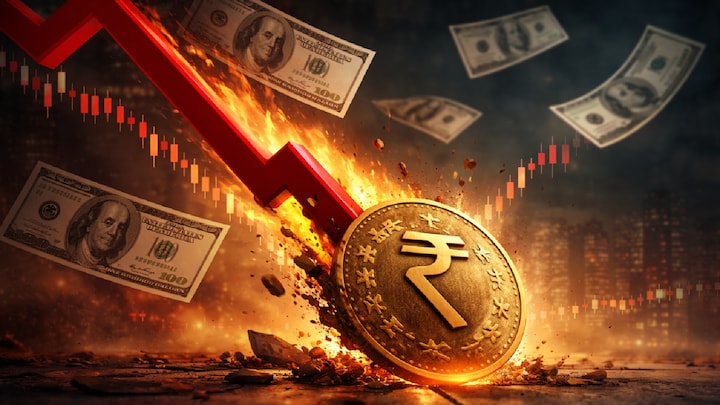
On the most recent trading session, the Indian rupee exhibited a remarkable advance of approximately two percent from the prior closing level. This movement marks the most pronounced single‑day gain recorded for the Indian rupee in the span of twelve years. The surge followed a series of freshly introduced measures by Reserve Bank of India (RBI) that target the reduction of speculative trading, a factor that had previously exerted downward pressure on the currency.
In concrete terms, the Indian rupee progressed to a level of 92.82 per US dollar, an improvement of 188 paise relative to the previous close of 94.70. Market participants interpreted the regulatory tightening as a precursor to an expanded supply of US dollars within the on‑shore market, a scenario that naturally benefits the Indian rupee when speculative positions are unwound.
During the session, the Indian rupee briefly touched 93.17 per US dollar, representing an intraday gain of roughly 1.8 percent. This high point stands as the strongest level witnessed since the period of September 2013, highlighting the depth of the rally after a two‑day pause in active currency trading.
Reserve Bank of India (RBI) has intensified its campaign to limit arbitrage channels and speculative bets that historically have weighed on the Indian rupee’s performance. While these efforts are gaining traction, lingering concerns continue to surround India’s current account balance, chiefly because of heightened oil prices and a comparatively tepid flow of capital from overseas investors.
In a decisive policy move, Reserve Bank of India (RBI) recently refined its regulatory framework by prohibiting banks from offering rupee non‑deliverable forwards (NDFs) to both resident and non‑resident clients. Additionally, Reserve Bank of India (RBI) barred corporations from rebooking forward contracts that had previously been cancelled. Both actions are designed expressly to suppress excessive speculation in the foreign‑exchange market.
The tightening of these norms is expected to curtail the ability of market participants to bet aggressively on short‑term currency fluctuations, thereby encouraging a more orderly development of the rupee’s exchange rate.
External forces, however, continue to pose challenges. Crude oil futures, as represented by Brent, have surged by roughly five percent, reaching a price level near $106 per barrel. This upward trajectory follows remarks from a former US president suggesting that the United States might take decisive action against Iran in the coming weeks, thereby inflating geopolitical risk premiums.
Such movements in oil prices exert upward pressure on the Indian rupee’s import bill, given India’s substantial reliance on imported energy. The interplay between speculative curbs from Reserve Bank of India (RBI) and external price shocks creates a nuanced backdrop for the currency’s trajectory.
Investor activity on the equity front has mirrored the mixed signals from the foreign‑exchange arena. According to provisional data released by the National Stock Exchange, Foreign portfolio investors (FPI) disposed of equity holdings amounting to approximately Rs 8,331 crore. In contrast, Domestic institutional investors (DII) accumulated equities worth about Rs 7,172 crore during the same interval.
The divergent behavior between Foreign portfolio investors (FPI) and Domestic institutional investors (DII) underscores a broader sentiment divide, with international investors reacting to heightened geopolitical volatility while domestic participants appear more resilient.
Earlier in the week, the Indian rupee breached the psychologically significant threshold of 95 per US dollar during intra‑day trading, a level that signaled acute pressure stemming from the intensifying Iran‑related conflict that rattled global financial markets.
The recent reversal, culminating in a rally to 92.82 per US dollar, suggests that the regulatory steps taken by Reserve Bank of India (RBI) are beginning to offset some of the adverse sentiment generated by external geopolitical developments.