Reserve Bank of India’s Policy Review Faces Unprecedented Challenges
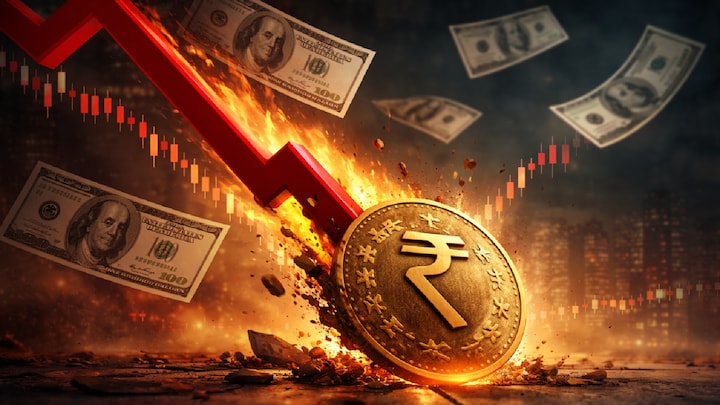
Oil above $100 per barrel, Rupee beyond 93 per dollar, and volatile global rates tighten policy space
Complex Macro Landscape Forces Reserve Bank of India Into a Tight Corner
Reserve Bank of India confronts a rare convergence of opposing macroeconomic signals. On one side, commodity markets are delivering price spikes that rekindle inflationary pressures. On the other side, external financing conditions are tightening, limiting the elasticity of monetary tools. The combination of these forces creates a scenario where conventional policy levers lose much of their predictive power.
Inflation risks have resurfaced after a stretch of relative comfort. Crude oil prices have surged past the $100 threshold, a development directly linked to heightened geopolitical tension in West Asia. India, as a net importer of crude, experiences an immediate transmission of higher oil costs into fuel and transport expenses, which then percolates into broader price indices. Simultaneously, the Rupee has weakened beyond the 93 per dollar mark, amplifying imported inflation by raising the local currency price of all foreign‑denominated goods.
Consumer Price Index data for the latest month show a rise to 3.21 percent, extending an upward trajectory that has persisted for four consecutive months. This statistic underscores the re‑emergence of price pressures at a level that can no longer be dismissed as transitory.
Supply‑Side Shock Undermines Conventional Monetary Responses
The current inflationary environment is being driven primarily by a supply‑side shock. The catalyst is external—geopolitical frictions and commodity market volatility—rather than an excess of domestic demand. In such a setting, the standard monetary policy instrument, the policy interest rate, tends to have diminished effectiveness. Raising rates may dampen demand but does little to alleviate the cost of imported fuel, while cutting rates could further weaken the Rupee, feeding additional inflationary pressure.
Because the shock originates outside the domestic economy, monetary policy must be exercised with heightened caution. Reserve Bank of India must weigh the risk of worsening the currency depreciation against the objective of containing price growth.
Global Monetary Uncertainty Restricts Policy Flexibility
The international monetary environment has shifted back toward uncertainty. US Federal Reserve has postponed the anticipated easing cycle, and discussions of a potential rate hike have re‑emerged amid persistent price pressures in the United States. This stance has fortified the US dollar, creating a spill‑over effect that tightens global liquidity.
For Reserve Bank of India, a stronger US dollar translates into higher import costs and greater pressure on the Rupee. Any aggressive monetary easing by Reserve Bank of India in this context risks triggering capital outflows, which would intensify the depreciation of the Rupee and could destabilize financial markets.
A senior treasury official at a private sector bank emphasized that while domestic growth remains supportive, lingering global uncertainties could dampen export performance and curtail investment activity. This assessment reinforces the need for Reserve Bank of India to preserve policy flexibility.
Balancing Growth Support With Price and Currency Stability
Reserve Bank of India faces a classic trade‑off between fostering economic expansion and maintaining macro‑economic stability. Domestic output has displayed resilience, yet external headwinds—such as subdued global demand, unpredictable capital flows, and ongoing geopolitical tensions—pose a risk to future growth prospects.
Implementing a rate cut could provide a stimulus to consumption and investment, potentially bolstering growth trajectories. However, a looser monetary stance could exacerbate inflationary trends and further erode confidence in the Rupee.
Conversely, a rate hike would likely strengthen the Rupee by attracting foreign capital, thereby moderating imported inflation. The downside of such an approach lies in the potential to restrain credit growth, dampen private sector spending, and slow the overall pace of economic activity.
Reserve Bank of India must therefore calibrate its policy stance to strike a balance that does not sacrifice one objective at the expense of another.
Currency Management Becomes Central to Policy Considerations
The recent depreciation of the Rupee adds a layer of complexity to the decision‑making process. Managing the Rupee’s trajectory now requires Reserve Bank of India to simultaneously address inflation containment and external equilibrium.
Effective policy signalling is essential in this environment. Clear communication from Reserve Bank of India can help anchor market expectations, discouraging speculative attacks on the Rupee and reducing the likelihood of abrupt capital movements.
Reserve Bank of India’s forward guidance must therefore be crafted with precision, reflecting realistic expectations about the path of inflation, growth, and exchange rate dynamics.
Revisiting Economic Projections Amid Heightened Uncertainty
Given the volatile backdrop, Reserve Bank of India is compelled to reassess its macro‑economic forecasts. Inflation projections may need an upward revision if crude oil prices remain elevated, while growth estimates could encounter downward pressure from persistent global disruptions.
The uncertainty surrounding both price and growth trajectories makes the formulation of forward guidance a particularly delicate task. Reserve Bank of India must incorporate a range of scenarios, reflecting best‑case, baseline, and adverse outcomes, to ensure that policy decisions remain robust under varying conditions.
Insights From Leading Economists and Market Participants
Soumya Kanti Ghosh, chief economist at State Bank of India, warned that the nation is not insulated from the current crisis. The economist highlighted that the Rupee’s position beyond 93 per dollar, combined with crude oil steadfastly above $100 per barrel, is driving a surge in imported inflation across states. The economist also noted that an anticipated “super El Niño” phenomenon could further intensify inflationary pressures.
Market analysts echo the sentiment that the simultaneous presence of supply‑side inflation and external financial tightening creates a policy environment with limited maneuverability. The consensus among observers is that Reserve Bank of India must adopt a measured approach, avoiding abrupt policy shifts that could destabilize either the price outlook or the exchange rate.
Potential Policy Paths and Their Implications
Reserve Bank of India could pursue a cautious rate‑hold, maintaining the current policy rate while monitoring incoming data. This path would provide a buffer against premature policy missteps but could be interpreted by markets as indecisiveness, potentially fueling further volatility.
An alternative scenario involves a modest rate cut aimed at supporting growth. While this approach could stimulate domestic demand, it would also risk weakening the Rupee and adding to imported price pressures.
A third possibility is a small rate increase intended to reinforce the Rupee and signal a commitment to price stability. Such a move could attract capital inflows, thereby stabilizing the currency, yet it might also dampen borrowing activity and slow the momentum of economic expansion.
Each of these policy avenues carries trade‑offs that Reserve Bank of India must weigh carefully, taking into account the latest inflation reading, exchange‑rate dynamics, and the external monetary climate.
Conclusion: A Delicate Policy Tightrope
The convergence of high oil prices, a depreciating Rupee, resilient yet vulnerable domestic growth, and an uncertain global monetary backdrop makes the current policy review one of the most demanding in recent memory for Reserve Bank of India. The institution must navigate a delicate tightrope, balancing the imperatives of supporting the economy, containing inflation, and preserving external stability.
In the coming weeks, the clarity of Reserve Bank of India’s communication, the precision of its data analysis, and the flexibility of its policy toolkit will be essential in shaping outcomes for households, businesses, and the broader economy.