How the case reached the Supreme Court
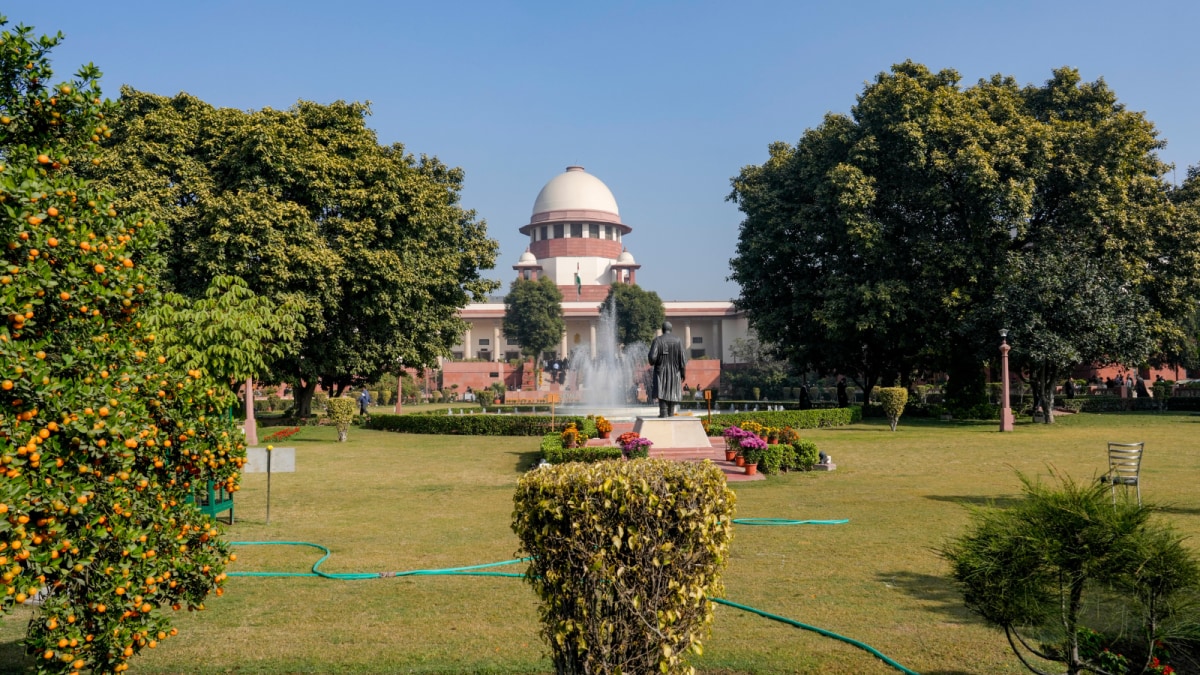
Honestly, when I first read about this petition, I thought it sounded like something out of a movie. But the facts are stark and unsettling. The Supreme Court, on a recent Friday, asked the Centre to reply within a week to a habeas corpus petition that was filed by the families of 26 Indian nationals. These families claim that their loved ones are stuck in Russia and are being compelled to fight in the war against Ukraine. The bench that heard the matter consisted of Chief Justice of India Surya Kant, Justice Joymalya Bagchi and Justice Vipul Pancholi. The bench issued a notice to the Centre after hearing the petition.
The petitioners, who are actually the relatives of the 26 Indian nationals, have been saying that there has been "continuous and uninterrupted inaction" on the part of the authorities. They argue that the Indian nationals are trapped in a foreign land, forced into a conflict they never signed up for. The legal counsel for the petitioners quoted a statement that reads, "We are stuck in Russia. We are fighting a war against Ukraine for a foreign state unwillingly." It is a heartbreaking line that captures the desperation these families feel.
Background of the 26 Indian nationals
Let me break down what the petition actually says about the 26 Indian nationals. According to the filing, they had originally come to Russia on various types of visas – tourist visas, student visas, and even job visas. So imagine a group of people from India, maybe a student named Rahul, a tourist named Priya, or an IT professional like Amit, all heading to Russia for legitimate reasons. Once they arrived, the story takes a dark turn. Their passports and identity documents were allegedly seized by the authorities. Their movement was restricted – basically, they could not leave the country or travel freely.
From there, the petition alleges a series of coercion and threats that eventually led to their forced enlistment in structures associated with the Russian armed forces. The families say the last communication they received from these individuals was mostly between September and October of the previous year. In those messages, they learned that the Indian nationals were stationed near active conflict zones such as Kupyansk, Selydove, Makiivka and Chelyabinsk. Those are places that have been in the news a lot because of the ongoing hostilities.
It is worth noting that the families have been trying, for months, to get information. They have written to the Ministry of External Affairs, the Indian Embassy in Moscow, the Ministry of Home Affairs and several state governments. But according to the petition, they got no concrete answers.
The tragic case of Sachin Khajuria
Adding to the emotional weight of this whole matter is the recent return of a body to a small village in Jammu. Sachin Khajuria, a 23‑year‑old from Jammu, lost his life while supposedly in the same war. His body was brought back to his native village, Pahariwala, and that incident has reverberated through the community. Neighbours recall how the whole village gathered, and the sorrow was palpable. It is a stark reminder that what is being discussed in the courtroom is not just legal jargon – it is about real lives.
When the families of the 26 Indian nationals heard about Sachin Khajuria’s death, they felt a deep sense of urgency. They fear that the same fate could await their loved ones if they remain trapped. The petition points out that the situation is not just about the loss of freedom, but potentially a loss of life.
Government’s response and the Supreme Court’s direction
During the hearing, the Solicitor General Tushar Mehta, who appeared for the Union Government, said that the matter would be looked into and asked for time to take instructions. He did not give any concrete answers on the spot. The Supreme Court, however, was not willing to wait indefinitely. The bench asked the Centre to submit a detailed response within one week.
Now, you may wonder what the Centre’s response could include. Typically, such a reply would cover any diplomatic efforts that have been made, any consular assistance provided, and a timeline of the steps taken so far. The families are hoping for a clear plan – perhaps extraction of the Indian nationals, assurance of their safety, or at the very least, transparent information about their whereabouts.
Legal perspectives on the habeas corpus petition
The use of a habeas corpus petition in this context is quite significant. Essentially, a habeas corpus petition asks a court to examine whether a person’s detention is lawful. Here, the petition is framed around the alleged forced enlistment and detention of the Indian nationals in Russia. The Supreme Court’s decision to issue a notice to the Centre indicates that the court believes there is a prima facie case that needs to be addressed.
From a legal standpoint, if the Centre fails to provide a satisfactory response, the court could potentially order specific actions – maybe even direct the Ministry of External Affairs to take immediate steps to secure the safe return of the 26 Indian nationals. This would be an example of the judiciary stepping in when the executive appears sluggish.
Implications for Indian citizens abroad
Think about the many Indians who travel abroad every year – students, tourists, workers. This case raises a worrying question: what safeguards are in place if a foreign government decides to hold them against their will? The situation also puts focus on how Indian diplomatic missions can respond in real time to such crises.
In many Indian households, especially those with members studying or working overseas, there is an expectation that the government will step in and protect its citizens. When that expectation is not met, it erodes trust. The petition and the Supreme Court’s involvement could trigger a review of existing consular protocols, perhaps leading to more robust mechanisms for tracking the whereabouts of Indian nationals in conflict zones.
On a broader scale, the case could impact India’s foreign policy stance towards Russia. India has historically maintained a strategic partnership with Russia, especially in defence and energy. However, if Indian citizens are being forced to fight on the Russian side, the political equation may become more complicated. The government may have to balance its diplomatic ties with the welfare of its people.
What the families are hoping for
Speaking to the families, even indirectly through the petition, you get a sense of raw emotion. They want answers – a simple confirmation of where their loved ones are, whether they are alive, and if there is any chance of bringing them home. The families also mentioned that they had tried to get help from the state governments, but that too turned up empty‑handed.
They are also worried about the possible mental and physical trauma the Indian nationals might be facing. Being forced into combat without consent can lead to severe psychological stress. The families want not just a safe return, but also proper medical and counseling support for whatever the individuals have endured.
Possible next steps after the week‑long deadline
Assuming the Centre submits its response within the stipulated week, the Supreme Court will have to evaluate it. If the response is satisfactory – for example, if the Ministry of External Affairs provides a clear plan with timelines – the court may close the matter. If not, the court could issue further directions, maybe even appoint a committee to oversee the extraction operations.
There is also a possibility of the court ordering a joint meeting with the Ministry of External Affairs, the Ministry of Home Affairs and the Indian Embassy in Moscow to coordinate a rescue mission. In the worst case, the court could order the issuance of a declaration that the Indian nationals are being unlawfully detained, which could have diplomatic consequences for Russia.
Conclusion: A story that blends law, diplomacy and human tragedy
All in all, this is a story that mixes legal procedure, international diplomacy and a very personal human tragedy. The Supreme Court’s involvement shows that the judiciary is keen to ensure that the executive does not remain idle when Indian lives are at stake. For the families, the hope is simple – to get their loved ones back safely. For the government, it is a test of its ability to protect citizens abroad, especially in a volatile geopolitical environment.
We will have to wait and see what the Centre’s response looks like, and how the Supreme Court proceeds after that. Until then, we can only imagine the anxiety that the families are living with, and hope that the legal system and diplomatic machinery work together to bring the 26 Indian nationals home.