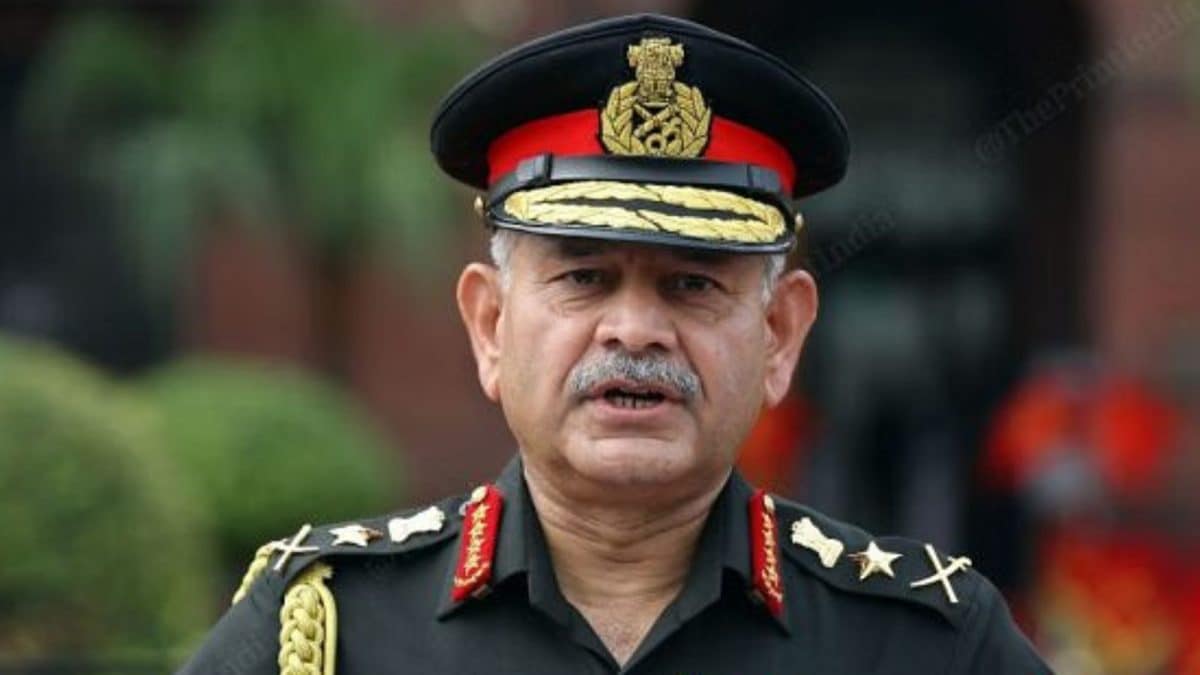
My Takeaways from General Upendra Dwivedi’s Talk
Last week I found myself sitting among a bunch of defence enthusiasts at the Ran Samvad forum in Bengaluru, sipping on some strong South Indian filter coffee, when General Upendra Dwivedi stepped onto the stage. I’ve always admired the way our armed forces operate, but hearing the chief explain the ethical heartbeat behind Operation Sindoor made it feel personal – like a close friend was letting you in on a secret.
He started by saying that the Indian military had the flexibility to hit targets any time of the day – be it the dead‑of‑night hour when everyone is sleeping or the bright afternoon when the sun is scorching. Yet, the commanders made a conscious decision to keep a close eye on the daily routines of the enemy camps on the other side of the border. In simple terms, they chose to hold fire during the moments when the militants would be offering Namaz. This, he said, reflected a deeper belief that “Sabka Malik Ek Hai” – there is one God for all – and that even in war, the sanctity of prayer should be respected.
Honestly, it struck me how much thought goes into these split‑second decisions. It’s not just about firepower; it’s about timing, about being humane even when dealing with people you consider enemies.
Why the Timing of Operation Sindoor Mattered So Much
When General Upendra Dwivedi explained the backdrop, I could picture the scenario vividly. Imagine you are watching a neighbour’s routine for weeks – you know when they cook, when they pray, when they sleep. The Indian forces, he said, did something similar but on a grand scale. They used surveillance and intel to map out the precise moments when the terrorist camps would be quiet, typically during the evening and night prayers.
He emphasized that striking during these periods would have sent the wrong message – that we were targeting the people for their belief rather than their deeds. By holding fire, the army could demonstrate that the operation was purely about dismantling terror infrastructure, not about assaulting religious practices. This nuance, he argued, helped maintain the moral high ground and avoided giving the adversary any propaganda fodder.
For a layperson like me, it reminded me of how we avoid ringing doorbells at night if we know someone is sleeping – it’s just common courtesy, but on a battlefield it becomes a strategic lever.
The Core Objective of Operation Sindoor
Operation Sindoor wasn’t just another routine attack; it was launched as a direct response to the horrific Pahalgam terror attack in April, which claimed 26 lives, mostly tourists. The loss felt close to home for many of us who love to travel the mountains during the monsoon. The retaliation required a response that was swift, decisive and, importantly, joint across all services.
General Upendra Dwivedi spoke about the “domain jointness” – a phrase that now sticks in my mind whenever I hear about the Indian armed forces. The Army, Navy and Air Force operated like a single organism. The naval strike group led by INS Vikrant delivered high‑impact hits, while the Air Force provided air superiority and precision munitions. Meanwhile, the Army secured the ground footholds and neutralised training camps.
He described the operation as a “defining case study” for our forces, because it combined kinetic action with cyber and electronic warfare. I remember thinking about how we in the city often rely on Wi‑Fi and smartphones; similarly, on the battlefield, the same kind of networks become the battleground.
Information Warfare: The Invisible Frontline
One part of General Upendra Dwivedi’s address that really stuck with me was the emphasis on the “non‑kinetic” battlefield. He said that roughly 15 per cent of the overall effort during Operation Sindoor went into handling disinformation and psychological operations. To put that into perspective, it’s like spending a good portion of a cricket match just watching the crowd’s reaction and making sure no false chants spread.
After the strikes, India faced a wave of hybrid threats – swarm drones buzzing in the skies and a sudden spike in online propaganda trying to stoke communal tensions. In response, the Indian Army set up a dedicated information warfare organisation and a psychological defence division. General Upendra Dwivedi warned that future wars would increasingly be fought in a “grey zone”, where enemies try to create confusion below the threshold of full‑blown war.
This made me recall the countless social media rumours that surface after any major event. It’s a reminder that the battle isn’t just on the ground; it’s also in the minds of people.
How the Standoff Eventually Ended
The escalation following Operation Sindoor lasted a few tense days. I could feel the palpable anxiety in the air, especially when news channels kept running live feeds of the border. As losses piled up on both sides, the Director General of Military Operations (DGMO) of Pakistan reached out to his Indian counterpart. The two sides finally aGreed on a total cessation of hostilities across land, air, and sea – a ceasefire that took effect in early May.
General Upendra Dwivedi summed it up beautifully: technology is crucial, but it is human judgment, ethics and compassion that truly steer the course of a nation’s defence. The operation proved that a high‑intensity, multi‑domain offensive could still respect the sanctity of prayer – even in the middle of hostile territory.
For me, it was a humbling reminder that behind every headline about missiles and drones, there are real people making tough choices, often guided by a simple belief that “Sabka Malik Ek Hai”.
Personal Reflections on Ethical Warfare
Walking back home after the forum, I couldn’t help but think of the many times I’ve seen people pause for a brief moment of prayer on the bustling streets of Delhi or Mumbai. It’s a tiny gesture, but it carries deep respect. General Upendra Dwivedi’s explanation made me realise that the same principle can be scaled up to a national level.
In my own life, I try to be mindful of others’ beliefs – like avoiding loud music during early mornings when neighbours might be praying. The army’s decision to hold fire during Namaz shows that similar courtesy can be embedded in even the most complex operations. It tells us that warfare doesn’t have to be devoid of humanity.
While I may never fully understand the intricacies of domain jointness or cyber‑electronic warfare, the core message resonates: ethics and empathy have a place on the battlefield, just as they do in everyday interactions.
Looking Ahead: What This Means for Future Conflicts
General Upendra Dwivedi warned that the “grey zone” – where information warfare, cyber attacks and psychological ops blend together – will become the new normal. He urged that our armed forces keep sharpening both their technological tools and their moral compass.
For the younger generation watching these developments, the lesson is clear: mastery over gadgets is not enough. We need to cultivate an understanding of diverse cultures, respect for religious sentiments and the ability to think ethically under pressure.
In many ways, the story of Operation Sindoor feels like the story of a family dinner that goes smoothly when everyone respects each other’s preferences – the only difference is that the “family” here is a nation, and the “dinner” is a high‑stakes military operation.