Donald Trump Set to Raise Potential NATO Withdrawal in Talks with Mark Rutte, White House Confirms
Donald Trump may broach a United States exit from NATO during a meeting with alliance leader Mark Rutte, reflecting mounting frustration over NATO partners’ stance amid the Iran conflict.
Background of the Upcoming Discussion
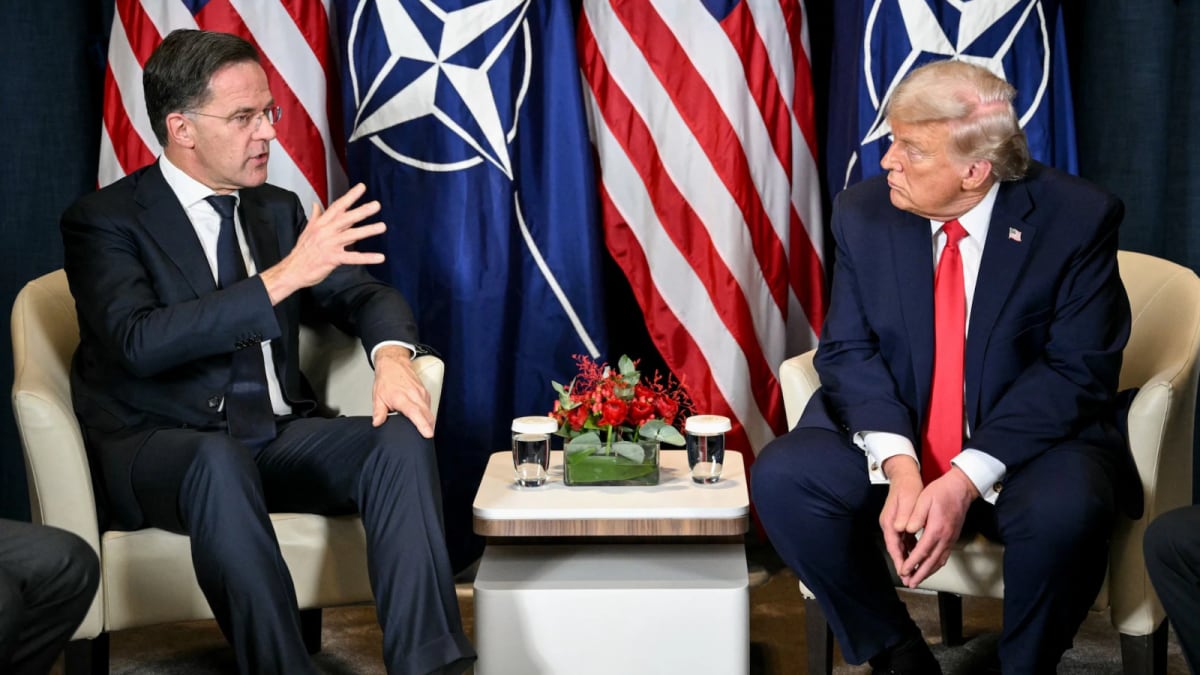
Donald Trump is expected to address the prospect of a United States departure from the North Atlantic Treaty Organization during a scheduled meeting with alliance chief Mark Rutte. The White House relayed this information through a briefing given by press secretary Karoline Leavitt.
Karoline Leavitt explained that Donald Trump’s frustration stems from what the administration perceives as a lack of solidarity from NATO partners during the ongoing hostilities with Iran. According to Karoline Leavitt, the sentiment within the administration is that NATO allies have effectively “turned their backs” on the American people throughout the most recent six‑week period of conflict.
Karoline Leavitt emphasized the perceived irony, noting that American taxpayers have been financing the defense capabilities of NATO members while those same members, in the view of the administration, have failed to respond adequately to the security challenges presented by Iran.
Current Diplomatic Climate and Recent Developments
The scheduled conversation between Donald Trump and Mark Rutte follows a recent two‑week ceasefire aGreement between the United States and Iran. That ceasefire marked the end of an escalated phase of conflict that placed additional strain on the cohesion of the 77‑year‑old military alliance.
Throughout the heightened confrontation, the administration has repeatedly voiced displeasure regarding the response of NATO allies, especially concerning the security of the Strait of Hormuz. The Strait of Hormuz remains a critical artery for global oil shipments, and the administration has framed the perceived lack of allied action as a direct threat to the stability of that route.
While the personal rapport between Donald Trump and Mark Rutte has generally been described as cordial, the present circumstances have introduced new variables that could reshape the strategic calculus surrounding United States participation in NATO.
Legal Framework Governing NATO Membership and Withdrawal
The North Atlantic Treaty contains explicit provisions that permit any member state to cease participation by providing formal notice. Article 13 of the North Atlantic Treaty specifies that, after the treaty has been in force for twenty years, a party may denounce the treaty, with the effect of withdrawal occurring one year after the United States government receives the notice and then informs the governments of the other parties.
Article 13 reads: “After the Treaty has been in force for twenty years, any Party may cease to be a Party one year after its notice of denunciation has been given to the Government of the United States of America, which will inform the Governments of the other Parties of the deposit of each notice of denunciation.”
However, domestic legislation adds an additional layer of complexity. Under the National Defense Authorization Act for Fiscal Year 2024, Subtitle H—Limitation on Withdrawal From NATO—places explicit restrictions on the unilateral ability of the President to terminate United States participation. The text states that the President is prohibited from suspending, terminating, denouncing, or withdrawing the United States from the North Atlantic Treaty unless two conditions are met:
- The action is taken with the advice and consent of the Senate, requiring a two‑thirds majority of Senators present to concur.
- The action is undertaken pursuant to an act of Congress.
This statutory limitation means that, even if Donald Trump were to decide to pursue a formal exit, the necessary legislative approvals would be required before the United States could officially withdraw from NATO.
Potential Military Implications of a Reduced United States Role
Although the statutory framework restricts a full withdrawal without congressional involvement, the President retains authority as commander‑in‑chief over the deployment and redeployment of United States forces. This authority enables the possibility of scaling back the United States military presence within NATO without invoking a formal denunciation of the treaty.
A reduction in United States troop contributions could have a cascading effect on the alliance’s collective defense capabilities. The United States has traditionally supplied a significant portion of NATO’s strategic assets, ranging from air‑defense systems to rapid response forces. Any substantial drawdown could therefore weaken the alliance’s ability to project power and deter potential aggressors.
Moreover, a perception of diminished United States commitment may influence the willingness of other member states to allocate resources toward NATO initiatives, potentially eroding the overall readiness of the alliance.
Historical Context of United States Participation in NATO
The North Atlantic Treaty Organization was established in the aftermath of World War II as a collective security arrangement aimed at countering emerging threats in Europe. Since its inception, the United States has played a central role in shaping NATO’s strategic direction, providing both the bulk of its military capabilities and a significant portion of its budgetary resources.
Over the decades, NATO has adapted to a changing geopolitical landscape, expanding its membership, redefining its strategic concepts, and conducting operations beyond the Euro‑Atlantic region. Throughout these transformations, the United States has remained a pivotal contributor, enabling the alliance to undertake missions ranging from peacekeeping in the Balkans to counter‑terrorism operations in Afghanistan.
The prospect of a United States exit therefore raises profound questions about the future relevance and operational effectiveness of an alliance that has historically depended on American leadership and resources.
Strategic Considerations for the United States and NATO Allies
From the perspective of the United States administration, the primary grievance centers on the belief that NATO partners have not adequately supported American strategic interests during the Iran conflict. The administration contends that the lack of coordinated action undermines the collective security framework that NATO is intended to provide.
For NATO allies, the issue raises concerns about the reliability of the United States as a guarantor of the alliance’s defense commitments. The alliance’s foundational principle of collective defense—articulated in Article 5 of the treaty—relies on the assumption that all members will stand together in the face of aggression.
Should the United States pursue a reduction in its involvement, allies may be compelled to reconsider their own defense postures, potentially seeking alternative security arrangements or increasing national defense spending to compensate for the anticipated shortfall.
Potential Diplomatic Outcomes of the Donald Trump‑Mark Rutte Meeting
Given the high‑stakes nature of the discussion, possible diplomatic outcomes include:
- A reaffirmation of United States commitment to NATO, accompanied by a call for greater burden‑sharing among allies.
- An exploration of mechanisms that would allow the United States to modify its level of participation without triggering a formal withdrawal.
- Explicit articulation of the conditions under which the United States might consider a formal exit, thereby setting a benchmark for future negotiations.
Any of these outcomes would shape the strategic trajectory of the alliance for years to come, influencing defense planning, procurement, and cooperative security initiatives across the Trans‑Atlantic region.
Conclusion: The Future of the Trans‑Atlantic Alliance
The forthcoming dialogue between Donald Trump and Mark Rutte represents a critical juncture for the North Atlantic Treaty Organization. While the administration’s expressed frustration over the perceived lack of ally support during the Iran crisis is clear, the legal and institutional constraints governing United States withdrawal from NATO remain substantial.
The interplay between domestic statutory restrictions, the treaty’s withdrawal provisions, and the strategic imperatives of collective defense will determine whether the United States opts for a calibrated reduction in its involvement, a continued full‑scale commitment, or contemplates the formidable step of a formal exit.
Regardless of the chosen path, the outcome will reverberate throughout the alliance, compelling member states to reassess their security strategies and to engage in renewed dialogue about burden‑sharing, mutual defense, and the enduring relevance of a unified Trans‑Atlantic security architecture.